Generational wealth transfer—or a change in legacy thinking?
Generational wealth transfer—or a change in legacy thinking?

Savvy financial advisors can help clients navigate the many complexities of generational wealth transfer—including the conflicted emotions often involved in difficult family decisions.
You know the old saying: “You can’t take it with you.”
Most people choose to pass on their wealth—typically to family members or a favorite cause—while some are determined to spend it all before they go.
According to Capital Group, the stakes are high for both advisors and their clients’ families when it comes to generational wealth planning:
“The numbers swirling around the Great Wealth Transfer, which is the transfer of wealth from the Silent Generation through Generation Z, are breathtaking: Cerulli Associates estimates the sum at $124 trillion, with $105 trillion going to heirs and the rest to charity between 2024 and 2048.
“But inheriting assets is not always straightforward. Beneficiaries may need to do a little work before they can use the funds, and this is where financial professionals can play a role: By understanding options and obligations that come with different assets, you can help clients make informed decisions about money they may inherit or plan to leave behind.”
While baby boomers have trillions in wealth that has to go somewhere, financial advisors told Yahoo Finance that not all of it may go to their kids, and in some cases, none at all.
“Traditionally, boomers have prioritized leaving an inheritance. However, there’s a shift,” said Sean Lovison, CFP, CPA, and founder of Purpose Built Financial Services LLC in Moorestown, New Jersey
Lovison cited Bill Perkins’ bestseller, “Die with Zero: Getting All You Can from Your Money and Your Life,” adding that the author’s philosophy resonates with many boomers’ “desire to fully enjoy their retirement years.”
Others worry they will outlive their money and have nothing left to give. A study by Empower found that while 67% of families say they want to leave an inheritance, more than a third (34%) are unsure if they’ll be able to.
Patrick Simasko, an elder law attorney and estate planning advisor at Simasko Law P.C. in Mount Clemens, Michigan, explained why to Yahoo Finance:
Beyond the desire to enjoy their wealth or fear of outliving it, some boomers have other reasons for not leaving an inheritance. As Yahoo Finance reported, these include avoiding family infighting, concerns about their heirs’ ability to manage money, the desire to make a positive impact during their lifetime through charitable giving, and the need to preserve funds for their own long-term care or senior living expenses.
In 2024, Warren Buffett offered perhaps some of the best guidance on wealth transfer. In a lengthy letter about how he plans to distribute his estate, he wrote that parents should leave their children with enough money to “do anything but not enough that they can do nothing.”
 Related Article: What is the real key to retirement fulfillment?
Wealth transfer challenges and decisions for baby boomers
Research from eMoney highlights a surprising gap in the advisory industry when it comes to estate planning:
“An overwhelming majority of clients (93 percent) want estate planning advice from advisors, yet only 22 percent are getting it.
“That may be because providing advice on a client’s estate plan requires candid conversations that can be challenging to navigate.
“Family dynamics can be tough, and talking about death is a taboo in our culture. So it’s no surprise that only 38 percent of all advisors are comfortable talking about estate and legacy planning.”
Experienced advisors practicing holistic financial planning offer comprehensive guidance on estate-planning issues and refer clients to appropriate third-party professionals as needed. Advisors can add value—and competitive differentiation—by helping clients address many of the key considerations involved in distributing their wealth in a way that is both efficient and personally meaningful.
KEY WEALTH TRANSFER ISSUES FACING BABY BOOMERS

Source: Proactive Advisor Magazine, based on information from Fidelity Investments, Vanguard, Cerulli Associates, the American College of Financial Services, and Pew Research Center
For this issue, we asked three successful financial advisors:
How do you address legacy planning with your clients?
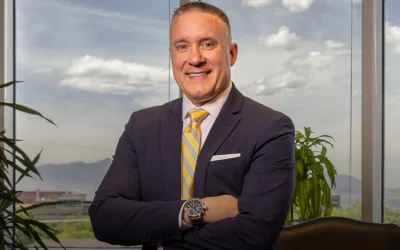
 For many clients, the desire to leave a legacy is real—but often secondary to ensuring a fulfilling retirement. Michael Freemire, founder of Full Circle Financial of Colorado, helps clients carve out a distinct legacy “tranche” within their broader financial plan, coaching them on how to invest with a multigenerational time horizon while still enjoying life today.
“When working with clients dedicated to leaving a legacy, the conversation almost always begins the same way. They say they would love to be able to leave a legacy, but when we dig deeper, many prefer to talk about what they would like to do in retirement. So, the legacy piece often becomes a smaller carve-out of the overall plan.
“That portion is invested differently. It’s invested for the next generation or two down the road, whereas the investment strategy for the client approaching retirement becomes less aggressive, more risk averse, and more income oriented.
“Managing that legacy tranche requires a great deal of coaching. You tell the client that, essentially, we’re starting over again. ‘Think back 20 or 30 years to when you first started investing. Now let’s look at that and what chunk we need to put aside to leave the level of legacy you want?’
“I think it reframes the conversation and gives the client a great deal of comfort. In essence, they can have their cake and eat it too—accomplish their retirement goals and make sure they’ve got a tranche invested properly for future generations.
“When it comes to charitable giving, clients are typically dedicated to their charity—but only after they know they’ve taken care of their own family. We’ve also talked about donor-advised funds with clients and their families.
“Some clients believe they don’t need to leave anything to their children because their children are already successful. They really don’t need Mom and Dad’s money. Frankly, many children encourage Mom and Dad to go have a good time and enjoy life, knowing how hard they’ve worked. I think there’s a lot of wisdom in that.
“When we’re in the opening stages of getting to know the client, I try to understand their beneficiaries early on. Pretty soon, you learn who they are by name, and the client knows you care. You also start learning about the client’s interests, including organizations they support, and whether that changes their beneficiary designations. From there, it’s just a matter of listening and guiding the client as their needs evolve over time.
“Rather than just throwing information at the client, it’s about being a real part of their lives. When that connection is there, it’s easier for the client to accept your advice—because they know that you know them, and they know you.
“The best part of a two-way conversation is when it connects on multiple levels—intellectual, analytical, and—more importantly—emotional.”
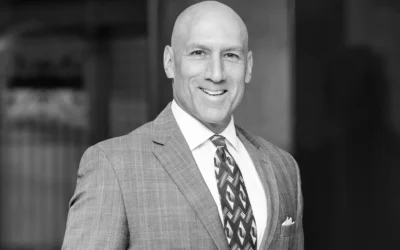
 Scott Winslow, managing partner at Nabell Winslow Wealth Management, observes changing trends in legacy planning. Unlike the World War II generation, many baby boomers are more focused on enjoying their wealth in retirement—yet still seek efficient ways to transfer what remains, often using trusts, gifting strategies, and donor-advised funds.
“There’s been a generational shift in how people approach wealth transfer.
“When I started as an advisor in 1996, we primarily worked with the World War II generation. Leaving larger inheritances and establishing legacy charities was a more characteristic trait of the World War II cohort. But the sentiment of baby boomers is different. Maybe it’s because they experienced a lost decade of investment returns, but their mindset tends to be, ‘I do want this money to go to my kids or charity—but after I’ve already lived life to the fullest and have probably spent much of it.’
“The World War II generation was worried about making sure that they could provide a better life for their kids than what they had coming out of the Depression. In contrast, the baby boomer generation is really worried about running out of money, partly because they are living longer than earlier generations. In many cases, they also have children who are already set up for success. Still, they do want an efficient transfer of wealth after their passing.
“I work with a lot of elder law attorneys, and one structure we often see is the use of seasoned irrevocable trusts. Clients transfer assets into the trust, let it season for five years, while spending down the balance of their residual wealth outside the trust. If they outlive their funds, they may qualify for Medicaid to cover costs for long-term care.
“Even people with substantial retirement portfolios may not be fully funded for their retirement needs. By age 85 to 90, some may need some form of government assistance.
“They may put their paid-for home and a small maintenance fund in the trust, continue to live there, and feel satisfied that if they spend all their money, at least that asset will be preserved for their heirs—provided the trust is properly drafted by a skilled elder law attorney.
“Others want to give money while they are still living—whether to help their kids during college or their child-raising years, or to support charities they care about and witness the impact.
“After the tax law changing itemized deductions passed in 2017, we saw more modest charitable giving. Many clients started contributing to donor-advised funds using a technique called ‘gift stacking’—contributing appreciated stock or other assets in a year they want to itemize, and then taking the standard deduction in other years.
“Some clients give large amounts of money to charity because they don’t believe their kids will be good stewards of the wealth. But more often, especially among baby boomers, I see clients give nominal amounts of money to charity and leave the residual estate to their kids, after making sure they have enough money to live on.
“Some of our ultra-wealthy clients pursue a more balanced approach to legacy planning for both charities and their kids.
“When we begin working with a client, we typically focus on their top three priorities and goals. If estate planning is one of them, we’ll spend a good amount of time getting that piece of their plan done professionally and efficiently.
“If you execute well on behalf of the client and help them understand the positive outcomes of the planning, you’ll create a marketing army of clients providing referrals to people they know.”
 Ivan Illan, founder and chief investment officer of Aligne Wealth Advisors Investment Management (AWAIM), emphasizes that wealth transfer strategies are highly individualized, driven by each family’s structure, values, and comfort level with control. While some clients delay inheritance, others accelerate it—with outcomes that can reshape both family dynamics and advisory relationships.
“This is a core topic that comes up regularly, and every family approaches it differently based on their own values. There are many ways to transfer wealth—but most simply name outright payments (upon death) to beneficiaries in governing documents (like trusts) or as named beneficiaries on qualified accounts.
“I can honestly say there isn’t a dominant choice. We have such a cross-section of high-net-worth clients, from never-married, retired corporate executives to multigenerational families. No two estate plans are exactly alike.
“Here are two recent examples that highlight very different issues our firm has addressed.
“One client we’ve had for four decades had inherited money from his parents and later founded and sold a business, which added to that net worth. Recently, he and his wife decided to gift their entire estate outright to their children now, pushing assets worth millions of dollars to their kids, who are in their early 30s.
“The son had his own ideas about investing. He quit his job to manage the money full time, ending our four-decade relationship with the client. The client told us the children were going to inherit this money anyway, so they were just going to give it to them now and hope it all works out.
“The son had been managing a smaller amount of gifted money for the past few years, and the client felt that was going well. But managing $1 million is very different from managing $10 million—you need different risk-management protocols.
“The client and his wife live well within their means, so there aren’t really any cash-flow issues for their own care. But they’ve now introduced this massive risk if their son mismanages this money—they’re putting their future in his hands.
“It was a little disappointing, of course, to see that happen. But I recognize it was an emotional decision, not a rational one. To see such a dramatic move by a family, it almost felt like the son had been pressuring his parents.
“When the client told me the news, I spoke to him using the language he had always used when talking about his family’s wealth: ‘prudent stewardship.’ That was his prime directive. I think that helped him realize that he hadn’t actually talked to his son about what it means to be a good steward. The son wants to turn $10 million into $100 million, but that doesn’t necessarily go hand in hand with prudent stewardship.
“As the investment advisor, what can I do? I can’t say no. It’s their money, and it’s their right to lose it all. I just reminded the client about prudent stewardship and the track record that we had delivered to him. I was very clear that we only want the best for his family and that, if there’s ever a concern, our door is always open.
“Another client is a widow who had invested in a lot of real estate with her husband, who is now deceased. She gifted money to one of her children to buy a piece of real estate, but the son and his wife didn’t want the property. Now she has to claw back that money and either sell the property or liquidate something else.
“The unannounced advanced gift also created other problems with the estate equalization amendments within the family trust. One child is now disproportionately out of favor because the other received an advanced gift out of the estate. Siblings often end up suing each other over issues like these, which unfortunately happen all too often if trusts aren’t updated.
“Trust documents need to be revisited at least every few years and amended if necessary to reflect ad hoc changes—like advanced gifts or beneficiary changes to a life insurance policy or an IRA. We strongly encourage clients to make an appointment with their attorney and spend a little bit of money now to avoid potentially hundreds of thousands in legal fees if there’s some kind of disagreement.”
The opinions expressed in this article are those of the author and the sources cited and do not necessarily represent the views of Proactive Advisor Magazine. This material is presented for educational purposes only.
 Katie Kuehner-Hebert is an award-winning journalist with more than three decades of experience writing about financial services. She has expertise in banking, insurance, financial planning, economic development, and employee benefits. Her work has appeared in many leading publications.
RECENT POSTS