A new behavioral challenge for advisors: Political bias amid economic uncertainty
A new behavioral challenge for advisors: Political bias amid economic uncertainty

Political affiliations have rarely been more divisive or contentious. The resulting chasm in worldviews is pushing some clients to opposite extremes in their market outlook and investment behavior.
In a perfect world, financial advice would be politically neutral, delivering objective analysis on the impact of government policies without making judgments on whether the advisor or the client necessarily agrees with them. After all, an advisor’s ability to remain financially objective during turbulent times is one of the top reasons clients seek them out in the first place.
But as behavioral finance (and experience) have taught us, the realities of being human sometimes prevent us from being as objective as we’d like. We know that emotions such as fear, pessimism, and grief can alter our perceptions and our judgments. Recent studies now tell us that we can add political emotions to that list.
There’s little question that the political environment in America today is highly polarized, with emotions running high on both sides of the divide. We are predisposed to exhibit a mental trait called belief perseverance, which tends to anchor us to a particular view of the world. We then subconsciously filter new information through the lens of that worldview, embracing news that aligns with it and rejecting (sometimes strongly) news that does not.
Our two-party political system has the power to create highly differentiated worldviews, especially when substantive changes are made to laws or public policies. When new information is perceived as inflammatory, our emotions get even stronger. These emotions drive behavior, and the differences in political stances today are palpable. We don’t need to look much beyond the Jan. 6, 2021, “event” at the Capitol to see how these emotions can play out. (Even the terms surrounding that day’s highly publicized actions usually split along party lines among voters and the media, with descriptions ranging from a “minor trespassing incident” to a “violent attack and borderline insurrection.”) In a broader context, people are quitting (or losing) jobs, distancing themselves from friends and relatives, taking to the streets in protest, and in some cases relocating—all due to political differences.
Financial behavior is not immune, and that makes it an issue for advisors. Among other things, political angst can manifest as financial anxiety, which then feeds a person’s outlook on the markets, risk tolerance, and investment choices. In the extreme, it can cause an irreparable rift between advisor and client—prompting some clients to bolt for redder or bluer pastures.
Do political beliefs influence an investor’s worldview?
Following a national election, it’s not uncommon for financial professionals to evaluate how new laws and policies may impact the economy or specific companies. But apart from such assessments, political bias has been shown to affect investment behavior. Investors affiliated with the winning party often increase their investments after an election win, while those unhappy with the results may reduce their exposure.
Several recent studies suggest that this effect has become more pronounced in the last 10–20 years. It looks to be greater now than ever, with interest rates, taxes, tariffs, medical costs, and industry subsidies all major elements of the current political agenda.
One study by professors at Washington University and MIT tracked millions of voters after the 2016 election. It found that people affiliated with the winning party increased their equity allocations following the election and that this “behavior was driven by investors interpreting public information based on different models of the world” rather than income or other financial changes. In other words, the election caused investors to increase their equity investments specifically as a result of their party winning the election.
The degree of polarization in financial outlook today is also striking. The Wall Street Journal reported that Gallup’s investor optimism poll this spring showed the percentage of Republicans expecting the markets to rise over the next six months exceeded that of Democrats by 47 percentage points. That’s the largest gap in over 20 years by either party. Previously, the widest gap was just 13 points. Meanwhile, the percentage of Democrats expecting the markets to decline over the period exceeded that of Republicans by a whopping 59 percentage points.
FIGURE 1: SHARE OF DEMOCRATS AND REPUBLICANS WHO EXPECT STOCKS TO GO UP IN THE NEXT SIX MONTHS
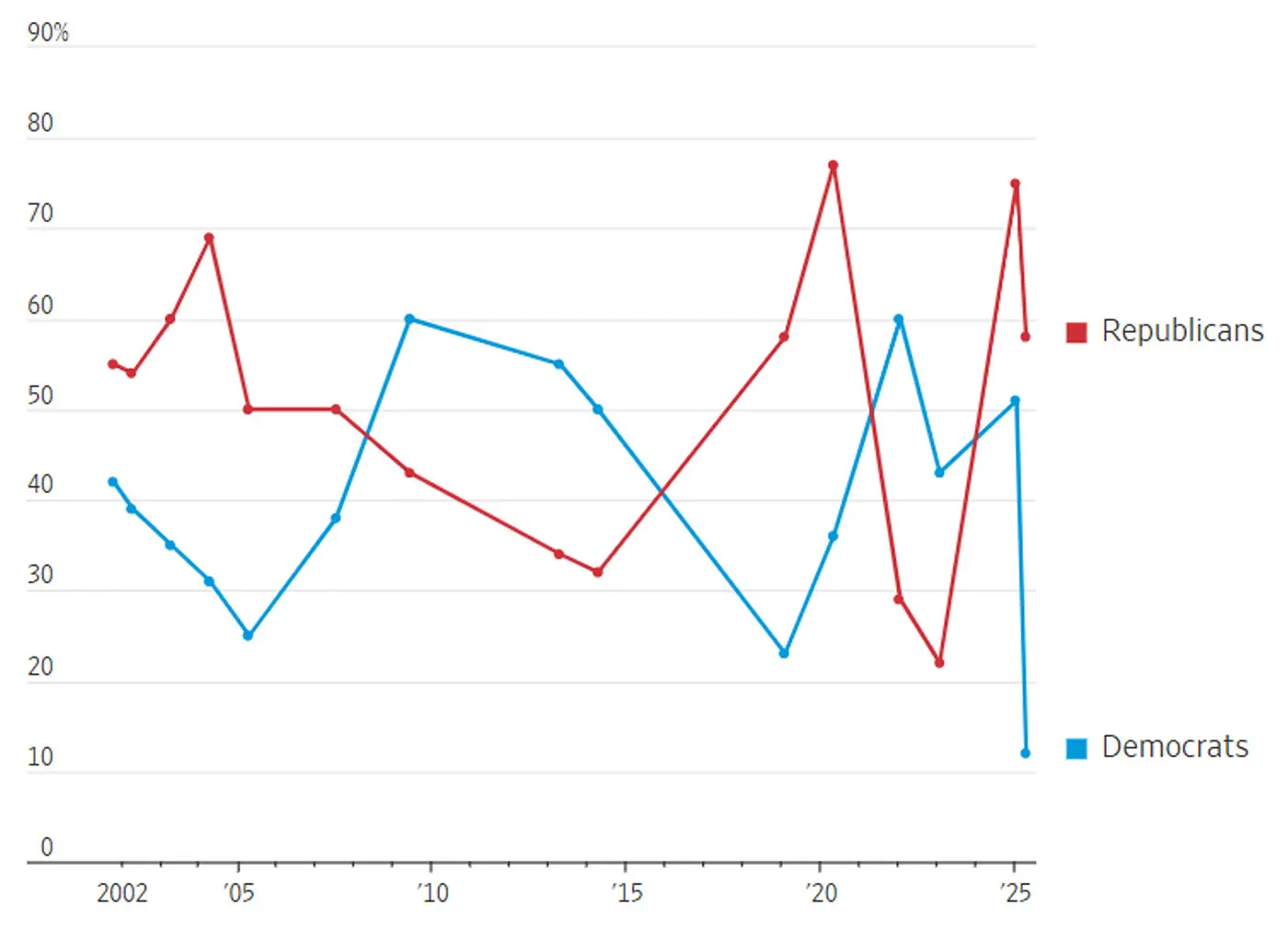
Sources: Gallup, The Wall Street Journal
A June 2025 Gallup survey found similar results. “Democratic investors (48%) are far more likely than Republican investors (9%) to say they are very concerned about recent stock market volatility and are twice as likely to be very or somewhat concerned overall (82% vs. 41%),” Gallup noted.
Such a high degree of polarization raises the question: Can advisors maintain neutrality and serve clients in both camps effectively? Sometimes that can seem like trying to hit a bull’s-eye on two moving targets with a single shot. Advisors must also remain aware of their own potential for political bias when evaluating the risks and merits of investment options.
Adding to the challenge is an equity market that reached an all-time high in February, dropped by more than 20% by early April, and then rose back to new highs by late June—all against a backdrop of falling consumer sentiment.
Bloomberg reported in late June that “Michigan’s Index of Consumer Sentiment was stuck at one of its worst readings on record for two months this spring after plunging 29% in the first four months of 2025. Over the 79 years of the survey, a drop this large this fast has almost always predicted a recession. Sentiment readings improved slightly at the start of June but still indicate Americans expect much higher prices and a much slower economy in the coming year.”
FIGURE 2: AMERICANS’ MOOD SOURED IN 2025—UNIVERSITY OF MICHIGAN CONSUMER SENTIMENT INDEX
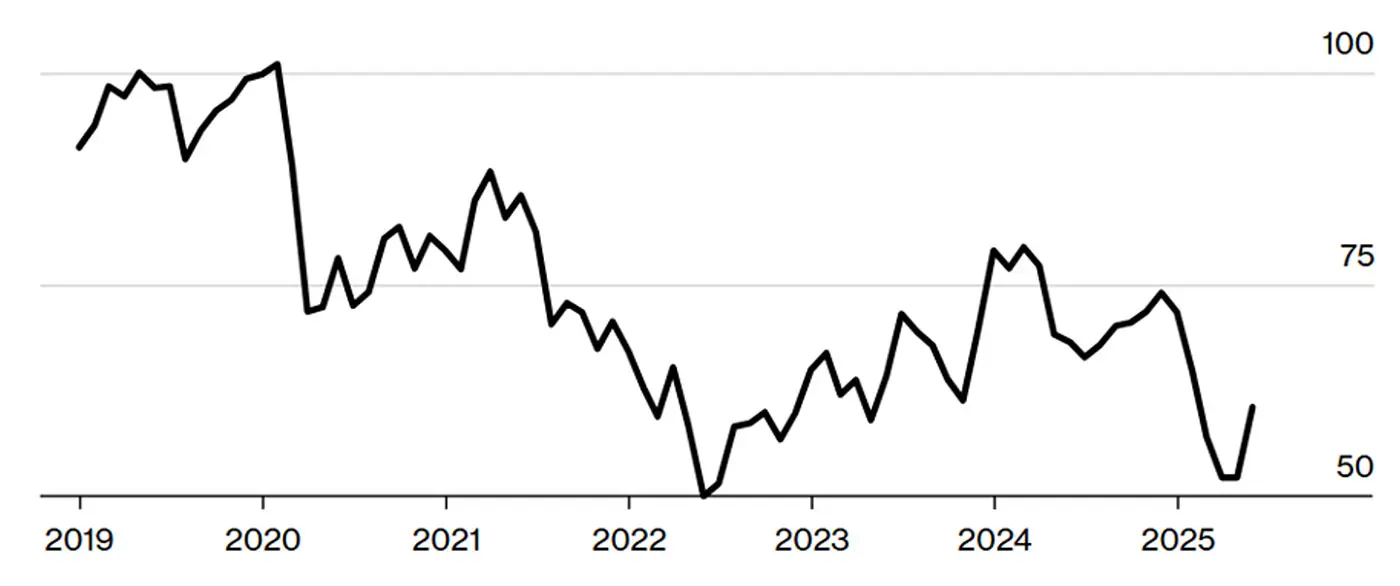
Sources: University of Michigan, Bloomberg
Adding to this is a sharp rise in “policy uncertainty.” Professors at Northwestern University and Stanford have joined forces to create a monthly U.S. Economic Policy Index designed to measure and track economic uncertainty tied to government policy. The spike in 2025 has been significant.
FIGURE 3: MONTHLY U.S. ECONOMIC POLICY UNCERTAINTY INDEX (PAST SEVEN YEARS)
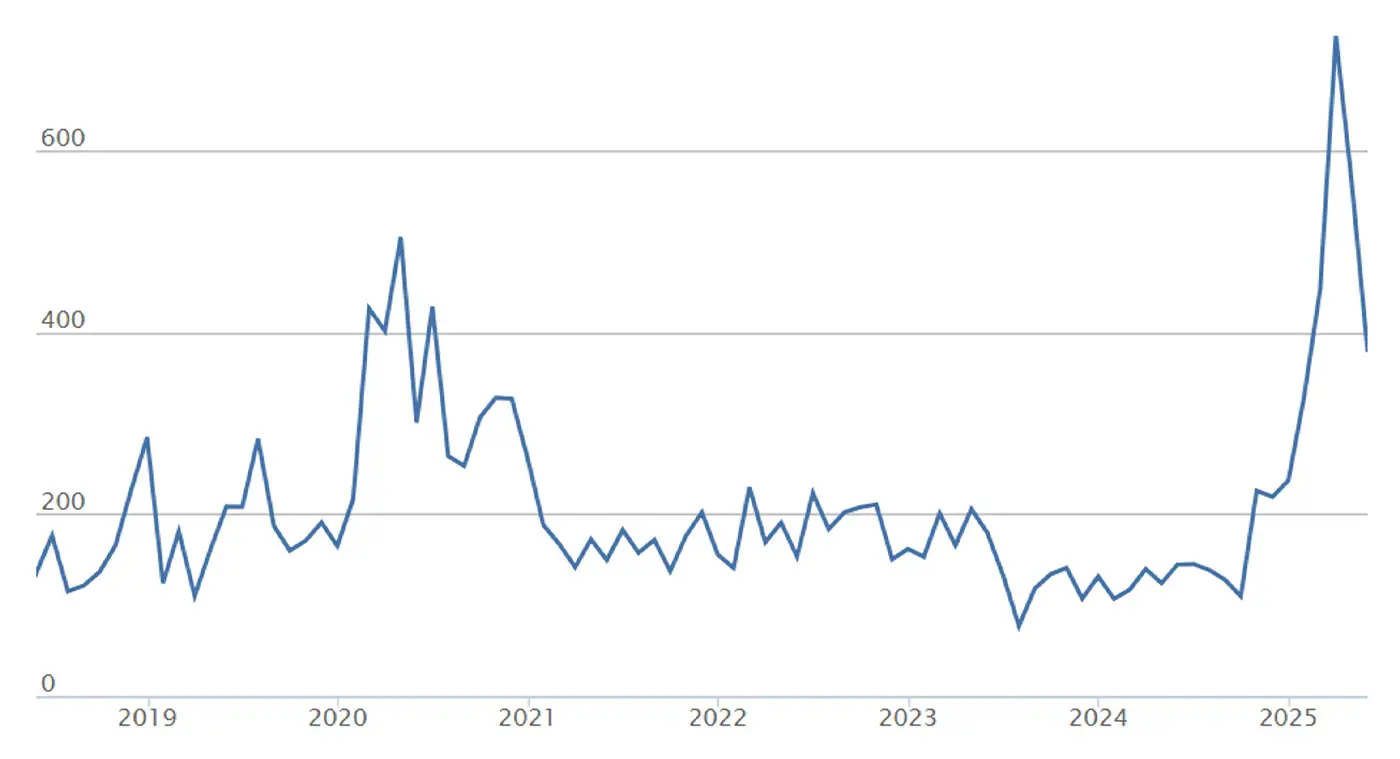
Source: Economic Policy Uncertainty Index
 Related Article: Think investor sentiment is an insignificant indicator? Think again.
The challenges for advisors
Dealing with volatile markets and emotionally charged clients is nothing new for advisors. That doesn’t mean, however, that there is a standard solution for every situation or client. Calamities like the real estate crisis in 2008 and the COVID pandemic were challenging, but in those situations, most people were affected in a similar way. In any given political environment, half your clients could be despondent while the other half are elated. Your approach needs to accommodate both, regardless of which side you may fall on personally.
What are some steps advisors can take?
Provide unbiased communications and analysis. One way to plant a neutral stake with clients at the outset is to issue a written report outlining your (or your firm’s) outlook for markets, sectors, rates, and other factors following a major election. You need to be careful to avoid any opinions or judgments that might inflame clients on either side of the political spectrum.
The analysis should remain high-level and objective, while also inviting a review of clients’ portfolios. This signals that the advisor understands individual clients may have specific issues or concerns and welcomes a conversation about them.
Revisit the client’s financial plan objectives, risk profile, and allocations. Financial advisors can play a valuable role in clarifying each client’s risk profile and risk capacity, while also understanding and accommodating their worldview—politics included—as part of their broader financial picture and goals.
However, clients need to understand that taking an extremely bullish or bearish stance based on political bias is no different from doing so based on other emotional factors, such as anger or FOMO (fear of missing out). Their attitudes toward risk should be thoroughly discussed and updated in the context of their long-term financial goals. Bring the conversation back to the basics of their financial plan—which has hopefully served them well. Reinforce the importance of a written investment policy or “decision discipline” that defines when portfolio changes should be made—typically in response to major life events or structural economic shifts, not political changes.
It is important that advisors guide clients through full market cycles with confidence. We do not want emotion to take over, causing panic in down markets or overconfidence in euphoric markets. When considering investment plan alternatives, protecting assets must remain a top priority. This is especially important for clients who are near or in retirement. Clients need to be prepared for their portfolios to take defensive positions in down markets and, just as importantly, to be positioned to take advantage of market uptrends. Active investment management, with a focus on rules-based investment approaches and controlling risk, can play an important role in most clients’ portfolios.
Listen, but “reframe.” Clients who are upset about current policies may feel compelled to express their emotions through financial action. Even clients who support the current administration may want to act on their emotions by taking on more risk.
Helping clients stay focused on their financial goals is a core aspect of an advisor’s role. Directing clients’ attention away from political issues and back to their objectives remains the primary goal. But when that’s not enough, behavioral techniques such as reframing and choice architecture may help.
When emotions run high, rational thinking blurs, and decisions tend to become more binary. People may look for ways to satisfy their emotional needs without fully considering the consequences. When clients feared the market was melting down in 2008, a common knee-jerk reaction for many people was to sell their stocks and buy U.S. Treasury bills. At one point, this caused the price on the Treasurys to exceed their par value, thus guaranteeing buyers a loss if they held to maturity.
Reframing involves changing the context surrounding a particular action or decision. If a client is biased by a strong emotion, acknowledge their feelings—then redirect the conversation away from the cause of those emotions and toward their financial situation. This may be easier said than done, but through active listening and thoughtful guidance, it’s possible to shift the focus to what matters most: the client’s long-term financial well-being.
Choice architecture comes into play when examining specific changes to a client’s portfolio and multiple options exist. Because people’s decisions can be strongly influenced by the choices they’re presented with, modifying or expanding that list can be a useful technique for advisors who want to preserve the client’s overall investment strategy while allowing them to select a specific security that reflects their political stance. That might be a small allocation intended to address the client’s current emotional needs without disrupting their broader wealth strategy.
Many advisors used a similar approach when clients wanted exposure to bitcoin. The good news is that today’s wide array of ETFs offers investors ways to express almost anything, including their political leanings. There are ETFs such as MAGA, designed to invest in companies that align with Republican beliefs and are supportive of Republican candidates. Likewise, DEMZ offers a Democratic counterpart. Other ETFs target specific industry sectors expected to benefit from one party’s support or the other. This is not an endorsement of any of these funds—just an acknowledgment that such funds exist and might play a role in helping clients express their political views in their portfolio.
Numerous quantitative studies have attempted to determine whether long-term market performance differs under Democratic or Republican leadership. Results have been mixed at best. There is no conclusive evidence that one party consistently delivers better market outcomes, and that political bias might therefore be justified. Presenting objective data—such as a chart of S&P 500 performance over the past 50 years that highlights that both parties have presided over both bull and bear markets—may help reduce emotional decision-making.
That said, clients’ feelings about their political beliefs are real and need to be addressed. By acknowledging them, staying focused on personal financial outcomes, providing historical context, and applying a disciplined decision-making framework, advisors can serve as a steady hand and help clients avoid costly, politically driven investment mistakes.
The opinions expressed in this article are those of the author and the sources cited and do not necessarily represent the views of Proactive Advisor Magazine. This material is presented for educational purposes only.
 Richard Lehman is an adjunct finance professor at Cal Poly. He specializes in behavioral finance and financial derivatives, and has authored three books. He has more than 40 years of experience in financial services, working for major Wall Street firms, banks, and financial-data companies.
RECENT POSTS