
The future of your firm starts with a clearly defined foundation
The future of your firm starts with a clearly defined foundation

You can build an advisory firm that’s intentional, fulfilling, and profitable—all at the same time. But getting there starts with reassessing your mission, values, team, and structure.
Editor’s note: This article is the first in a multipart series focused on building a successful, sustainable financial advisory firm. The series explores foundational practice management strategies, client service models, and business development approaches, offering insights designed to give your firm an “adrenaline boost” for growth.
Let’s be real. You probably didn’t start your advisory career thinking, “I’m going to build a business.”
You likely began with a few relationships, referrals, and clients who trusted you enough to hand over their life savings. That’s exactly where I started.
But at some point—usually after a few years in the industry—you wake up and realize that being a great advisor isn’t the same as building a great business.
You’re juggling too many clients. You’re taking on tasks that drain your energy. Or you’re struggling to grow and wondering how the heck you ended up here.
If that sounds familiar, you’re not alone—and it doesn’t have to stay this way.
You can build a business that’s intentional, fulfilling, and profitable, all at the same time, but it begins with defining one thing first.
Start with your why (seriously—don’t skip this step!)
You can’t build a business you love if you don’t know what you value most.
And I get it—this part can feel like “warm and fuzzy” fluff. But skipping it is like building a house without a blueprint. Eventually, things crack.
One of my early mentors introduced me to something called the “30-Day Journey,” a process I now use in my own firm and in coaching other advisors. It’s designed to help you step back, identify your priorities, and reconnect with the reasons you started this business in the first place.
It begins with a simple but powerful exercise:
- List your top five core values—things like family, freedom, health, purpose, or legacy.
- Rank them in order of importance.
- Then get brutally honest: Does your calendar reflect those values?
If you say you value freedom, but your calendar is booked solid from 8 a.m. to 6 p.m. every day, there’s a disconnect. And disconnects lead to burnout.
Once you’ve clarified your values, the next step is putting them into action by writing two mission statements: one personal and one professional. These don’t have to be complicated, but they should align with the priorities you just defined.
Start with your personal mission statement using this format:
“I will [action] by [method/behavior] so I can [desired outcome or feeling].”
Example:
“I will lead with intention by creating systems and structure in my firm so I can show up fully for my family.”
Then, write your professional mission statement—what your firm does, how you deliver it, and what clients should feel as a result.
Example (our firm’s client-focused mission statement at Libertas Wealth Management Group):
“To passionately construct a path for you to retire worry-free and enjoy the best version of your life.”
By establishing your values and defining your personal and professional missions, you’re giving yourself a framework for making decisions that align with what matters most.
Once you’ve written your statements, don’t just file them away. Say them out loud. Share them with your team. Post them on the wall. Let them shape how you spend your time, and more importantly, who you spend it with.
Get clear on who you are (and what you actually want to build)
With your values and mission in place, the next step is deciding what kind of firm you want to build.
Are you the financial planner who dives deep into estate, tax, and retirement planning?
Are you the CIO at heart—someone who thrives on strategy, research, and managing money?
Or are you the CEO, focused on growth, relationships, and building a team around you?
There’s no wrong answer here, but you need to choose. How you structure your firm, your services, and your team should reflect your strengths and your passion.
Too many advisors end up building what I call “Frankenstein firms”—a little bit of everything, added reactively over the years, with no intentional design.
This is your chance to pause, reflect, and design the business you actually want to lead—before moving on to the next critical step: assembling the right team to bring it to life.
 Related Article: How a diversified money-management approach reinvigorated my practice
Build a team to support your vision
Once you’re clear on the kind of advisor (and business) you want to be, ask yourself, Do I have the right team around me?
That doesn’t necessarily mean hiring more full-time employees tomorrow, but it might mean:
- Outsourcing compliance, trading, marketing, or paraplanning
- Hiring virtual assistants or fractional staff
- Bringing in a lead planner so you can stay focused on strategy
- Or, if you are the planner, outsourcing investment management
However, adding people isn’t the only consideration. If you’re constantly doing everything yourself, it’s not just a burnout risk for you—it can also cap your firm’s growth and send the wrong signal to talented team members who want a defined role and a clear future. That’s why creating the right culture matters just as much as hiring the right people.
At our firm, we always say that we’re “slow to hire, quick to fire.” Most of the time, you’ll know within the first 30 days whether you made the right decision. The hard part is trusting your gut and putting a plan in place to move on when it isn’t working out.
With that said, we also believe that every prospective hire should meet a set of non-negotiable criteria before joining our firm. They must be team players who are personable, genuine, intelligent, detail-oriented, and have a high level of integrity. Just as important, they need to fit the culture we’ve built. They can’t be someone who takes themselves too seriously. We work hard, but we also value having fun together, both in the office and at outside events.
But it’s not a one-way street. We also make sure candidates understand our commitment to a team-oriented culture and focus on high-value mentoring should they choose to join us.
Once you know the type of people you want to bring on board, you need a consistent process for finding and evaluating them. At our firm, that process looks like this:
- Post well-crafted job listings on relevant industry job boards and professional networks.
- Review and grade resumes.
- Send “good fit” questionnaires to top candidates.
- Analyze responses and schedule phone interviews.
- Conduct interviews with a mix of standard and customized questions.
- Reassess candidates and schedule in-person interviews.
- Use DISC personality assessments for the top two to four candidates.
- Conduct in-person interviews using targeted questions based on resumes, questionnaire responses, phone interview answers, and DISC assessments.
- Hold second-round interviews, if necessary.
- Make a final selection.
Once you have a new player on your team, you’ll need a great onboarding process to train them so that you can start delegating tasks.
Finally, despite all of the time invested, not every hire will work out. Be honest with yourself—and with them—when it isn’t, and be willing to make a change quickly.
Always remember, “Slow to hire, quick to fire.” It’s best for both parties … truly.
Decide who you want to serve
Now that the foundation—your values, your mission, your role, and your team—is set, it’s time to ask one of the most important questions of all: Who is this firm really for?
Too many advisors build their business around whoever comes in the door first, but who you’ve served so far isn’t always who you want to serve moving forward.
Do you want to work with business owners? Physicians? Engineers? Faith-based families? Individuals nearing retirement? Clients going through major life transitions, such as a divorce or the death of a spouse?
Your niche might be demographic, geographic, psychographic, or even product-based—like being a 401(k) specialist or real estate–savvy advisor.
The more focused you get, the more precise your messaging becomes, and the easier it is to earn referrals from both clients and centers of influence.
That said, I need to make a full disclosure: I struggled to establish a niche for the first 20 years of my career. And when I say “struggled,” what I mean is … I just didn’t do it.
I share this because it’s important to know that you don’t have to “niche down.”
While our firm does have a healthy niche in business owners today, we only started focusing more on this area in the last five years—and we still maintain a broad client base.
Said another way, I grew a seven-figure practice without any niche at all. So don’t beat yourself up if “niching down” isn’t right for you. Having a specialized focus can be helpful, but it doesn’t have to limit your growth with other client segments.
A final word (and a look ahead)
This isn’t about overhauling your firm or rebranding your entire business. It’s about taking a beat, stepping back, and asking yourself, Is this business aligned with who I am, who and how I want to serve, and what kind of life I want to live?
Once that clarity is in place, everything else gets easier—your service model, your marketing, your onboarding, your client reviews, your referrals … all of it.
In the next article in this series, we’ll dive into creating a client onboarding process that builds trust—the same process we use at our firm—which has resulted in a conversion rate of more than 85%.
The opinions expressed in this article are those of the author and the sources cited and do not necessarily represent the views of Proactive Advisor Magazine. This material is presented for educational purposes only.
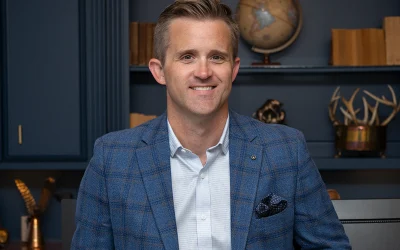
 Adam Koos, CFP, CMT, CFTe, CEPA, is the president and portfolio manager at Libertas Wealth Management Group Inc., based in Columbus, Ohio. He has been named one of Investopedia’s Top 100 Most Influential Financial Advisors in the U.S. and received the Torch Award for Ethics and Trust from the Better Business Bureau. He is also the founder of ADRENALINE Advisor Consulting. Mr. Koos earned Bachelor of Science degrees in finance and behavioral psychology from The Ohio State University. www.libertaswealth.com
RECENT POSTS

Passing the baton to the next generation of financial advisors

The age of immediacy—and why investing still requires patience
Committed to clients’ financial clarity and confidence

Existing home sales slide in August, but affordability may improve