Helping clients overcome anxiety about spending money in retirement
Helping clients overcome anxiety about spending money in retirement

Your clients have retired with significant savings and a solid financial plan. So why can spending their hard-earned nest egg still feel so difficult?
Clients can be very good at saving money during their working years. But once they retire, emotional concerns and risk factors can make it difficult to shift from accumulating assets to spending them.
Some fear outliving their savings. Others struggle to break habits developed over decades of careful spending. Financial advisors can help clients overcome these psychological hurdles so they can enjoy their hard-earned money while preserving enough of their nest egg for the long haul.
A 2025 Aegon survey found that some adults associate spending retirement savings with anxiety (26%), fear (18%), and guilt (15%). Fewer associate it with positive emotions such as security (17%), excitement (15%), or relief (10%).
“It’s a strange problem to have: to an economist, there’s no such thing as ‘saving,’ only deferred spending. Yet many people, even those who’ve saved more than enough, struggle to spend,” says Thomas Mathar, PhD, head of Money:Mindshift at Aegon.
“But when we understand the emotional complexity of modern life, it makes perfect sense,” Mathar says. “Never have we had to navigate such intricate trade-offs between our present selves and our future selves.”
The 2026 Annual Retirement Study from the Allianz Center for the Future of Retirement presents the following key findings:
- 71% of working Americans anticipate being reluctant to spend in retirement so they can preserve as much of their account balance as possible.
- 42% worry they will regret spending too much money early in retirement.
- 65% say the inconsistency of retirement expenses makes it challenging to plan a stable financial future.
- Uncertainty continues after people leave the workforce. Nearly two in five (39%) retirees are reluctant to spend to preserve their savings.
According to the Allianz study, the leading concerns that make Americans reluctant to spend in retirement include:
- Outliving savings (50%)
- Future medical or long-term-care expenses (50%)
- Unforeseen costs, such as major home repairs or emergencies (50%)
- Inflation reducing their purchasing power (48%)
“People spend most of their lives building their savings and it can feel uncomfortable or even wrong to spend that money,” said Kelly LaVigne, VP of consumer insights at Allianz Life.
“Many Americans may be financially prepared for retirement, but not psychologically prepared to spend,” she adds. “That’s why retirement strategies need to evolve beyond building assets to managing how assets are used and addressing risks throughout retirement.”
 Related Article: Clients still need—and want—to build wealth after retirement
Three advisors share how they help clients spend with confidence in retirement—without breaking the bank
 Ivan Illan, AIF, CFS • Founder and chief investment officer of Aligne Wealth Advisors Investment Management (AWAIM) in Los Angeles, CA
“Many retirees struggle to flip the switch from saving to spending. After decades of disciplined accumulation, spending that hard-earned nest egg can feel counterintuitive, even anxiety-provoking. It’s a real psychological hurdle.
“Clients who won’t spend—we see this frequently. Clients who have spent 30 or 40 years building the habit of saving find that drawing down capital—especially money that won’t be replaced—is emotionally challenging. Spending in retirement is a skill in its own right, and it’s rarely taught.
“Here’s how we approach it: Use modeling to build confidence. We walk clients through financial projections showing best- and worst-case scenarios. You can’t just say, ‘Don’t worry.’ You have to lay it all out and let them see where they’re vulnerable and how that risk is mitigated. When a client has a 95% or 100% probability of success, we might jokingly ask, ‘Do you really want to leave this much money to your kids?’—using humor to disrupt their traditional thinking.
“Start with small steps. Rather than jumping from $10,000 a month to $15,000, we suggest a gradual increase: ‘Let’s give it a shot. If it sits in the bank, that’s fine—but we want you to see what your portfolio can still do.’ Over time, they begin to believe it.
“Reframe spending as investment, not consumption. We introduce the concept of a ‘memory fund’—spending on experiences, connection, and legacy. We also remind them that by age 75 or 80, the opportunity for new experiences starts to dwindle.
“Reframe withdrawals as income. Many retirees view portfolio assets as emergency reserves rather than spendable income. By simplifying decumulation strategies and framing retirement savings as a stream of income, we can help clients develop more confidence in their spending decisions.
“Conversely, about one in 10 retired households spends almost twice what they should per year. In a 2024 EBRI survey, 68% of retirees aged 62 or older incurred credit card debt, and 31% said their spending exceeds what they can afford. It doesn’t matter if they’re worth $10 million-plus either; retirees at all net worth levels can overspend.
“For these clients, we take a more direct approach: Show them the numbers. Using financial planning tools, we model the impact of their current spending. If they’re spending an extra $5,000 or $10,000 a month, we show them the detrimental long-term impact. Sometimes seeing the worst-case scenario is the wake-up call they need.
“Have the hard conversation. If overspending continues, we’ve had to tell clients they may need to sell their house or make other significant adjustments. It’s not an easy conversation, but it’s our responsibility. Having those tough talks with overspenders also gives us credibility when we encourage underspenders to loosen the belt a little.
“Identify the ‘why.’ Overspending often stems from social pressure, supporting adult children, or unexpected expenses. Understanding the root cause helps us address it together.
“Whether a client is spending too little or too much, our role is to guide them toward a retirement that’s not just financially secure but also fulfilling.”
 Catherine Seeber, CFP, CeFT • Principal and financial advisor at CAPTRUST in Lewes, DE
“When a person has spent decades accumulating, they can’t just switch that mindset overnight. You have to look at their relationship with money, what I call their money story. I have them tell me some history about what they observed about spending, scarcity, or security growing up.
“Sometimes it’s about family patterns or certain people in their family. If they saw a parent overspend and was less responsible, they want to go the complete opposite. It’s not really the reluctance to spend money—it’s not about dollars and cents. It’s more about emotions around money.
“Another reason many clients hold tightly onto their funds is so they can afford the expense of care in their later years. The problem we have now more than ever is that people are seeing the generations before them live very long lives, but not with the quality of life that they expected. There is a growing concern over becoming a burden.
“We don’t dismiss those concerns—we plan for them. When clients see that these risks have been thoughtfully addressed, they often feel more permission to live fully today. We also reframe their portfolio as a paycheck: Their money is now working for them, not the other way around.
“We do long-term projections. For example, if they have $5 million today and continue their current spending patterns, assuming the average mortality age, they’re going to have X dollars when they pass away. They can give it all to their heirs, but is that really what they want?
“Most say no, that their kids don’t even need all of that, or that’s going to cause a huge tax burden for them if their money happens to be in an IRA.
“That gets the conversation going, and then we work backward: What do they want the end result to look like? Maybe they can spend an extra $15,000 a year, or whatever the number happens to be.
“When it comes to clients spending too quickly, I have to approach it without judgment. They’re often embarrassed, calling in the middle of the night asking about a $100,000 kitchen renovation. I tell them, ‘You know the value of your house is $300,000, so with the renovation, you’re pricing yourself right out of the market.’
“That’s when we have the conversation: Were they ever in a position when they’ve spent money and didn’t really get value out of it? How did it make them feel? I try to make it situational, using past experiences so they can better relate to it.
“I had one client who was spending feverishly, giving things away to her son—$300,000 to start a trash-removal business, and then more money to buy a big truck for it. But at 73, she was spending at such a rate that I told her she could potentially run out of money. Then she would have to ask her son to support her financially. How would that make her feel? All of a sudden, the spigot turned off.
“I see our role not as pushing clients toward decisions, but as guides. A good guide brings clarity, asks thoughtful questions, and honors each client’s unique path. Everyone navigates the river differently. Some will spend freely, others more cautiously—and both can be appropriate. Our role is to help them find confidence in their way.”
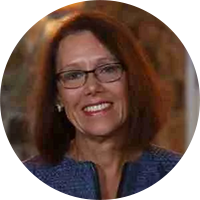 Claudia Mott, CFP, CDFA • Principal of Epona Financial Solutions in Basking Ridge, NJ
“It’s not uncommon for clients to not want to spend money in retirement. They may have parents who came through the Depression or other difficult times, and it’s often a money story that was passed down from parent to child. Maybe they’re afraid they’re going to run out of money and, in extreme cases, think they will end up without a home or have to eat dog food.
“Getting people to feel comfortable spending a little more is one way advisors can be so helpful. We have tools that can model their financial picture based on their spending patterns and available resources—best-case scenarios and worst-case scenarios. This analysis can help them visualize that it’s OK to spend a little more than what they’re spending now.
“These conversations can also be difficult when clients fear outliving their assets because of a catastrophic illness or longevity. As professionals, those are the things we try to plan for, setting aside for contingencies. Hopefully, we help provide a level of comfort that, yes, they can cover these difficult, extraordinary expenses. Long-term-care insurance might be an important protection if it fits the budget. All of the work we do as financial advisors is meant to help clients gain a comfort level that, ultimately, it’s going to be OK.
“Retirement should be a time of joy and happiness, when you can have adventures, take trips, do something that you haven’t done before. Your financial assets can help support that by providing the resources to enjoy life while still having enough for contingencies.
“Regarding clients spending too much, that can be a very challenging conversation. Not all clients will have what they need to spend the way they want to. People don’t like having boundaries put around them, and they don’t like having to cut back, even when they know they really can’t afford to spend as they want to. The modeling tools we have can provide scenarios to help them see the bigger picture. They give clients something tangible to help them see why they need to change their behavior.”
Financial advisors can help their clients navigate the brave new world of retirement and feel more comfortable enjoying their hard-earned money, while making sure they don’t go overboard and deplete their savings.
As Aegon’s Mathar says, “Advisers have a powerful opportunity here. By helping clients define what a good life looks like, and giving them the confidence to live it, financial advice becomes truly transformative.”
The opinions expressed in this article are those of the author and the sources cited and do not necessarily represent the views of Proactive Advisor Magazine. This material is presented for educational purposes only.
Accredited Investment Fiduciary and AIF are registered trademarks of Fi360 Inc. Certified Fund Specialist and CFS are registered trademarks of the Institute of Business & Finance (IBF). Certified Financial Transitionist and CeFT are registered trademarks of Yeldarb Properties LLC. Certified Divorce Financial Analyst and CDFA are registered trademarks of the Institute for Divorce Financial Analysts. CFP and Certified Financial Planner are registered trademarks of the Certified Financial Planner Board of Standards Inc. (CFP Board).
 Katie Kuehner-Hebert is an award-winning journalist with more than three decades of experience writing about financial services. She has expertise in banking, insurance, financial planning, economic development, and employee benefits. Her work has appeared in many leading publications.
RECENT POSTS