Committed to clients’ financial clarity and confidence
Committed to clients’ financial clarity and confidence

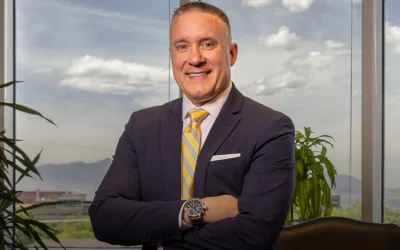
Chad Fuson • Murfreesboro, TN
RAI Advisors • LPL Financial
Read full biography below
I grew up in Brentwood, Tennessee, in a family that emphasized hard work and personal responsibility. My father worked in banking and was my first major influence in finance. He spent much of his career in trust services, real estate, and special assets. I did not understand those areas at the time, but I knew he enjoyed both the technical side of the business and serving people.
He also introduced me to investing. I bought my first stock when I was around 12, and the stock market captured my attention. My father encouraged that interest by explaining things and teaching me about the markets.
I went to the University of Tennessee, Knoxville, where I earned a degree in business administration with a major in finance. The curriculum focused more on corporate finance than personal finance, but it taught me the language of the industry—financial statements, markets, and how capital works.
After college, I worked for two years in the orthopedic medical-device industry as a technical representative supporting surgical cases. I helped operating-room teams work through procedures efficiently. It taught me precision, preparation, and how to work under pressure.
My path into financial planning began when I had the opportunity to join RAI Advisors. The firm’s founder became an important mentor. Before I officially came on board, he spent months training me and other aspiring advisors in the evenings. Once I joined the firm in 2011, I sat in on client meetings, learned account mechanics and implementation, and saw how an experienced advisor helped clients think through important decisions.
I also pursued the CFP certification to accelerate my learning and strengthen my ability to serve clients. The coursework helped me see planning more broadly. It was not just about investments. It was about understanding the client’s full situation, identifying issues, and helping people make decisions that fit their goals.

My mission is to help clients make sense of their financial lives and move forward with confidence. I want to understand what they are trying to accomplish, what concerns they have, and what decisions they face. My role is then to help them think through options clearly.
I believe clients want transparency and simplicity—not because their lives are simple, but because they want to understand what is happening and why. Financial planning can feel intimidating. People may be dealing with retirement accounts, insurance questions, Social Security decisions, estate-planning concerns, debt, college expenses, and investment choices all at once.
I try to meet people where they are. I am not looking to force them into a particular portfolio or product. I want to learn about them, their family, their work, their goals, and what prompted them to meet with me. I also want them to understand how I work, how I am compensated, and whether I can realistically provide the help they need.
There have been times when I have told someone, “You may not need me right now,” or “What you already have is working well for you.” I think clients respect that. The advice has to fit the person, not the other way around.
Many of my clients are at or near retirement, but I also enjoy helping younger professionals, business owners, and families who are still in the accumulation phase. I am willing to play the long game. Some of my favorite client relationships began with smaller accounts or early planning conversations and grew over time.
The most important part of the process is understanding the client’s full picture. I collect basic financial information, but I also use what I call the blank-notepad approach. I want the conversation to unfold naturally. I want to know what is on the client’s mind, what keeps them up at night, and what they hope their money will allow them to do.
The first meeting is usually a complimentary planning session in which both sides decide whether the relationship makes sense. I am determining whether I can help, while the client is deciding whether they trust me to be involved in important financial decisions.
My planning process has a basic framework: discovery, goal setting, analysis, recommendations, implementation, and review. I keep that structure in mind, but I do not want the process to feel overly rigid. Real life does not always follow a checklist. Sometimes the planning work is comprehensive. Other times, a client first needs help solving a specific issue.
For someone approaching retirement, the planning conversation often starts with income. We look at Social Security, pensions, 401(k) assets, other investments, spending needs, debt, insurance, and taxes. Social Security is a major consideration because many people do not fully understand their options, especially when spousal benefits are involved. I encourage clients to set up their Social Security account so we can review projected benefits and possible claiming ages.
Health insurance, Medicare, and estate planning may also be part of the conversation. I often work with specialists or attorneys in those areas, while helping clients identify issues involving beneficiary designations, special-needs planning, legacy goals, or whether their assets are structured to reflect their intentions.

My investment philosophy starts with the client’s goals, time horizon, risk tolerance, income needs, and overall financial picture. I do not believe one portfolio fits everyone. The investment strategy should reflect what the client is trying to accomplish.
For many of my clients, most of their assets are professionally managed using a combination of strategies that we believe fits their needs. Depending on the situation, the approach may include mutual funds, ETFs, model portfolios, fixed income, or other vehicles.
I believe both active and passive strategies can have a place. Efficient, passive market exposure may make sense, particularly for long-term investors. But active management may also be valuable, especially during volatile markets or when a client is approaching retirement and has less ability to recover from a large drawdown.
Risk management becomes especially important for retirees and pre-retirees. A 30-year-old and a 65-year-old may experience market volatility very differently. A younger investor may have decades to recover, while a retiree may be withdrawing income while markets decline. That is why we consider downside risk, income planning, and the timing of withdrawals when building portfolios for clients approaching or already in retirement.
I sometimes use a baseball analogy. In volatile markets, you do not always need to swing for a home run. Singles and doubles can be valuable. Providing important guidance means helping clients pursue growth, manage risk, and avoid making emotional decisions during difficult markets.
Annuities may also play a role for certain clients. When used appropriately, they can help address income needs with a greater degree of predictability. Structured products or other strategies with defined features may also be considered in certain circumstances. My job is to explain the options clearly and help the client understand the trade-offs of different investment approaches.
 Related Article: Guidance, not guesswork: Active management for retirement accounts
Third-party investment managers are an important resource because they allow me to bring specialized experience to client portfolios. When I first became interested in finance, I thought I would spend most of my career picking stocks. Over time, I realized that my primary value to clients is not trying to watch every market move myself. It is understanding the client, building the plan, selecting appropriate strategies, monitoring what is being used, and staying available for the client relationship.
Third-party managers have teams, research processes, and disciplines that can support portfolio management more effectively than I could on my own. Some managers may have experience in bonds or other asset classes, while others may specialize in tactical allocation, risk management, or model portfolios.
I explain managed money to clients by comparing it to what they may already know from a 401(k). They are familiar with choosing investments, but a managed portfolio broadens the approach and adds professional oversight. The portfolio may adjust over time based on the manager’s approach, discipline, and risk-management tools, as well as the client’s overall risk and suitability profile.
A large part of my role is due diligence and monitoring. If a strategy no longer seems appropriate or another manager offers a better fit, we can make changes. In a fee-based advisory structure, that flexibility can be valuable because the client is not necessarily limited to one fund company or manager.
Third-party managers can also be helpful in employer retirement plans when a self-directed brokerage account is available. In those situations, an actively managed portion of the 401(k) can complement the plan’s core options. It can be a diversifier, adding an active component where appropriate.
I think clients value that I take the time to understand them as people and am committed to helping them pursue their goals. Financial analysis is important, but it only makes sense in the context of someone’s life.
For me, this business is about relationships and service. It means working hard, treating people the way I would want to be treated, and helping clients make decisions with greater confidence. It is rewarding when disciplined savers realize that a comfortable retirement may be possible or when younger clients see that the next phase of life is within reach.
 Chad Fuson, CFP, is an investment adviser representative with LPL Financial and works with RAI Advisors in Murfreesboro, Tennessee.
Mr. Fuson grew up in Brentwood, Tennessee, where he attended Brentwood Academy. His father worked in banking, and his mother was a bookkeeper and later ran her own beauty salon. He says his parents emphasized the value of hard work and provided a tight-knit, supportive family life. An accomplished athlete in high school, Mr. Fuson earned all-state honors in football and played varsity baseball.
Mr. Fuson graduated from the University of Tennessee, Knoxville, with a degree in finance. He says his father influenced his choice of major and eventual career path by introducing him to investing and basic financial concepts at an early age.
After college, Mr. Fuson worked for two years as a technical support representative for a provider of orthopedic hardware used in surgery. He says the position required constant availability and precision while assisting physicians, nurses, and other operating-room staff.
In 2010, Mr. Fuson was invited to join RAI Advisors after completing his training and licensing requirements. He began working with the firm as a financial advisor in 2011. “The founder of our firm was a tremendous mentor,” he says. “He provided formal training and exposed me to many sophisticated planning issues in client meetings early in my career.”
Mr. Fuson has since built a practice serving small-business owners, retirees, physicians, senior executives, and young professionals. He provides guidance on retirement planning, Social Security analysis, life insurance, investment allocation, employee benefits, and strategies for college funding. He is a Certified Financial Planner professional, serves as the LPL branch manager at RAI Advisors, and is a preferred advisor for a local bank.
Mr. Fuson and his wife have two daughters. They enjoy traveling and spending time with family and friends. They are also active in their church and support international adoption programs. Mr. Fuson enjoys fly-fishing, sports, and the outdoors.
Disclosure: Securities and advisory services offered through LPL Financial, a registered investment advisor. Member FINRA/SIPC. 805 S. Church Street, Suite 9, Murfreesboro, TN 37130.
CFP and Certified Financial Planner are registered trademarks of the Certified Financial Planner Board of Standards Inc. (CFP Board).
Photography by James Strength
QUICK TIP

Answering clients’ key retirement questions
Chad Fuson, CFP, is an investment adviser representative with LPL Financial and works as a financial advisor with RAI Advisors in Murfreesboro, Tennessee.
“My mission is to help clients make sense of their financial lives and move forward with confidence,” Mr. Fuson says. “I want to understand what they are trying to accomplish, what concerns they have, and what decisions need to be addressed. My role is then to help them think through options clearly.”
For clients approaching retirement, that often means addressing several important questions:
- Which retirement benefit options should I choose at work?
- How much do I need to retire?
- When should I begin claiming Social Security benefits?
- How can I transfer my company 401(k) to a tax advantaged account?
- How can I start building passive income for retirement?
- Do I need life insurance?
Mr. Fuson says many clients have spent decades working, saving, and making responsible financial decisions but remain unsure whether they have accumulated enough.
“One of the most rewarding parts of my job is helping disciplined savers understand what they have accomplished,” he says. “Helping them gain clarity and develop a plan for pursuing their retirement goals is very fulfilling.”
RECENT POSTS