
Angst is probably the best word to describe today’s market environment. The continuing conflict with Iran, and the resulting spike in oil prices, has become a primary source of investor concern. At the same time, the deep partisan divide, along with uncertainty over the implications of AI’s rapid integration into nearly every aspect of daily life, has only added to the unease.
Sentiment surveys seem to reflect this pessimism. The University of Michigan Consumer Sentiment Index has fallen to its lowest level since the 1960s, down roughly 50% from its 2019 peak. Other measures of consumer confidence paint a similarly gloomy picture.
Yet something remarkable has happened along the way. By most objective measures, the economy remains exceptionally strong. Real GDP has expanded almost continuously since 2009, interrupted only briefly by the pandemic in early 2020. That represents the longest period in history—roughly 17 years—without a significant economic downturn.
Meanwhile, the stock market has continued to set new highs amid the occasional pullback. Individual and institutional investors alike are steadily allocating capital to stocks and other investments. U.S. household net worth has also reached a record $176 trillion in 2026.
This presents an interesting contradiction. Sentiment surveys tell one story, while economic and market data tell another. Which should investors trust?
A change in the historic relationship of sentiment and markets
Before 2020, consumer confidence had an asymmetric two-way relationship with the stock market. Studies found that the strongest link ran from the stock market to consumer confidence. This is the well-known wealth effect: as the market rises, investors feel wealthier and tend to increase their spending.
The relationship running in the opposite direction is much weaker. Increases in consumer confidence do not necessarily lead to higher market returns. This likely reflects the fact that the stock market is a leading indicator of economic activity, while consumer confidence tends to respond to current economic conditions.
In other words, consumer confidence has historically been a poor predictor of the stock market but a useful indicator of current economic conditions.
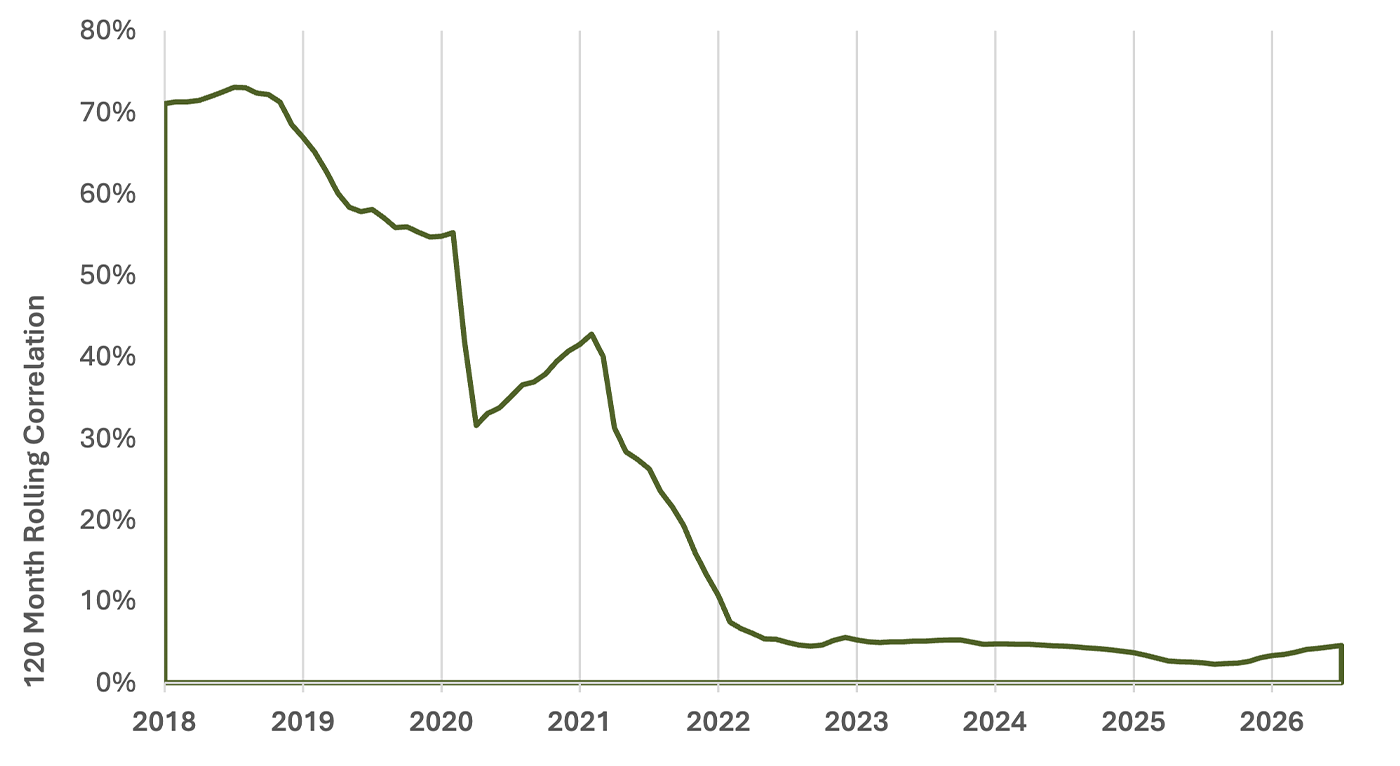
But when COVID hit in 2020, these relationships were scrambled. Since then, the economy, the stock market, and consumer confidence have displayed virtually no consistent relationship with one another, as seen in the following graph.
REAL PERSONAL CONSUMPTION EXPENDITURES ANNUAL GROWTH VERSUS UNIVERSITY OF MICHIGAN CONSUMER SENTIMENT INDEX
Sources: FRED Database, University of Michigan, Quartz calculations
The graph reveals that the correlation between consumer spending and sentiment was quite strong until early 2020 and then declined precipitously to the current relationship of near zero.
Research by Brave, Henken, and Jolley of the Federal Reserve Bank of Chicago in Chicago Fed Letter No. 521 confirms that the 120-month correlation between consumer spending and the Michigan Consumer Sentiment Index had fallen to near zero by March of this year, consistent with the results above. In addition, they find that the correlation between spending and the Conference Board Consumer Confidence Index also weakened considerably, to just 0.25 in March.
In other words, the previously strongest link—the relationship between confidence and spending—has all but disappeared. There was some hope that these relationships would reemerge as the COVID crisis faded, but so far, they have not.
 Related Article: Is there a ‘right’ federal funds rate?
A possible explanation—and why surveys must be viewed with caution
An interesting side note is that both the University of Michigan and the Conference Board have, in recent years, moved away from phone-based surveys toward web-based surveys. This has produced larger samples but also appears to have coincided with greater economic pessimism among respondents. The shift seems to have had a greater impact on the Michigan Consumer Sentiment Index than on the Conference Board Index.
So, has the combination of a chaotic economic response to COVID and the shift to web-based surveys undermined the usefulness of consumer confidence measures? I think the answer is yes.
Consumers may have a reasonable sense of confidence about their personal finances and the economy as a whole, but current surveys appear to do a poor job of capturing these underlying sentiments.
And capturing consumer confidence is more complicated than it might seem. Surveys have long found a significant divergence between how individuals feel about their personal financial situation and how they feel about the economy as a whole.
An Economist/YouGov poll earlier this year found that more than half of Americans believe the economy is getting worse, while fewer than a quarter expect to be worse off financially a year from now. So which sentiment matters when thinking about the stock market?
For now, I believe investors are better off looking past consumer sentiment and confidence surveys when analyzing investments. Someday, these measures may become useful again, but that does not appear likely in the near future.
RIP, consumer confidence surveys.
The opinions expressed in this article are those of the author and the sources cited and do not necessarily represent the views of Proactive Advisor Magazine. This material is presented for educational purposes only.
 C. Thomas Howard, Ph.D., is the director of research and portfolio manager at Quartz Partners Investment Management. Dr. Howard is a professor emeritus in the Reiman School of Finance, Daniels College of Business at the University of Denver. Dr. Howard is the author of the book “Behavioral Portfolio Management” and co-author of “Return of the Active Manager.” Dr. Howard applies behavioral finance principles to investment management and provides educational resources for the financial community.
RECENT POSTS

Let your values shape how you serve clients

Helping clients overcome anxiety about spending money in retirement

From chaos to clarity: Strategic growth matters more than ever in the age of AI

Bull market strength masks growing economic risks