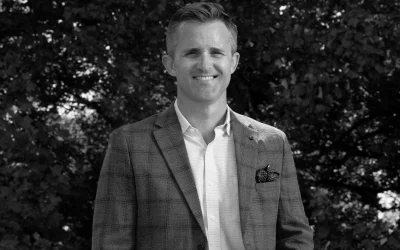
While Americans are, by and large, a well-educated population, most have little to no training in investment portfolio management. Unfortunately, many financial advisors have little portfolio-management training themselves.
That was certainly true of me.
In December 1998, I graduated from North Carolina State University with a Bachelor of Science in business management and a concentration in finance. Near the end of my college career, I met with one of my professors, a practicing CFP professional, to discuss breaking into the advisory industry. After exploring the topic with me a bit, he told me which firm he believed had “the best training in the industry.”
Thankfully, they hired me.

Sure, some training was required to get my licenses, and even more education was required before I was able to sit for the CFP Board exam. But I quickly learned that too much of that training and education centered around theories that I would soon see fall apart in the real world.
When the dot-com crisis (finally!) passed, I thought we were in the clear. After all, the folks at the firm I joined assured me it was a once-in-a-career event.
Then the global financial crisis hit.
And they told me the same thing again.
After going through two once-in-a-career crises, I began a bit of a quest. I knew there had to be a better way to manage client assets. I started reading everything I could about investments and investment theory. My clients were counting on me. However, after this second major bear market, I finally realized that many of the academic theories—like modern portfolio theory—are massively flawed.
Yet these theories continue to be taught as gospel. As a result, too many professionals in the financial community continue to offer advice that ignores market history.
While I don’t claim to have all the answers, about a year ago, I decided to write the book that I wish someone had given me back in early 1999. “Evidence-Based Investing” is my attempt to serve the greater financial community. It aims to challenge some of the myths that too many of us were taught.
Like any professional who chooses to read my book, I take my role as a shepherd of client wealth seriously. Like you, I believe we have a duty—a higher calling—to serve our clients with excellence.
 Related Article: From Aristotle to active investment management
Yes, financial planning is important. Most Americans need competent, ethical financial planners to guide them in making smart financial decisions. But I believe even the best financial plan combined with a poor investment strategy can lead to disastrous results. I hope that my book helps newer professionals navigate the learning curve a bit faster and avoid some of the missteps many of us made early on.
There seems to be a shortage of accessible introductory books on the core principles of evidence-based investing. I hope my book can fill that gap—something an aspiring investment manager can pick up early in their self-education journey. I’ve worked hard to make it both easy to read and truly educational.
While I’m sure the medical profession involves more complexity than this, doctors are fundamentally taught, “First, do no harm.” I believe those of us entrusted with managing other people’s money should adopt a similar credo. That’s why our firm manages client portfolios with a rigorous, rules-based, data-driven approach. We aim to grow our clients’ wealth while minimizing downside volatility. We can’t predict the future outcomes of the financial markets, but we have a solemn duty to ensure clients are as prepared as possible for whatever lies ahead. They are counting on us.
Disclosure: Advisory services offered through Hicks & Associates Wealth Management LLC, an investment adviser registered with the SEC.
CFP is a registered trademark of the Certified Financial Planner Board of Standards Inc. (CFP Board).
This article first published in Proactive Advisor Magazine on Aug. 7, 2025, Volume 47, Issue 6.
Photography by Savannah Grace