Two closely watched inflation reports reinforced concerns about the financial pressures facing American households. Both consumer and producer prices increased more than economists expected in September, adding to evidence that inflation remains a persistent challenge for the U.S. economy.
The reports followed the University of Michigan’s preliminary October consumer sentiment reading, which declined from September. Together, the data suggest that rising prices, particularly for energy and everyday necessities, are weighing on consumers’ perceptions of the economy—even as spending remains relatively resilient.
Consumer sentiment weakens as inflation expectations rise
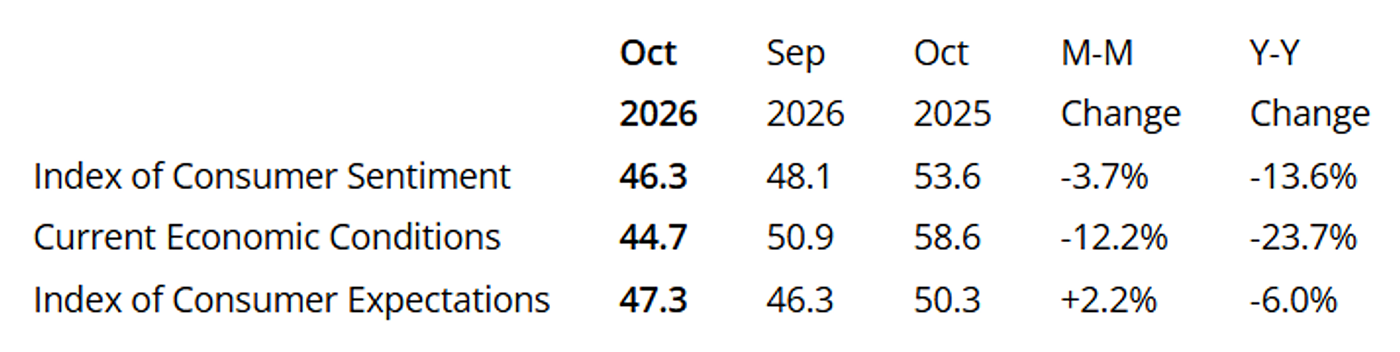
The University of Michigan’s preliminary Consumer Sentiment Index fell to 46.3 in October from 48.1 in September, a decline of 3.7%. The Index was also 13.6% below its October 2025 reading of 53.6.
The decline was particularly pronounced in consumers’ assessments of current economic conditions. That component fell 12.2%, to 44.7 in October from 50.9 in September. By comparison, expectations edged higher, to 47.3 from 46.3.
TABLE 1: UNIVERSITY OF MICHIGAN PRELIMINARY SENTIMENT RESULTS FOR OCTOBER 2026
Source: University of Michigan
Joanne Hsu, director of the Surveys of Consumers, noted that consumers remained frustrated with the cost of living, while assessments of buying conditions for durable goods deteriorated sharply amid high prices and borrowing costs.
The survey also showed that inflation expectations continued to rise. Consumers anticipated prices would rise 4.7% over the next year, up from 4.6% in September. Longer-term inflation expectations increased to 3.5% from 3.4%.
Both measures reached their highest levels since May, highlighting persistent concerns about future purchasing power.
The weakness was especially evident among lower-income households and consumers with smaller stock portfolios, who generally have fewer financial resources to absorb rising costs.
Consumer inflation accelerates in September
Those concerns gained support from the Consumer Price Index (CPI) report released Oct. 14.
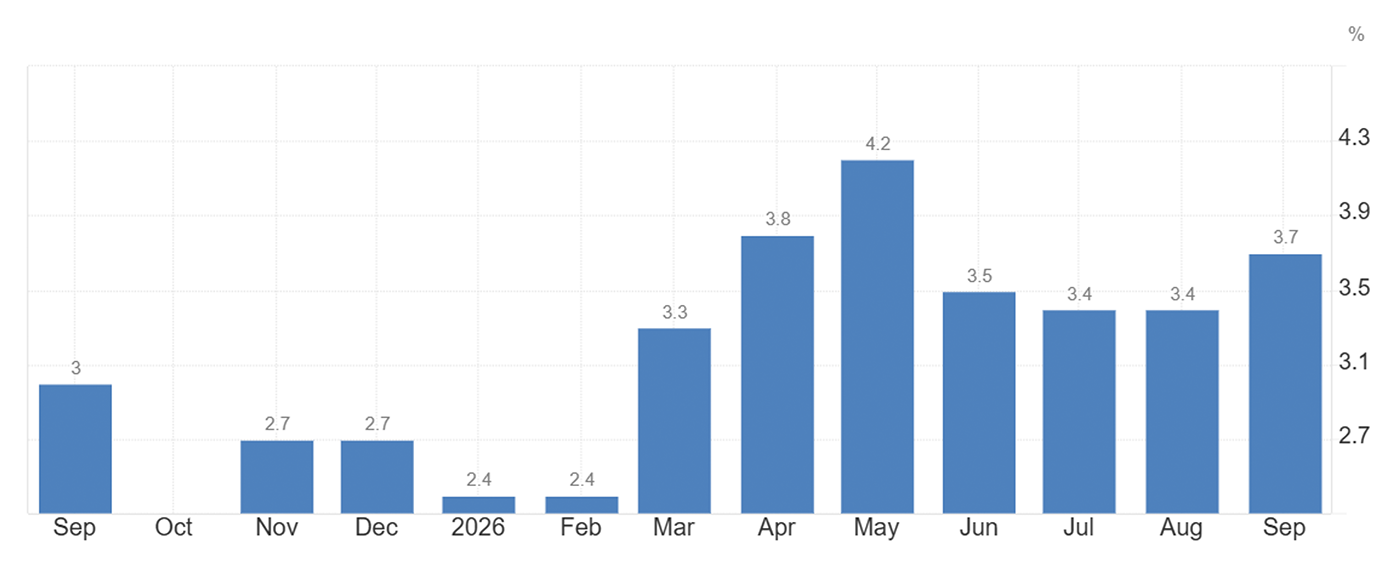
According to the Bureau of Labor Statistics, consumer prices rose 0.6% in September, up from 0.4% in August. Year over year, the all-items inflation rate accelerated to 3.7% from 3.4% in August.
Energy costs were a major contributor. Gasoline prices jumped 9.1% during September, accounting for more than half of the monthly increase in the overall CPI. The broader energy index climbed 5.2%.
However, price pressures were not limited to energy. Shelter costs rose 0.4% during the month, but, notably, the index for food was unchanged. Core CPI, which excludes food and energy, increased 0.3% for the month and 2.6% over the preceding 12 months.
FIGURE 1: U.S. CONSUMER PRICE INDEX (ALL ITEMS), YEAR-OVER-YEAR CHANGE
Source: Trading Economics, Bureau of Labor Statistics
The distinction between headline and core inflation is important. Energy prices can fluctuate significantly from month to month, but sustained increases in other categories may indicate more persistent inflationary pressures.
For households, the combination of higher fuel costs, shelter expenses, and elevated borrowing rates creates additional challenges. Even when inflation moderates, consumers continue to contend with the cumulative price increases of previous years.
 Related Article: RIP consumer confidence surveys?
Producer prices point to additional inflation pressure
The Oct. 15 Producer Price Index (PPI) report provided further evidence of rising costs throughout the economy.
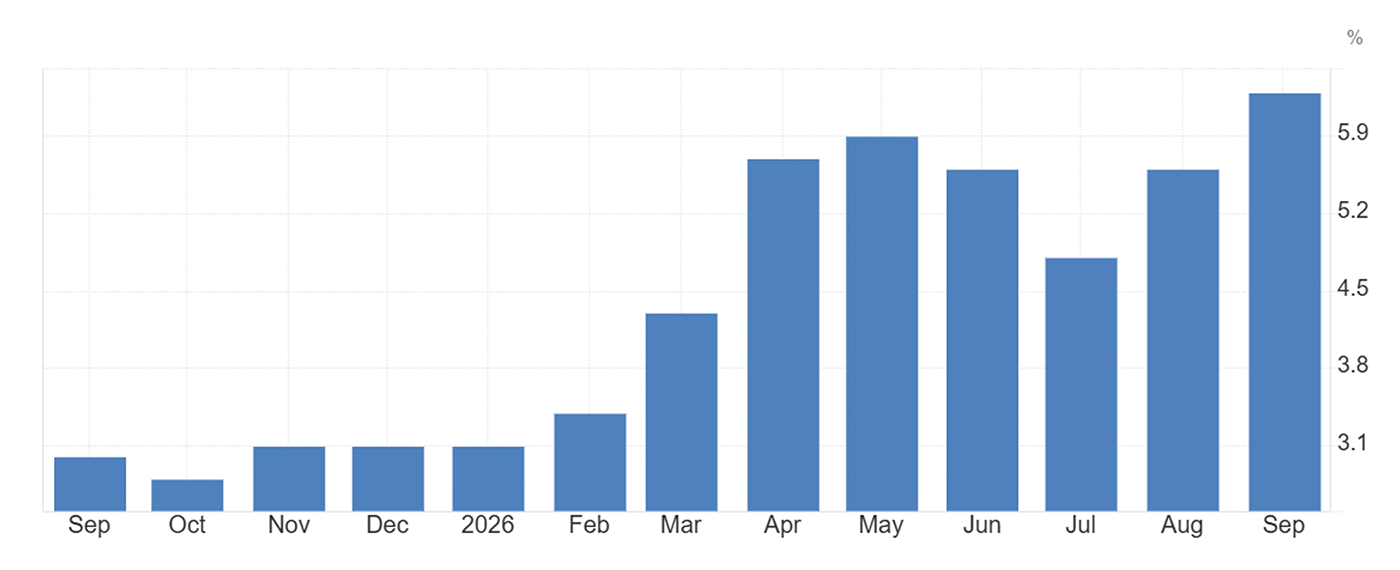
Producer prices increased 1.3% in September, more than double economists’ consensus expectation of 0.6% and the largest monthly increase since 2022. Over the preceding 12 months, producer prices climbed 6.3%, also the largest annual increase since late 2022.
FIGURE 2: U.S. PRODUCER PRICE INDEX, YEAR-OVER-YEAR CHANGE
Source: Trading Economics, Bureau of Labor Statistics
Energy increases played a significant role. Prices for final-demand goods rose 2.6%, including a 20.3% increase in gasoline prices. Producer prices for services advanced 0.8%.
Importantly, producer prices excluding food, energy, and trade services increased 0.5% for the month and 5.0% over the past year.
Although increases in producer prices do not automatically translate into higher retail prices, businesses facing rising production and transportation costs will likely pass some of those expenses along to customers. This adds another dimension to consumers’ concerns about the direction of inflation.
Consumer spending remains a counterpoint
Despite weakening sentiment, Americans have continued to spend.
September retail sales increased 0.8% from August, exceeding economists’ expectations. The results suggest that consumer activity remains an important source of support for economic growth.
FIGURE 3: U.S. RETAIL SALES (SEPT. 2026 REPORT, MONTHLY DATA)
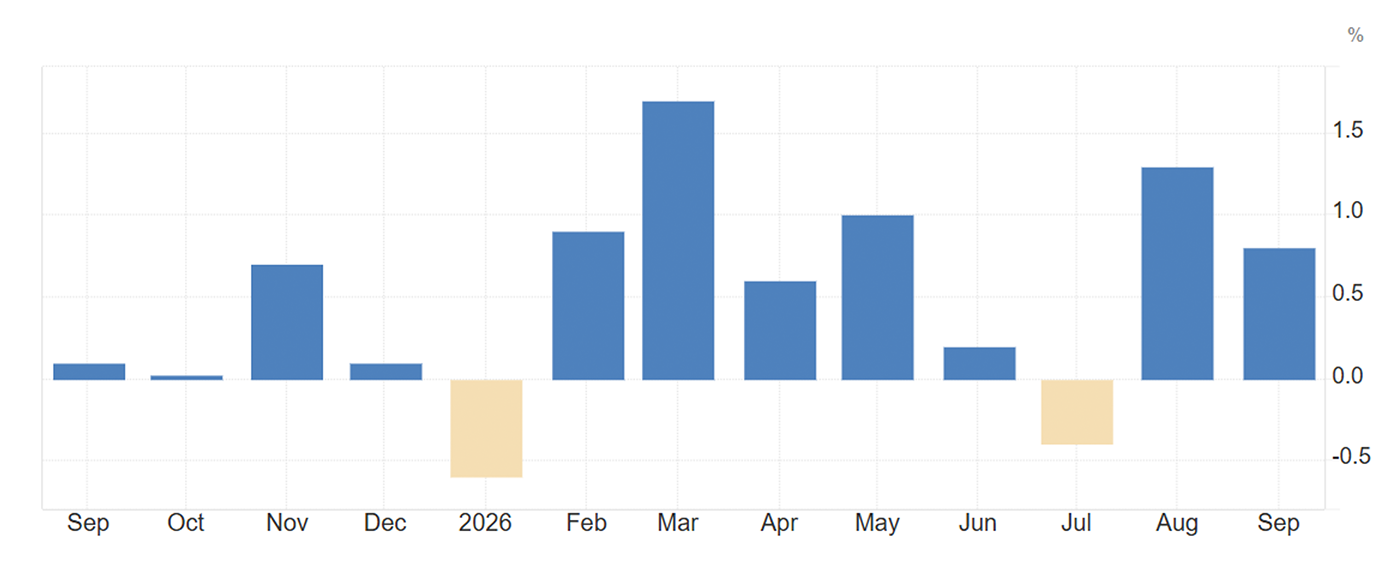
Sources: Trading Economics, U.S. Census Bureau
However, higher prices can inflate nominal retail sales figures, making it important to distinguish between increased spending in dollars and the actual number of goods purchased.
Commentary from PBS helps show how this effect played out in the September retail sales report:
“Shoppers showed their willingness to spend in September even after a better-than-expected splurge in August.
“But a big chunk of their purchases last month went toward paying the bills at the gas pump, according to the Commerce Department’s latest snapshot on retail sales released Thursday. … Excluding business at gas stations, retail sales rose 0.2% in September.”
The uneven effects of inflation also complicate the picture. Higher-income households may be better positioned to maintain spending, while lower-income consumers face greater pressure from rising costs and limited financial flexibility.
The coming months will help determine whether September’s inflation surge reflected temporary energy-related disruptions or more persistent price pressures. For the Federal Reserve, the latest reports present a difficult balancing act. Persistent inflation may require more restrictive monetary policy, even as consumers express growing dissatisfaction with economic conditions.
RECENT POSTS