Existing home sales slide in August, but affordability may improve
Existing home sales slide in August, but affordability may improve

Highlights
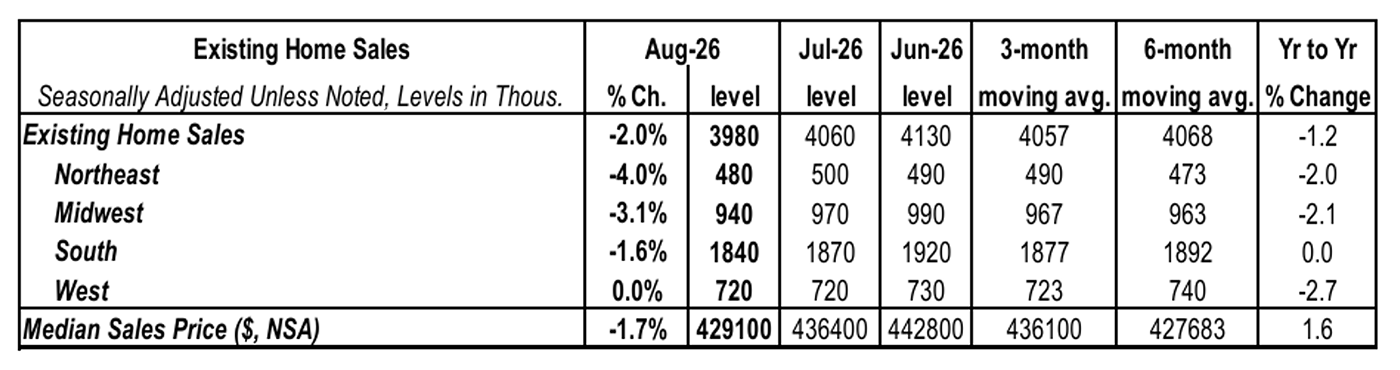
- Existing home sales declined 2.0% in August to a 3.980 million annual rate, matching consensus expectations. Sales are down 1.2% versus a year ago.
- In August, sales fell in the Northeast, Midwest, and South but remained unchanged in the West. The decline was driven by both single-family homes and condos/co-ops.
- The median price of an existing home declined to $429,100 in August (not seasonally adjusted) but is up 1.6% versus a year ago.
Implications
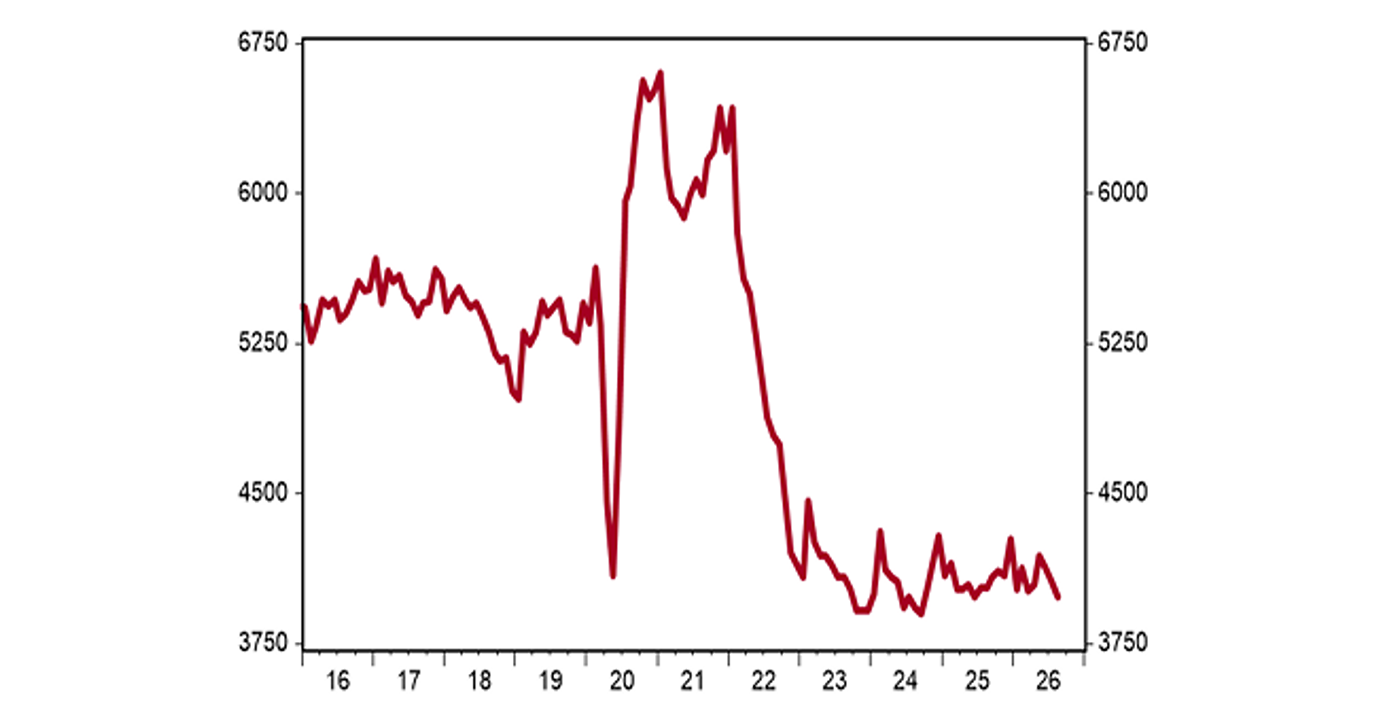
Existing home sales continued to struggle in August, as the recent jump in mortgage rates kept potential buyers on the sidelines. Sales declined 2.0% in August and are now at the slowest pace in more than a year.
FIGURE 1: NAR TOTAL EXISTING HOME SALES IN THE U.S. (SAAR, THOUSANDS)
Sources: National Association of Realtors, Haver Analytics, First Trust
 Related Article: Secretary Bessent does not know he’s battling against the gold market
Looking at the big picture, activity has been stuck in low gear since the end of the COVID pandemic, with the annual sales pace hovering around 4.000 million. That is roughly in line with the aftermath of the Great Financial Crisis, and well below the roughly 5.250 million annual pace before COVID, much less the 6.500 million pace during COVID.
The main issue remains affordability, which has taken a turn for the worse in the aftermath of the conflict with Iran, with higher energy costs putting upward pressure on short-term inflation. The result has been a rapid increase in 30-year mortgage rates, which are up 70 basis points since February and now sit around 6.8%.
Buyers are also unlikely to get any help from the Federal Reserve because recent strength in the U.S. labor market and stubborn inflation have put rate hikes back on the table. However, there is some good news for buyers. Since the COVID pandemic, many existing homeowners have been reluctant to sell because they bought or refinanced at much lower rates before 2022, a phenomenon known as “mortgage lock-in.” This meant that potential buyers had to deal with limited options.
However, the existing home inventory has been improving recently and now sits at the highest level since the pandemic (though still well below pre-COVID levels). Meanwhile, the months’ supply of homes (how long it would take to sell existing inventory at the current very slow sales pace) rose to 4.9 in August, the highest level since 2015 and nearing the benchmark of 5.0 that the National Association of Realtors uses to denote a normal market.
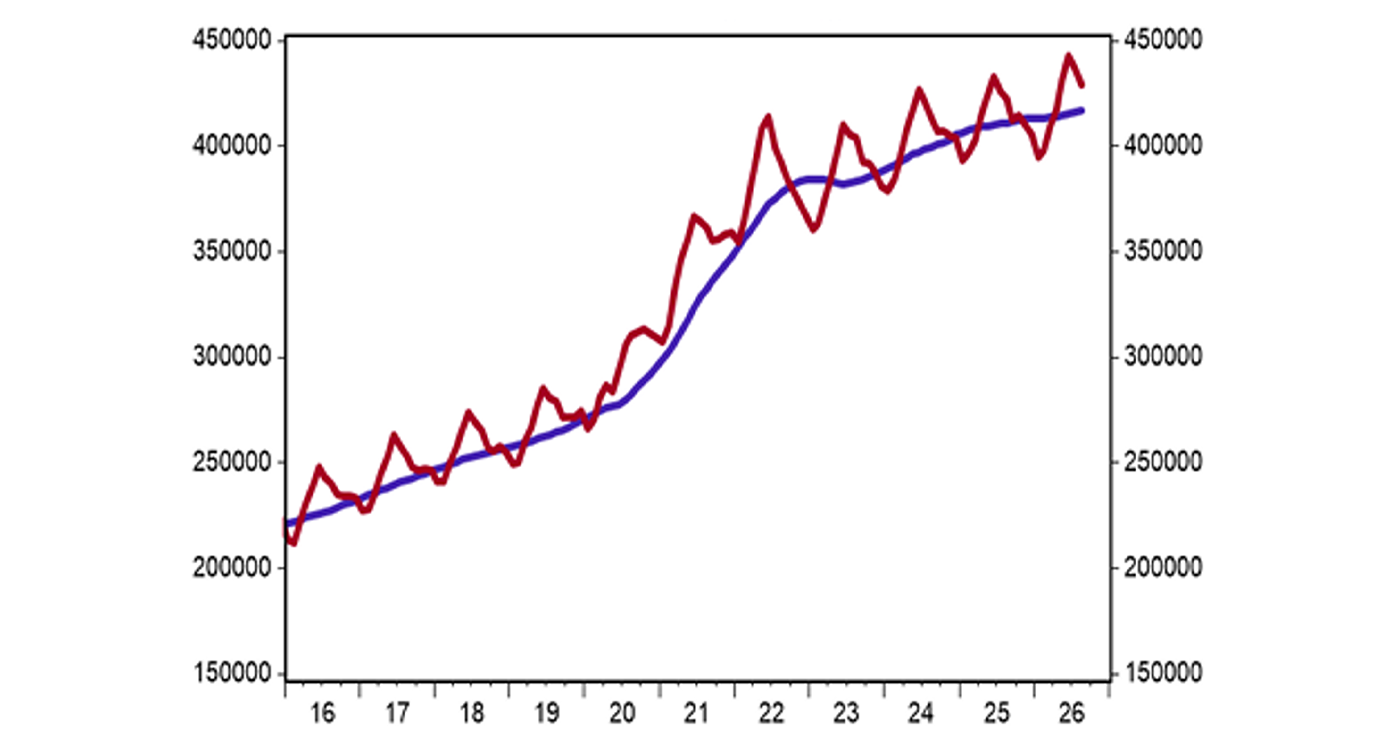
Finally, though the median price of an existing home sits near a record high, it is up only 1.6% from a year ago. Aggregate wage growth (hourly earnings plus hours worked) has been consistently outpacing median home price gains since early 2025, which gradually improves affordability. While many crosscurrents remain, the fundamentals for a modest improvement in home sales are starting to emerge.
FIGURE 2: EXISTING HOMES—MEDIAN SALES PRICE ($)
12-month moving average
Sources: National Association of Realtors, Haver Analytics, First Trust
TABLE 1: EXISTING HOME SALES BY REGION
Source: National Association of Realtors
Editor’s note: Brian Wesbury is chief economist at First Trust Advisors LP. He and his team prepare a weekly market commentary titled “Monday Morning Outlook,” as well as frequent research reports and the recurring feature “Three on Thursday.” Proactive Advisor Magazine thanks First Trust for permission to republish an edited version of this commentary, which was first published on Sept. 10, 2026.
This report was prepared by First Trust Advisors LP and reflects the current opinion of the authors. It is based on sources and data believed to be accurate and reliable. Opinions and forward-looking statements expressed are subject to change without notice. This information does not constitute a solicitation or an offer to buy or sell any security.
The opinions expressed in this article are those of the author and the sources cited and do not necessarily represent the views of Proactive Advisor Magazine. This material is presented for educational purposes only.
First Trust Portfolios LP and its affiliate First Trust Advisors LP (collectively “First Trust”) were established in 1991 with a mission to offer trusted investment products and advisory services. The firms provide a variety of financial solutions, including UITs, ETFs, CEFs, SMAs, and portfolios for variable annuities and mutual funds. www.ftportfolios.com
RECENT POSTS