
The Federal Reserve faces an increasingly difficult decision as it prepares for its final policy meeting of 2026. Inflation remains stubbornly elevated, and recent economic data suggest that price pressures may be spreading more broadly throughout the economy.
Two reports released last week reinforce that concern. Consumer prices rose more than expected in October, while producer prices registered their largest annual increase in nearly four years. Together, the reports strengthen the case for another interest-rate increase at the Fed’s Dec. 8–9 meeting.
The debate, however, is shifting beyond whether another increase is warranted. Policymakers must also decide whether a conservative quarter-percentage-point increase will be sufficient—or whether persistent inflation calls for a more aggressive response.
Consumer inflation remains stubborn
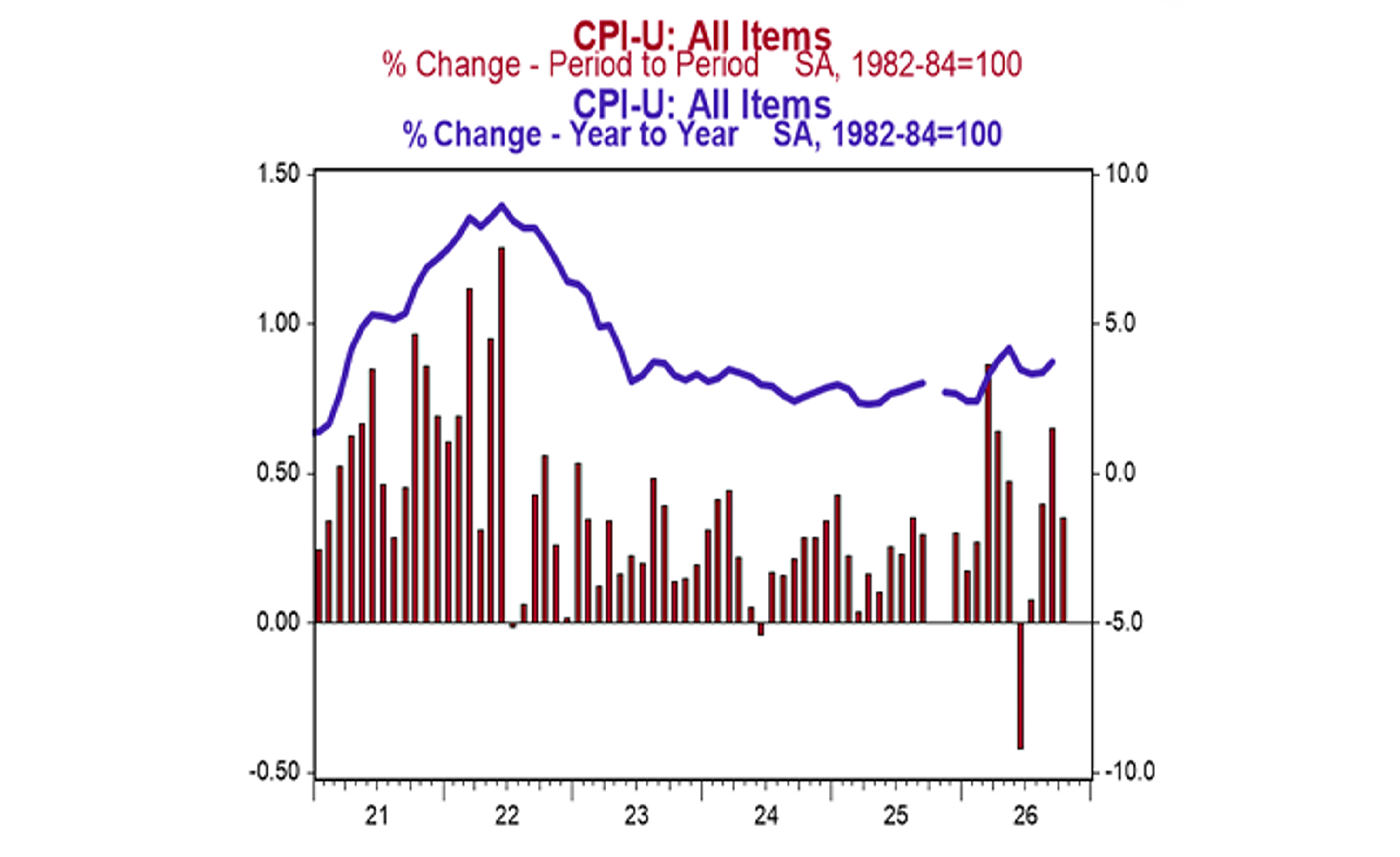
The consumer price index (CPI) increased 0.4% in October, exceeding economists’ consensus forecast of 0.3%, according to the Bureau of Labor Statistics. That followed a 0.6% increase in September.
Energy prices rose 0.7%, while food prices increased 0.5%, their largest monthly advance in six months. Shelter costs climbed 0.3%, accounting for more than 30% of the overall increase.
Of particular concern was the core CPI, which excludes food and energy. It rose 0.3% for the third consecutive month, exceeding expectations of 0.2%.
The persistence of core inflation suggests that price pressures extend beyond volatile energy markets. In its analysis of the report, First Trust noted that the earlier trend toward slower increases in housing rents has stalled. With shelter representing approximately one-third of the CPI, continued increases could make progress toward lower inflation more difficult.
The Fed’s preferred inflation gauge, the personal consumption expenditures (PCE) price index, also remains well above its 2% target. Core PCE inflation was 3.1% over the 12 months ending in September.
The latest CPI figures provide little evidence that underlying inflation is moving decisively toward the Fed’s objective.
FIGURE 1: CONSUMER PRICE INDEX TREND (OCTOBER 2026)
Sources: Bureau of Labor Statistics, Haver Analytics, First Trust
Producer prices add to the concerns
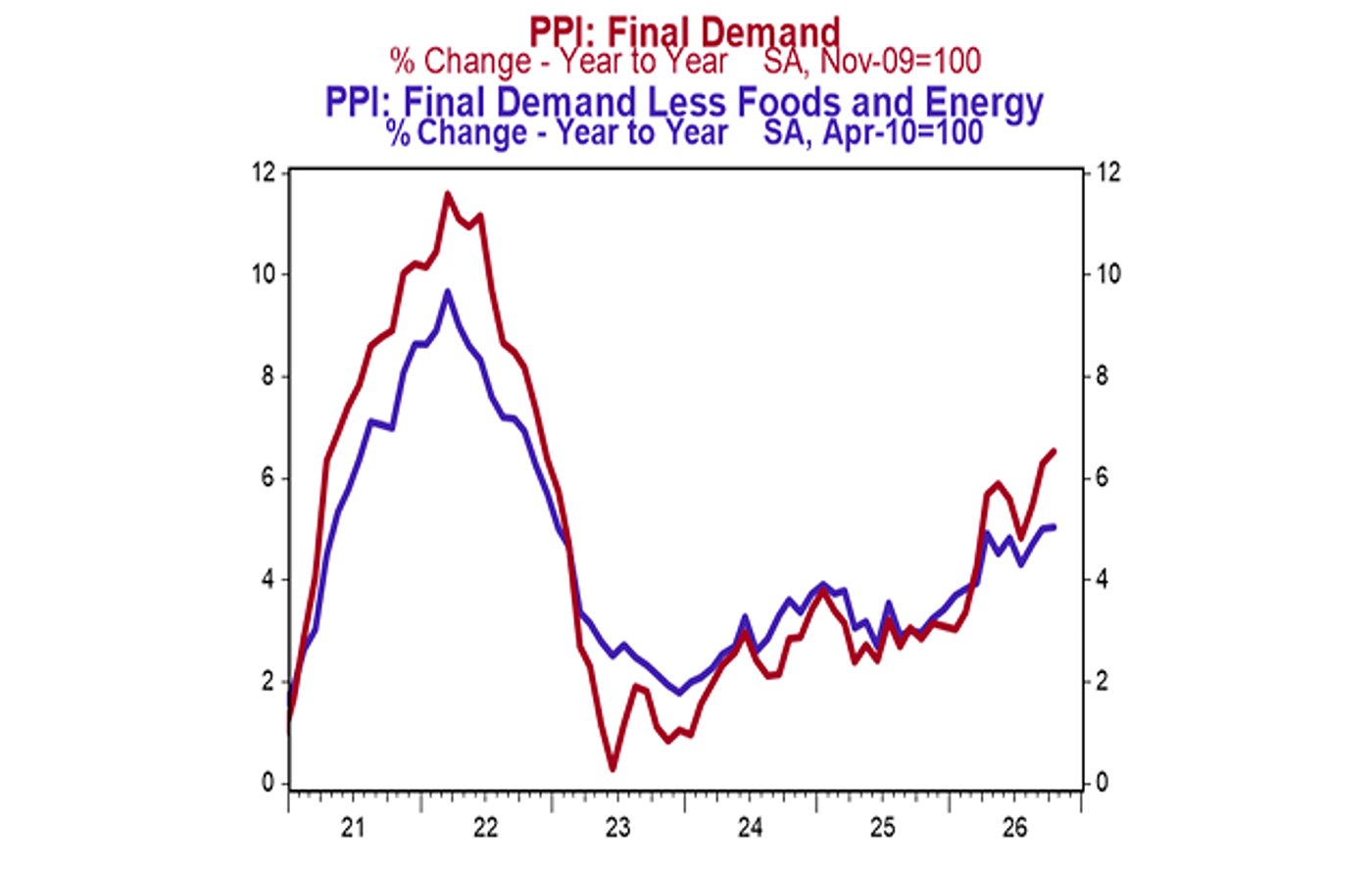
The October producer price index (PPI) did little to reassure the Fed about the path of inflation.
Producer prices increased 0.3% in October, following a sharp 1.4% increase in September. Over the past year, they have risen 6.5%, their largest annual increase since November 2022.
The underlying figures reveal additional pressures. Food prices at the producer level rose 1.3%, while transportation and warehousing services continued to experience significant cost increases.
These developments matter because rising costs for manufacturers, distributors, and other businesses can eventually reach consumers. Companies may initially absorb higher expenses through narrower profit margins. But if those increases persist, businesses face growing pressure to raise prices for their products and services.
Although not every producer-price increase translates directly into consumer inflation, the report suggests that businesses continue to confront an environment of elevated input costs.
FIGURE 2: PRODUCER PRICE INDEX TREND (OCTOBER 2026)
Sources: Bureau of Labor Statistics, Haver Analytics, First Trust
 Related Article: Implications of the 7-year cycle in margin debt
Fed officials signal that more tightening is needed
Several Federal Reserve officials have recently expressed heightened concern about taking a conservative approach in dealing with inflation.
In a Nov. 10 speech, Fed Governor Christopher Waller indicated that he was leaning toward a quarter-percentage-point rate increase in December. However, he warned that another elevated core inflation reading could warrant a larger move.
Waller specifically identified a monthly core CPI increase of approximately 0.3% or higher as a reason to consider raising rates by half a percentage point. October’s reading met that threshold.
Dallas Fed President Lorie Logan also called for additional tightening, arguing that the central bank needs at least two more quarter-point increases to bring inflation under control.
“The longer above-target inflation persists, the greater the risk that it becomes baked into behavior,” Logan said in remarks delivered the same day.
Logan suggested that policymakers might need to move more rapidly this winter, although she also acknowledged the advantages of allowing households, businesses, and financial markets time to adjust to higher borrowing costs.
New York Fed President John Williams similarly emphasized that the economy remains strong, but persistent inflation means the central bank still has work to do to restore price stability.
Not all policymakers favor moving more aggressively. Fed Vice Chair for Supervision Michelle Bowman has acknowledged that inflation pressures have broadened but also cautioned about the potential economic consequences of tighter financial conditions.
The differences reflect less disagreement about the seriousness of inflation than uncertainty over the appropriate pace of the response.
How much tightening is enough?
The possibility of a larger rate increase in December will likely generate considerable discussion ahead of the Fed’s announcement.
A Nov. 11 Barron’s analysis examined the case for a half-percentage-point increase, noting that officials increasingly agree additional tightening is necessary but differ over whether it should occur all at once or in smaller steps:
“A half-point hike would be a large move for a central bank that has been proceeding cautiously. The Fed’s benchmark interest rate currently stands at a range of 3.75%-4%, following a quarter-point increase in September and a decision to hold rates steady in October.
“The pressure to raise rates comes from an economy that has continued to grow even as inflation has remained above the Fed’s 2% target for nearly six years.
“Gross domestic product grew at a 3.4% annual rate in the third quarter, and unemployment fell to 4.1% in October. Consumer spending remains solid and businesses are investing money in artificial intelligence infrastructure.”
The question is complicated by the nature of today’s inflation pressures.
Higher energy costs, geopolitical disruptions, tariffs, and investment associated with artificial intelligence are contributing to price increases. Raising interest rates can moderate borrowing, spending, and investment demand, but it cannot directly resolve many of these supply-side pressures.
That creates a difficult balancing act for policymakers. Moving too slowly risks allowing inflation to become more entrenched, potentially requiring more restrictive monetary policy later. Moving too aggressively could weaken economic growth without directly addressing some of inflation’s underlying causes.
First Trust economists also acknowledge the challenges facing the Fed as it weighs its next move:
For now, the October inflation reports have strengthened the argument for further action.
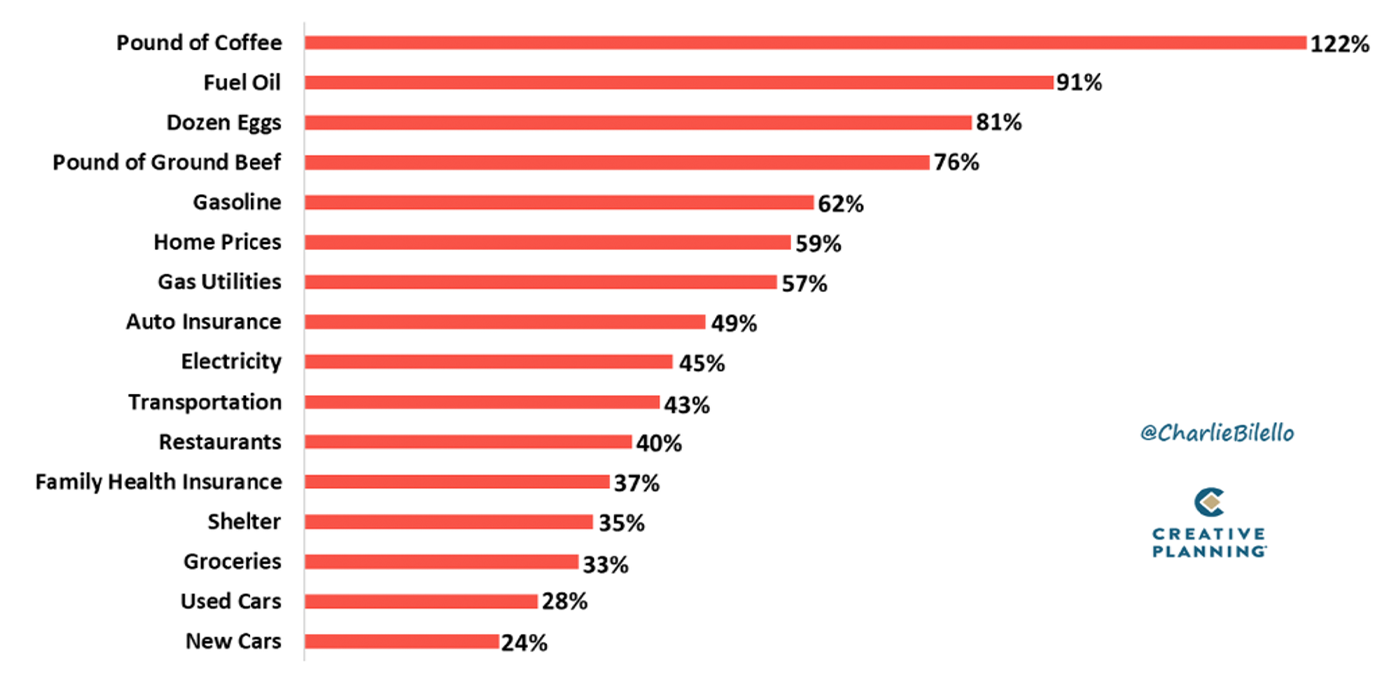
For consumers, the prospect of higher debt-servicing costs and elevated mortgage rates is not appealing. At the same time, as Charlie Bilello of Creative Planning points out, inflation has already imposed a significant burden on Americans over the past seven years.
FIGURE 3: CUMULATIVE PRICE INCREASES IN THE U.S. OVER THE LAST 7 YEARS
Sources: C. Bilello, YCharts. Data as of 10/31/2026.
RECENT POSTS

The dynamics of gold: Performance across different market scenarios

Aftermath of the ‘blue tsunami’

You’ve helped clients plan for retirement—but what about sabbaticals and ‘mini retirements’?

Addressing 13 important wealth-management issues for retirement clients