How advisors can help close the financial literacy gap
How advisors can help close the financial literacy gap

As Americans face rising financial anxiety and complex money decisions, financial advisors have an opportunity to help people of all ages build greater financial confidence and capabilities.
Financial advisors can play an important role in helping more adults and young people learn the basics of financial literacy—even if they are not clients.
Financial illiteracy can lead to poor decisions, and those decisions can have effects beyond a person’s bank account. Numerous studies have shown that financial stress can lead to elevated cardiovascular risk, disrupted sleep, reduced immune function, and higher rates of depression and anxiety, according to the Health Data Consortium.
The problem is real for too many Americans.
Nearly half give themselves a grade of C or worse when it comes to their own knowledge of personal finance, according to the National Foundation for Credit Counseling’s 2024 Financial Capability Survey. No matter how they grade themselves on their financial literacy, eight out of 10 believe they could still benefit from some advice and answers to everyday financial questions from a professional.
“There is a significant need for financial education and counseling. Many Americans are struggling financially and lack the confidence to plan for the future,” said Mike Croxson, the nonprofit’s CEO, when the survey results were announced. “Financial education empowers people to make informed financial decisions and overcome challenges standing in the way of their long-term goals.”
FIGURE 1: PERSONAL FINANCE CHALLENGES FOR MANY AMERICANS
● Roughly 6 in 10 (61%) feel most improvements in the U.S. economy don’t benefit people like them.
● At least one-quarter are concerned their money won’t last (39%) or feel they will never have the things they want in life because of their financial situation (24%).
● Of those who don’t think their money will last, a quarter say it’s because they don’t save enough.
● Only approximately 2 in 5 (42%) have a budget and keep track of spending.
● One in three (34%) are comfortable maxing out their credit.
● One in five (21%) believe that if they are going to have debt, the amount they owe is irrelevant.
Source: National Foundation for Credit Counseling
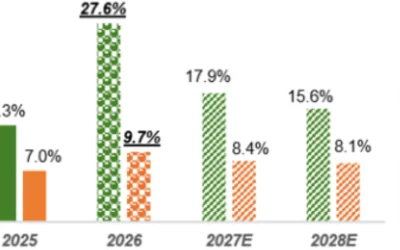
Results from the FINRA Foundation’s comprehensive National Financial Capability Study largely confirm these findings and also show that anxiety around personal finances has increased.
FIGURE 2: FINANCIAL ANXIETY HAS RISEN SINCE 2018

Source: FINRA Foundation’s National Financial Capability Study, 2025
The need for financial education ideally starts in childhood, and the earlier the better. However, the U.S., like many other countries, has a long way to go in that effort.
According to the Organization for Economic Cooperation and Development’s 2022 PISA financial literacy test, nearly one out of five teenagers in 14 countries, including the U.S., on average did not achieve baseline proficiency levels in financial literacy.
“These results, combined with the increased incidence, complexity and potential impacts of financial frauds and scams, highlight the need to better equip our young people with the knowledge and skills necessary to make safe and informed financial decisions,” OECD Secretary-General Mathias Cormann said when the report was released.
We asked three financial professionals to share their perspectives and outline their efforts to improve basic financial capabilities among diverse groups of Americans. Their work includes helping financial advisors bring curricula and other tools into local schools; volunteering to teach financial literacy to both adults and children; and using a free online course to help advisors, employers, colleges, and community organizations expand access to financial education.
 Related Article: Offsite ‘boot camps’ promote financial literacy to clients’ children
Bringing financial education into the community
 David Pickler, Esq., CFP • President and CEO of Pickler Wealth Advisors based in Collierville, TN • Founder of the American Pillars Education Foundation (APEF)
“We are experiencing a national epidemic of financial illiteracy, and schools across America are utterly failing the next generation by not giving them the basics of quality financial education. Financial literacy gives people the tools necessary to not only survive but thrive in our economy by learning what it takes to make good financial choices.
“I had the honor of serving for 16 years as a local school board member, including 12 years as chair. I was then elected president of the Tennessee School Boards Association and, after that, president of the National School Boards Association.
“When I left public office in 2014, I established APEF for the express purpose of trying to procure resources for financial literacy and workforce development.
“In APEF’s first Nation’s Report Card on Financial Literacy in 2019, nearly 70% of schools had no financial education. Over the past seven years, that has improved, and now more than 70% do have some sort of financial education, even if it’s at the most basic level. We are working to improve quality and accountability—measuring whether students are getting a quality experience.
“In April 2025, APEF created the first national K-12 standards for financial education. Then we launched a free curriculum with 89 lessons, a stand-alone high school curriculum, and a 15-video series featuring our ‘Captain Cashflow’ avatar for elementary schools. The big idea in these elementary videos is, ‘What is money, and how does it work?’
“Middle school students learn about topics such as starting their own business and the power of long-term goals. High school students learn about earning, planning, investing, and risk, concluding their course with a capstone project.
“Today, school districts or individuals, including financial advisors, in 38 states are delivering the foundation’s curriculum. APEF is looking to be a national aggregator of best practices. We’re pursuing funding to establish a national grant organization so we can shine a light on notable examples through monetary grants, recognizing districts or individuals that exemplify best-in-class financial literacy teaching and programs. We would like these examples to be replicated across the country and eventually raise the standard of financial education.
“APEF is partnering with financial organizations, insurance companies, and financial advisory firms to create a national certificate for ‘financial education champions.’ This initiative should be completed by the end of summer. Right now, we can provide free content to any local financial advisor who would like to learn to deliver content to K-12 schools. We want to create an opportunity for advisors across America to make a difference in their communities.
“School districts are so overwhelmed now, having to meet all their state and federal requirements, so advisors should position themselves as a solution to their district’s budget restraints. Advisors should let schools know that they can deliver quality financial literacy content to students without tying up teacher time or requiring teachers to be trained on new coursework. This can go a long way toward helping prepare children—not just for college, but for life.”
 Susan Quigley, CFP • Founder of Squigley Financial LLC in Garden City, NY
“I teach financial literacy to both adults and young people.
“For adults, I offer six different seminars. The first is about basic financial planning—how to budget, manage debt, manage cash flow, save, and invest for retirement.
“I have attendees download a year’s worth of transactions from their checking accounts and credit cards to see exactly how they’re spending their money. We talk about questions such as, ‘Do you really need every streaming TV subscription?’ and ‘Are you eating out too much?’
“We also have seminars on home buying, how couples should handle their finances together after they get married, how couples should manage money differently when they start having children, how to manage life insurance and estate planning, and how self-employed individuals can manage taxes and retirement savings.
“I’m a vendor at a local bridal show where I can showcase our firm’s efforts. I offer our seminars to the people who attend the show. I used to conduct in-person seminars before COVID, but now I conduct them on Zoom. Now I have people from all over the country attending these seminars after hearing about it from local attendees.
“I also reach out to local politicians who will host my seminars. They will then post a replay of the seminar on their Facebook page, which will attract an even wider audience.
“For kids, I have a financial literacy program called Welcome 2 Real Life that is used in a variety of settings for different age groups. For example, both the Girl Scouts and the Boy Scouts in my Long Island area use the program to help the Scouts earn badges. And because I’m part of the Girl Scout association here, I have led activities for different troops.
“For the younger Scouts, they learn how to be a smart shopper and how to save. In one activity, I hold up a pair of Marc Jacobs sneakers for $250 and a similar pair from Target for $39, and I ask the kids which sneaker is better. The reaction is mixed. Then I say, if I gave you $250 and you bought the $39 sneakers, you would have $210 leftover—or you could get those shoes in all five colors.
“The older kids learn about longer-term planning, such as how much to save for larger-ticket purchases, like an iPhone, a car, or college.
“I also explain the stock market in simple terms, like how they can earn a dividend or a capital gain if they sell a stock at a higher price. I have them pick three stocks they can track to see how they’re doing, like Disney or Netflix.
“Outside of Scouts troops, a local summer camp hired me to conduct five financial literacy sessions for kids in August.
“My advice for other advisors teaching financial literacy to young people: Don’t lecture them. They’ll just get bored. Be current and be interactive. Do your homework, including just asking the kids about what they like or maybe about the hottest new toy. Be a little self-deprecating when you need to be.”
 Timi Joy Jorgensen • Assistant professor and director of Financial Education and Wellbeing at The American College of Financial Services in King of Prussia, PA
“‘Know Yourself, Grow Your Wealth’ is a free, online, asynchronous course that consists of four digital badges. Each badge can be completed in 90 minutes or less, and the full course typically takes four to six hours to complete.
“We designed the course to fill a gap we saw in the marketplace. People can easily find isolated financial tips online, but we wanted to offer a cohesive, learner‑centered experience—one that helps people build knowledge, confidence, and momentum, rather than just consume information.
“This is applied financial education. Rather than prescribing rigid benchmarks or ‘one‑right‑way’ solutions, the course is grounded in the understanding that adult learners are doing the best they can with the resources and information available to them. Our goal is to meet people where they are, respect their lived experience, and provide practical tools they can apply immediately—without judgment or shame.
“The course is structured around four content areas that we call badges: Financial Wellness, Brilliant Borrower, Savvy Investor, and Wealth and Legacy. Learners earn a digital badge after completing each module. Financial Wellness is the most completed badge, followed by Savvy Investor. After finishing all four modules, participants receive a certificate of completion.
“We developed original scripts and hired actors to reflect real‑life situations, recording all of the videos in our studio. The intent was for learners to see themselves in the stories—more like listening to a natural conversation between peers than being lectured.
“Each module combines short videos with optional reflection tools, including downloadable worksheets, prompts, and practical templates learners can apply directly to their own finances. Additional resources and discussion boards are available for those who want to go deeper or connect with others taking the course.
“At its core, the program focuses on how people think, feel, and behave around money—not just the numbers. The curriculum is designed with real‑world constraints in mind, recognizing learners’ limited time, energy, and attention, and helping them make intentional, practical financial decisions that fit their lives.
“The course was first introduced in 2022 through partnerships with historically Black colleges and universities, where it was delivered directly to students nationwide. Engagement was especially strong around the discussion boards, reinforcing the value of peer connection alongside self‑paced learning.
“In 2023, the program expanded into its current format, making it available for individuals to take independently or through employers, colleges, and community organizations. The course is also offered in Spanish, broadening access nationwide.
“Learners frequently share that the course helps them make practical changes right away, without feeling judged or talked down to. Many describe the experience as empowering—and, as one learner said simply, ‘I feel seen.’
“The program is used by corporate and nonprofit partners to support financial well-being initiatives in their communities. For example, OneAmerica Financial works with local organizations in the Indianapolis region to integrate the course into existing student and community programs.
“Ivy Tech Community College incorporates the course into financial aid onboarding and classroom instruction, while nonprofit financial literacy groups in upstate New York use it as part of live community education efforts. Across these settings, the most effective approach has been embedding the course into work already underway, rather than treating it as a stand-alone resource.
“Financial advisors can take a similar approach—either by directing individuals to the free course or by integrating it into broader education or community engagement efforts with support from our team.”
Financial literacy efforts do not have to begin with a large program or formal classroom setting. Advisors can start by partnering with schools, community organizations, employers, youth groups, or nonprofits—or by directing people to free, established resources that already exist. What matters most is making financial education more approachable, practical, and available to people before they face major financial decisions alone.
For advisors, the opportunity is both professional and highly personal. By helping people better understand budgeting, debt, saving, investing, and long-term planning, they can strengthen not only individual households but the broader communities they serve.
“This is a win-win opportunity—it provides needed support, and it also gives advisors an opportunity to make a difference in their community,” Pickler says.
The opinions expressed in this article are those of the author and the sources cited and do not necessarily represent the views of Proactive Advisor Magazine. This material is presented for educational purposes only.
CFP and Certified Financial Planner are registered trademarks of the Certified Financial Planner Board of Standards Inc. (CFP Board). Know Yourself, Grow Your Wealth is a registered trademark of The American College of Financial Services.
 Katie Kuehner-Hebert is an award-winning journalist with more than three decades of experience writing about financial services. She has expertise in banking, insurance, financial planning, economic development, and employee benefits. Her work has appeared in many leading publications.
RECENT POSTS

Passing the baton to the next generation of financial advisors

The age of immediacy—and why investing still requires patience
Committed to clients’ financial clarity and confidence

Existing home sales slide in August, but affordability may improve