Helping clients move forward with a plan and a purpose
Helping clients move forward with a plan and a purpose

Curtis Fay • Williamsport, PA
Creative Financial Strategies • Cetera Wealth Services LLC
Read full biography below
I grew up in rural northern Pennsylvania, where my family had a dairy farm. We had cattle, sold cash crops, and produced milk and maple syrup. My father later became a part-time farmer and a rural mail carrier, and my mother worked at the local bank.
That upbringing really influenced me. We did not have much money, but we had a supportive family and a strong work ethic. I remember waiting for my father to milk cows before we could open presents on Christmas mornings. The cows came first. That kind of life teaches patience, responsibility, and the value of doing what needs to be done.
I attended Shippensburg University, where I majored in business administration and marketing. After college, I worked for a Pennsylvania state senator as a constituent services representative, helping people with a wide range of issues. I attended public events; spoke with business owners, farmers, attorneys, and community leaders; and learned how to listen to people who were often frustrated.
That experience helped prepare me for financial planning more than I realized. It forced me outside my comfort zone and taught me to listen first, understand the issue, and then figure out where to go for a solution. It also gave me the opportunity to meet people from many walks of life.
I entered financial services in 2012. A friend recommended an opportunity at the predecessor firm of Creative Financial Strategies. My mentor there also came from a farming background and had some political experience, so he saw a fit. The first few years after changing careers felt like drinking from a fire hose. I read everything I could, listened to experienced advisors, sat in on meetings, met with investment and insurance companies, and tried to learn as much as possible. My political career provided many beneficial networking contacts, and I have built a diverse client base over time.
I also became a Certified Financial Planner professional and Certified Plan Fiduciary Advisor and attained the Certified in Social Security Claiming Strategies designation. Each certification broadened my thinking about planning and reinforced the idea that wealth management is about more than investments. The CPFA work deepened my understanding of employer retirement plans. The Social Security training has been valuable because claiming decisions can significantly affect retirement income.
My mission is to help people identify what matters most and move forward with a plan and a purpose. I believe every person deserves sincere help with their own situation, goals, and concerns. No two clients are exactly alike, so the work has to begin with listening.
I also believe in making complicated issues understandable. That might mean organizing a complex portfolio; explaining Social Security claiming options; or helping a client see how retirement income, taxes, insurance, and estate planning fit together. The goal is to help clients feel they have a better handle on where they stand and what next steps make sense.
I try to meet clients where they are. If someone comes in with investments or planning decisions they made in the past, I do not start by telling them everything is wrong. My job is to say, “Here is what looks good, here is what could be improved, and here are the next steps we can consider.” I want clients to feel respected, informed, and confident that I am working consultatively and impartially on their behalf.
The process begins with getting to know the client. I want to understand their background, family, work, relationship with money, and what brought them in. People’s personal stories often explain a lot about how they make financial decisions. Someone who grew up with very little may think about risk differently than someone who has never had that experience.
From there, we talk about expectations. What are they looking for in an advisor? What do they want help with? What do they want to avoid? Then I explain what I can reasonably provide and how we can work together.
Broadly, I follow a consistent planning process: discovery, goal setting, analysis, recommendations, implementation, and review. But I do not want the process to feel like a rigid checklist. People do not live their lives in a straight line. I am comfortable developing long-term projections, but I also tell clients that life in 10 years may look different from today. Their plan has to guide them now but be flexible enough to adapt.
A large part of my work is with people who are near or in retirement. For those clients, retirement income is often the central issue. We look at Social Security, pensions, investment assets, tax considerations, Medicare-related issues, insurance needs, estate planning, and spending goals. Social Security claiming strategies can be complex. Spousal benefits, widow or widower benefits, divorce-related considerations, or other factors may affect the best approach.
Risk management is also part of the planning conversation. That can include investment risk, but it can also include life insurance, annuities, long-term-care concerns, liability exposure, or the financial impact of a spouse’s death. A portfolio strategy does not exist in a vacuum. If a client has a serious insurance gap, an estate-planning issue, or a tax concern, that can affect the overall financial picture.
I also work with attorneys and CPAs when appropriate. I think an advisor can provide value by helping clients recognize planning issues and coordinate with the right professionals. My role is to help make sure the client’s concerns are communicated clearly and that the planning ideas we discussed are not lost in translation with another professional.
 I would describe my investment philosophy as unbiased and client-specific. I do not advocate for either active or purely passive strategies. I think both approaches can have a place, depending on the client, the account, the time horizon, and what the money is supposed to accomplish.
For example, if a younger client is investing for retirement decades from now and wants low-cost broad-market exposure, passive strategies may make sense. If we are talking about the core of a long-term equity allocation, it can be difficult to argue against the efficiency advantages of broad index exposure in certain situations.
But the farther we move away from that core, the more I believe active management can show its value. That may apply in areas such as bonds, alternatives, small-cap stocks, emerging markets, or strategies designed to manage risk. It is also especially important for clients approaching or entering retirement. If a client is 65 and needs income from the portfolio, a significant drawdown can feel very different than it does for someone in their 30s or 40s.
I ask clients how they handled difficult markets. What did they do in 2008, or during COVID, or in 2022? It is easy to say you are comfortable with risk when markets are rising. The real test comes when markets trend to the downside. A risk questionnaire can be useful, but I also want to know what someone actually did when markets were under stress.
That is one reason I use third-party managers. I often describe myself as a general contractor. I don’t do the electrical work myself, but I choose who does it and continually evaluate the work. If a manager has a strong discipline in bonds, risk management, tactical allocation, or another area, I can use that expertise for clients and monitor the results.
Risk-managed strategies are not about avoiding every decline or capturing every bit of upside. That is not realistic. The idea is to participate in growth opportunities while trying to mitigate drawdowns. Clients usually do not leave because the market is up 12% and they are up 10%. They become concerned when the market is down sharply and they feel no one is paying attention.
Annuities can also play a role for certain clients, particularly when we are solving for long-term retirement-income stability, death-benefit needs, or certain long-term-care concerns. They are not appropriate for everyone, but they can complement a managed investment portfolio when the client’s goals call for that type of solution.
Ultimately, every investment recommendation should tie back to the plan. What is the money for? When will it be needed? What risks are we trying to manage? How does it fit with the client’s income needs, tax situation, estate goals, and comfort level?
 Related Article: Clients understand volatility—except when it happens
I think clients appreciate that I listen, explain things clearly, and am willing to help with the hard parts. It is one thing to tell someone what they should do. It is another to dig into the details and help them do it.
My earlier career in constituent services taught me that people often come to you because something is confusing, frustrating, or unresolved. They want someone who will listen, help them understand the options, and stay with the issue until there is a path forward.
I enjoy making the complicated simple. If clients can leave a meeting saying, “Now I understand this,” that is meaningful to me. Across the planning process, my goal is to help clients make better decisions with more confidence.
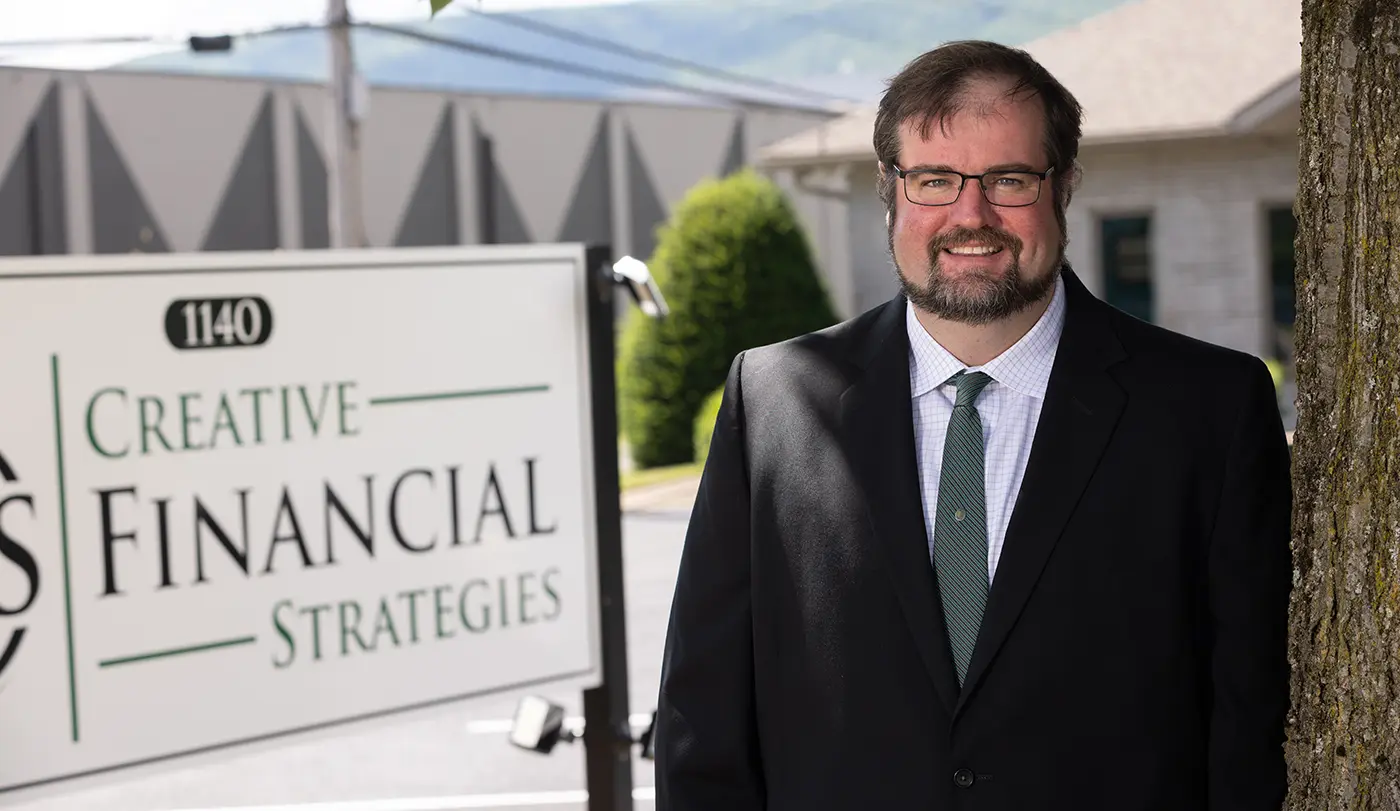
 Curtis Fay, CFP, CPFA, CSSCS, is an investment advisor representative with Cetera Wealth Services LLC. He works with Creative Financial Strategies, an advisory firm in Williamsport, Pennsylvania.
Mr. Fay grew up in rural Pennsylvania, where his family owned a dairy farm, raised cash crops, and sold maple syrup. His father later worked for the U.S. Postal Service, and his mother worked for the local bank. He says his parents provided a supportive, caring upbringing and emphasized the value of hard work and personal responsibility. In high school, Mr. Fay played varsity football, was a member of the honor society, and represented the school in academic quiz competitions.
Mr. Fay graduated from Shippensburg University with a bachelor’s degree in business administration and marketing. After college, he spent eight years as a constituent services representative in Pennsylvania’s 23rd State Senatorial District, supporting district office needs related to legislation, communications, business and consumer outreach, and constituent issues.
The predecessor firm of Creative Financial Strategies recruited Mr. Fay to become a financial advisor in 2012. He says he benefited from strong mentorship and dedicated himself to learning from a wide range of professional resources. Mr. Fay is a Certified Financial Planner practitioner and Certified Plan Fiduciary Advisor. He also holds the Certified in Social Security Claiming Strategies (CSSCS) designation. He serves the planning and implementation needs of business owners, families, and individuals. He also serves as a compliance associate, overseeing and auditing accounts to help maintain adherence to state and federal regulations.
Mr. Fay and his wife live in South Williamsport with their two young children. They are active in their children’s sports and their local church. They also enjoy spending time at the family farm, where Mr. Fay is now a “fourth-generation maple syrup farmer.” He is a member of the South Williamsport Lions Club.
Disclosure: Curtis Fay is an investment advisor representative with Cetera Wealth Services LLC and a financial advisor with Creative Financial Strategies. 1140 Sheridan Street, Williamsport, PA 17701.
Securities offered through registered representatives of Cetera Wealth Services LLC (doing insurance business in CA as CFGAN Insurance Agency LLC), member FINRA/SIPC. Advisory services offered through Cetera Investment Advisers LLC, a registered investment adviser. Cetera is under separate ownership from any other named entity. All investing involves risk, including the possible loss of principal. There is no assurance that any investment strategy will be successful.
CFP and Certified Financial Planner are registered trademarks of the Certified Financial Planner Board of Standards Inc. (CFP Board). NAPA CPFA Certified Plan Fiduciary Advisor is a trademark of American Society of Pension Professionals & Actuaries.
Photography by Eric Stashak
QUICK TIP

Build a financial plan clients can understand—and follow for life
Curtis Fay, CFP, CPFA, CSSCS, is an investment advisor representative with Cetera Wealth Services and works with Creative Financial Strategies, an advisory firm in Williamsport, Pennsylvania.
Mr. Fay says a financial plan does not have to be complicated to be effective. In fact, the more understandable it is, the more likely clients are to stay engaged and make thoughtful decisions over time.
“At Creative Financial Strategies, we help clients organize and coordinate the major areas of their financial lives, including retirement income, investments, insurance and risk management, Social Security, Medicare-related decisions, estate planning, and legacy goals,” says Mr. Fay. “Our role is to help clients see how these pieces fit together, so important decisions are made in the context of the full plan—not in isolation.”
To help clients build a plan they can understand and use, Mr. Fay and his team guide them through several practical steps:
- Start with a clear picture. They help clients organize income, expenses, assets, debts, insurance coverage, retirement accounts, and estate documents before making major planning decisions.
- Define what the money is supposed to do. Retirement income, emergency reserves, college funding, debt reduction, legacy goals, and lifestyle spending may each call for a different strategy.
- Coordinate decisions across the full plan. Investment choices can affect taxes, income planning, insurance needs, estate planning, and family goals. They help clients evaluate those decisions in relation to the broader financial picture.
- Review risk before markets test you. It is easier to talk about volatility when markets are calm. They help clients think through how much risk they can realistically tolerate before difficult markets arrive.
- Keep the plan flexible. Life changes. Retirement dates, health issues, family needs, market conditions, tax rules, and income requirements can all require periodic plan adjustments.
- Stay engaged with the process. A plan should not be created once and forgotten. Regular reviews help keep the strategy aligned with a client’s current goals and circumstances.
Mr. Fay adds, “The goal is not to create a plan that simply looks impressive on paper. The goal is to build a plan that is understandable, coordinated, and practical enough to help guide real-life decisions.”
RECENT POSTS

Passing the baton to the next generation of financial advisors

The age of immediacy—and why investing still requires patience
Committed to clients’ financial clarity and confidence

Existing home sales slide in August, but affordability may improve