U.S. consumer sentiment lost momentum in August, reversing two months of improvement, as households remained uneasy about inflation and the broader economic outlook.
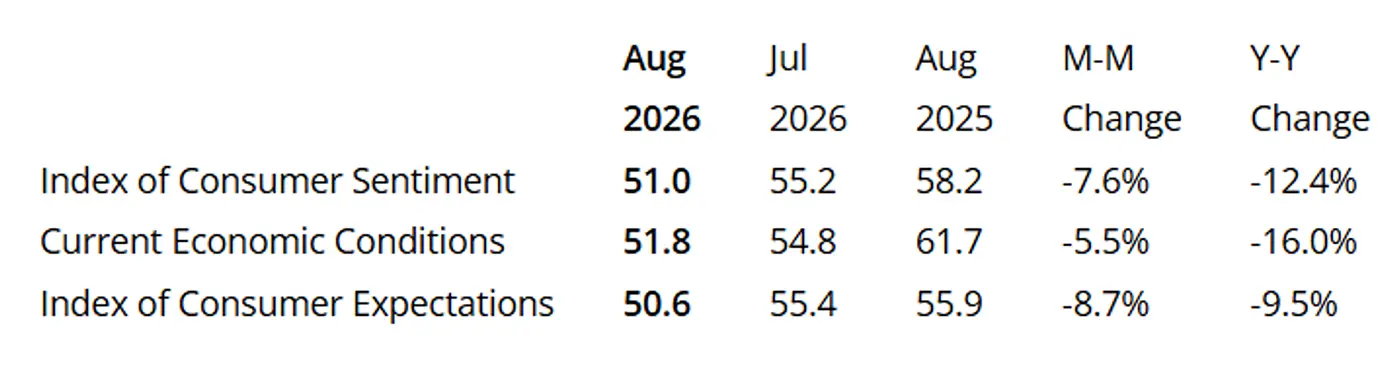
The preliminary August 2026 University of Michigan Consumer Sentiment Index declined to 51.0, well below the 54.5 reading economists surveyed by Reuters had expected. This decrease represented a 7.6% fall from the prior month and was 12.4% lower than the prior year.
Perceptions of current economic conditions and expectations for the future declined by similar amounts. Inflation remained a central concern: Year-ahead inflation expectations edged up to 4.3% from 4.2%, while five-year expectations held at 3.3% for a third consecutive month. The University of Michigan report noted, “The current reading substantially exceeds the 3.4% seen in February before the Iran conflict began, along with all 2024 readings.”
TABLE 1: UNIVERSITY OF MICHIGAN PRELIMINARY SENTIMENT RESULTS FOR AUGUST 2026
Source: University of Michigan
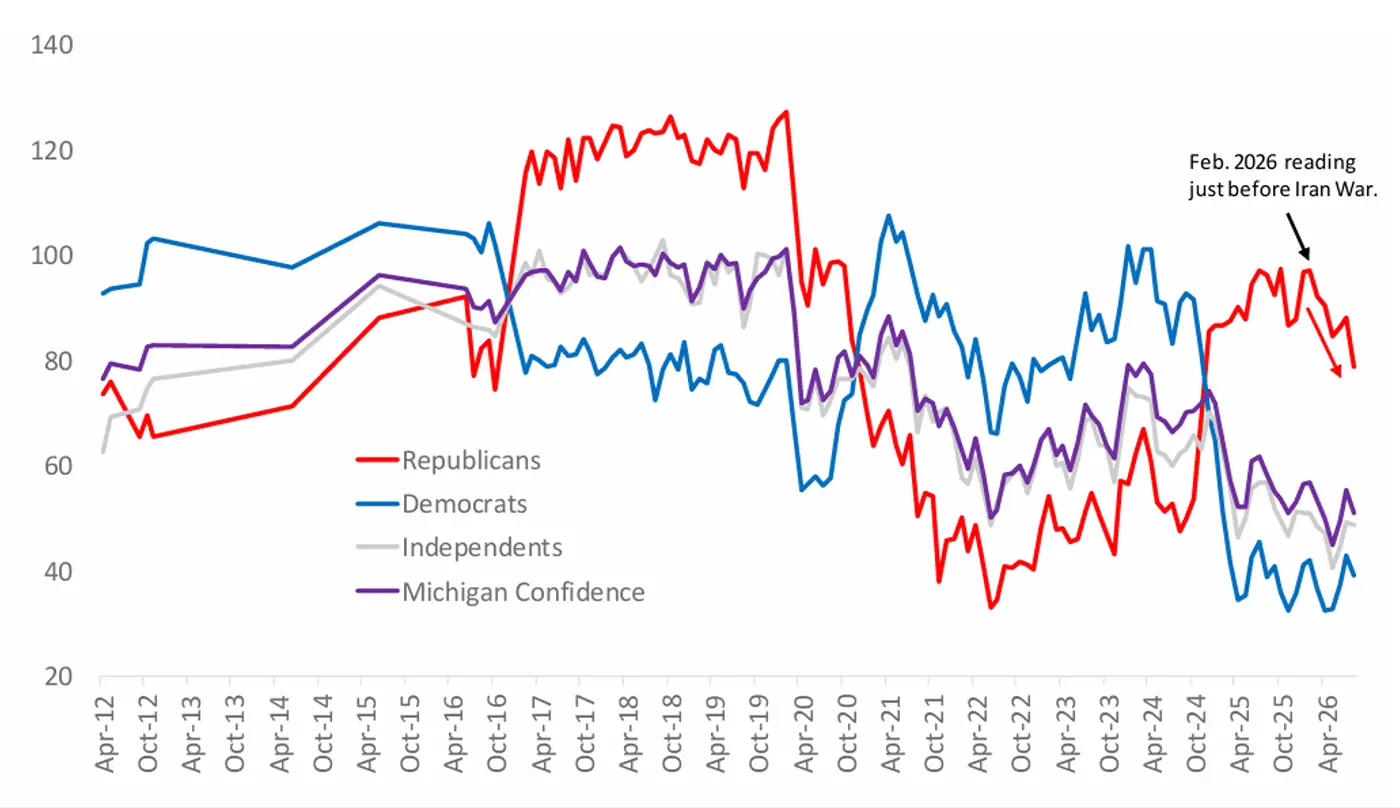
Surveys of Consumers Director Joanne Hsu cited the broad demographic decline in sentiment:
FIGURE 1: UNIVERSITY OF MICHIGAN CONSUMER SENTIMENT BY POLITICAL PARTY
Sources: University of Michigan, Bespoke Investment Group
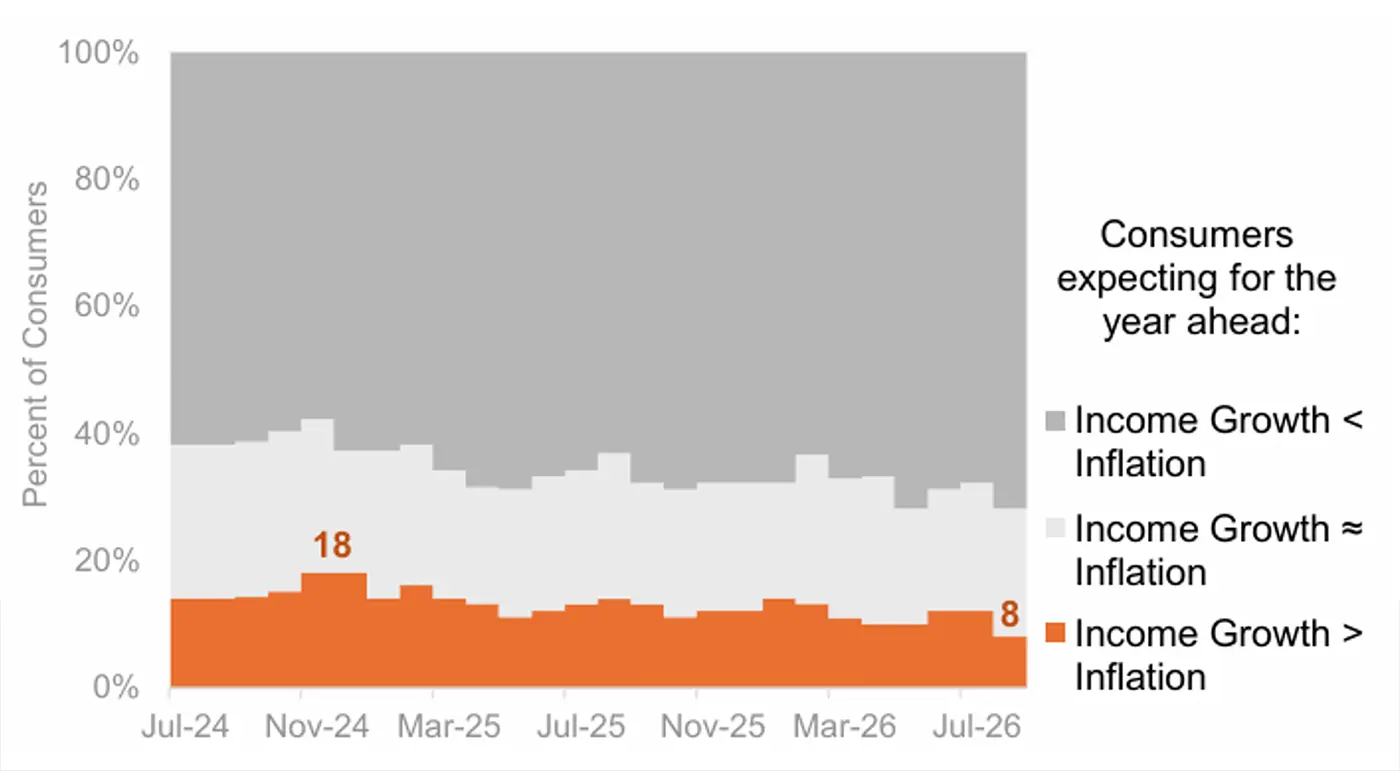
Ms. Hsu also highlighted the low percentage of consumers who expect their personal finances to improve soon:
FIGURE 2: ONLY 8% OF CONSUMERS EXPECT INCOME GROWTH TO OUTPACE INFLATION OVER THE NEXT YEAR
Source: University of Michigan
 Related Article: Is the U.S. economic glass more than half full?
Retail sales fall short of expectations
U.S. retail sales fell 0.6% in July 2026 to $763.6 billion, marking the largest monthly drop since May 2025, according to the Census Bureau data released by the Commerce Department. The decline missed economists’ expectations for an increase of 0.2% for July.
On the brighter side, “total sales for the May 2026 through July 2026 period were up 6.3 percent from the same period a year ago.”
U.S. News & World Report surmised that a post-tax-refund slump, along with spending anomalies related to the World Cup and Amazon Prime Day, could have affected the July numbers.
The article also placed the sales decline alongside other recent signs of moderation:
“The drop in spending for July, however, raised concern among some economists about the resiliency of consumers who have powered the economy forward despite nagging inflation and soaring gasoline prices. Yet, it may be too early to declare a retreat by one of the strongest and most consistent forces in the U.S. economy of late.
“Still, the weak sales report follows unexpectedly sluggish jobs figures last week, and both suggest the economy could be slowing after strong consumer and business spending in the first half of the year. …
“While most economists still expect solid economic growth in the July-September quarter, many have lowered their forecasts in the wake of the retail sales report.”
FIGURE 3: MONTHLY CHANGE IN U.S. RETAIL SALES (APRIL 2025–JULY 2026)
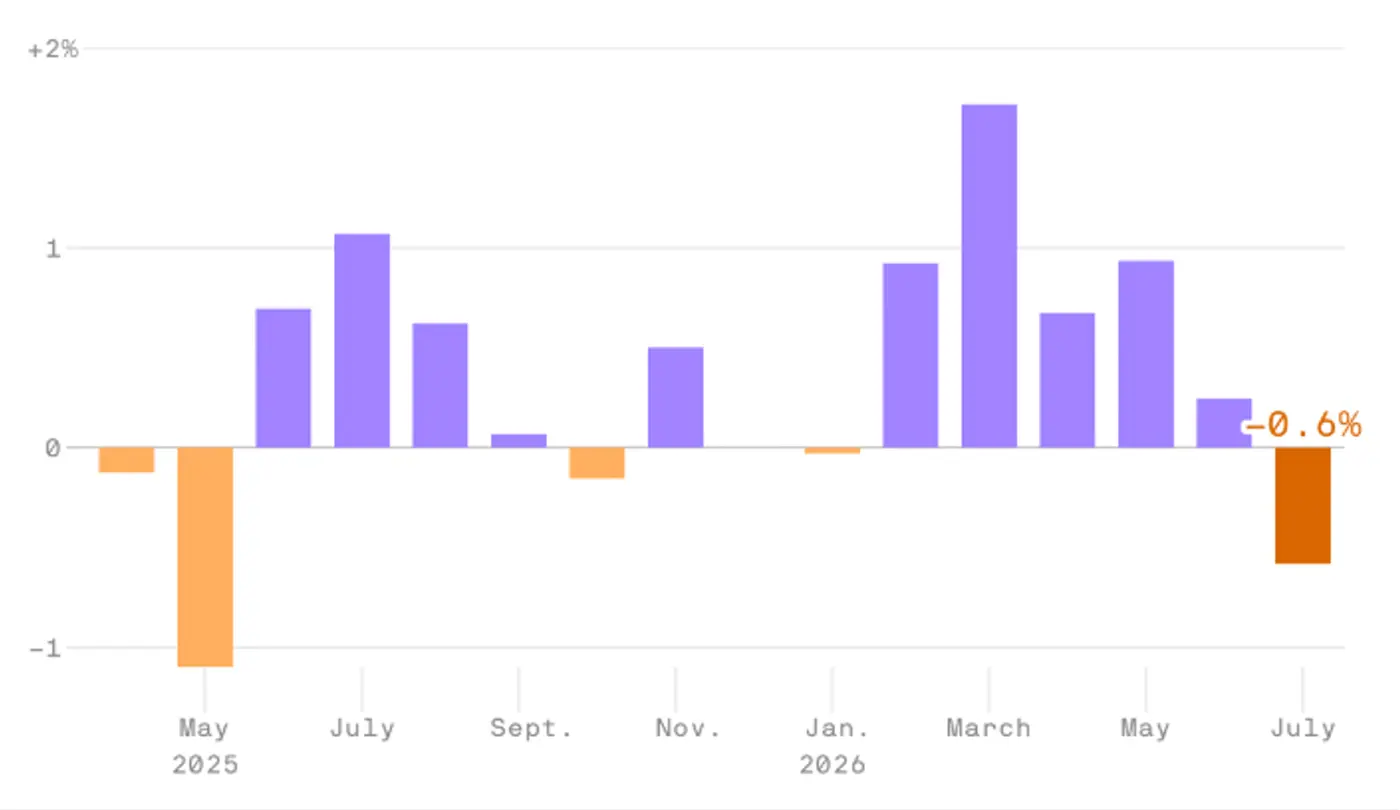
Sources: Data from the Census Bureau; chart from Neil Irwin/Axios
Axios noted what the recent weakening in economic data could mean for Federal Reserve policy:
RECENT POSTS

Passing the baton to the next generation of financial advisors

The age of immediacy—and why investing still requires patience

Committed to clients’ financial clarity and confidence

Existing home sales slide in August, but affordability may improve