Risk appetite fades as the market turns more selective
Risk appetite fades as the market turns more selective

Editor’s note: This article was authored as of the market close on July 29, 2026. Proactive Advisor Magazine thanks Asbury Research for permission to publish this commentary.
The U.S. economy continues to expand, but financial markets are signaling that investors are becoming increasingly cautious about what comes next.
While the fundamental backdrop remains supportive—corporate earnings are generally healthy, stocks continue to outperform bonds over the intermediate term, and economically sensitive mid-cap stocks remain relatively resilient—the character of this bull market is changing. Instead of rewarding virtually every growth-oriented investment, institutional investors are beginning to rotate toward higher-quality, lower-risk assets as concerns about elevated interest rates, persistent inflation, and slowing economic momentum become more pronounced.
Importantly, the evidence does not yet suggest that the economy is headed toward recession. Rather, it points to a mature expansion that is transitioning from an aggressive “risk-on” environment toward one in which capital preservation and selectivity are becoming increasingly important. This distinction matters because late-cycle markets often continue to produce attractive investment opportunities—but they tend to reward careful portfolio construction rather than broad participation.
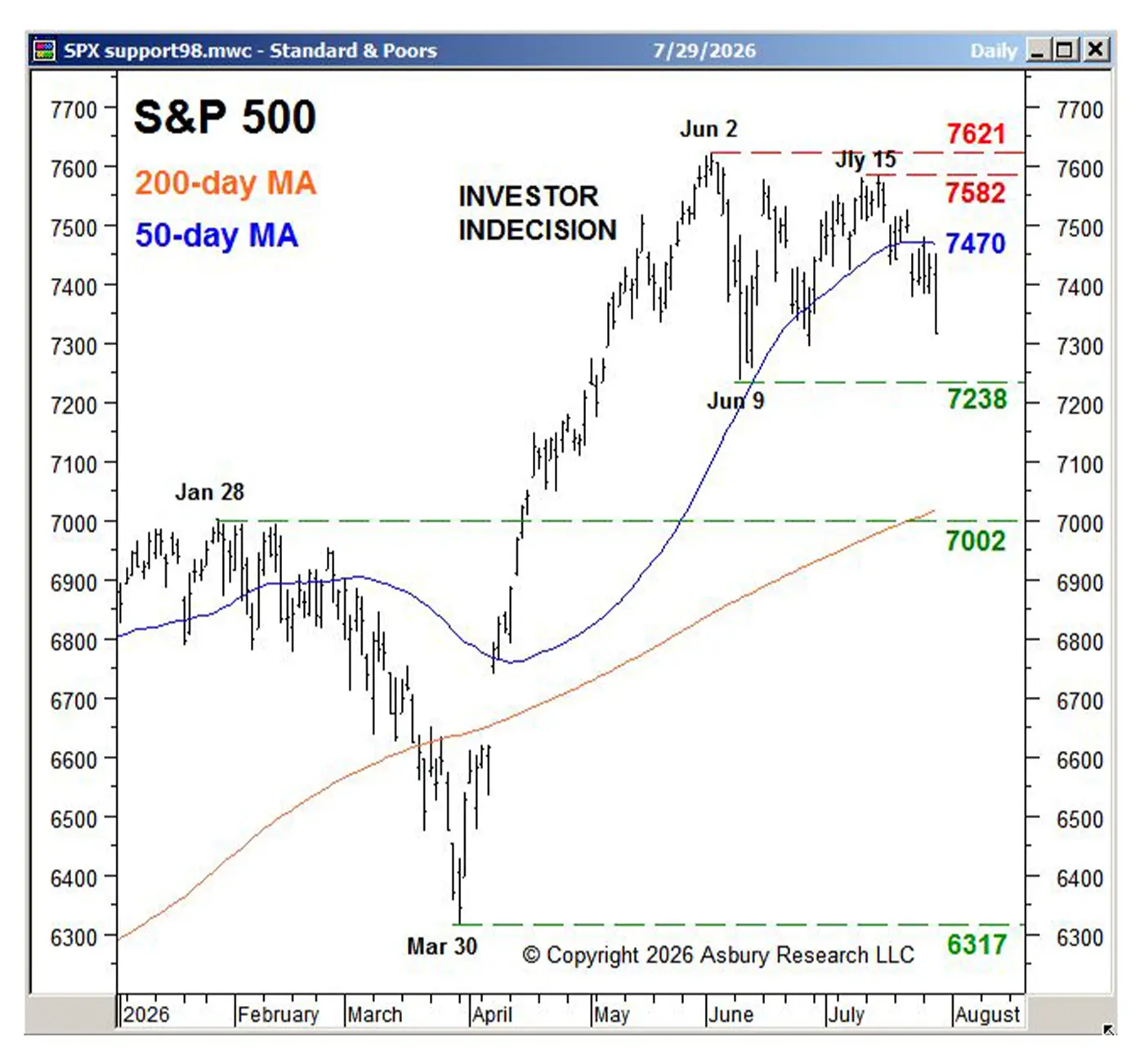
FIGURE 1: THE S&P 500 IS TESTING THE STRENGTH OF THE BULL MARKET
Source: Asbury Research. Data as of 7/29/2026.
The S&P 500 itself illustrates this transition. Although the Index remains above its 200-day moving average, preserving its longer-term bullish trend, it has slipped below its 50-day moving average (as of 7/29) after repeatedly finding support there since early June. Equally important, the market’s attempted breakout above its June highs has failed, leaving investors with another period of consolidation rather than renewed upside momentum.
Periods like this are common during mature bull markets. They rarely signal the immediate end of an economic expansion, but they often indicate that investors are becoming less willing to continually bid equity prices higher without stronger evidence that earnings growth and economic activity will accelerate further. The market appears to be asking an increasingly important question: Has this expansion entered a slower, more mature phase?
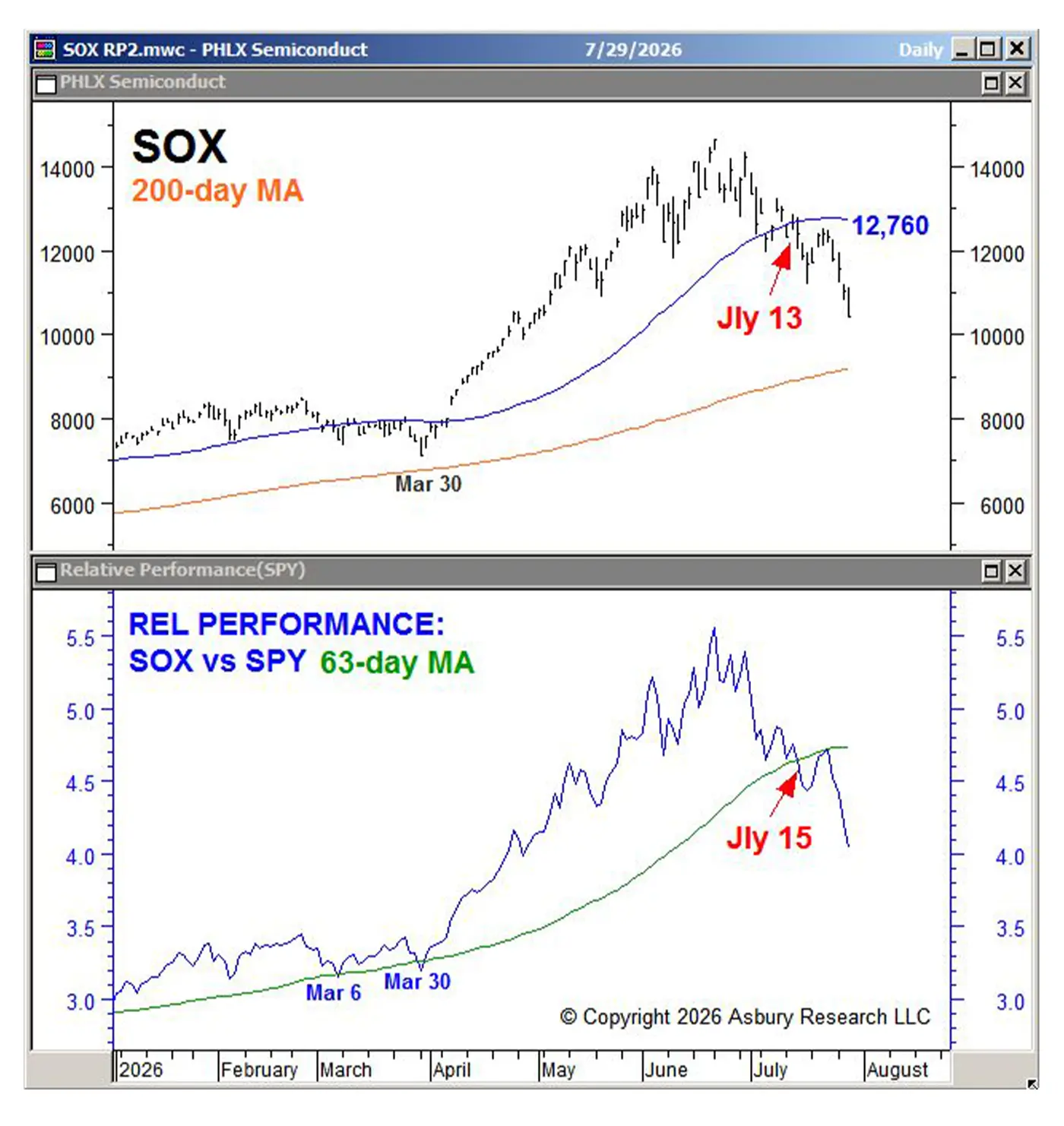
FIGURE 2: MARKET LEADERSHIP IS BEGINNING TO FADE
PHLX SEMICONDUCTOR (SOX) RELATIVE PERFORMANCE VS. SPY
Source: Asbury Research. Data as of 7/29/2026.
 Related Article: When risk tolerance clashes with reality
The recent breakdown in Semiconductor relative performance may be the most important development in today’s market. Semiconductor stocks have fallen below both their 50-day moving average and their longer-term trend of outperformance versus the S&P 500, while big-cap Technology has followed a similar path. Historically, when the market’s strongest leadership groups begin to weaken simultaneously, the broader market becomes increasingly vulnerable to an intermediate-term correction.
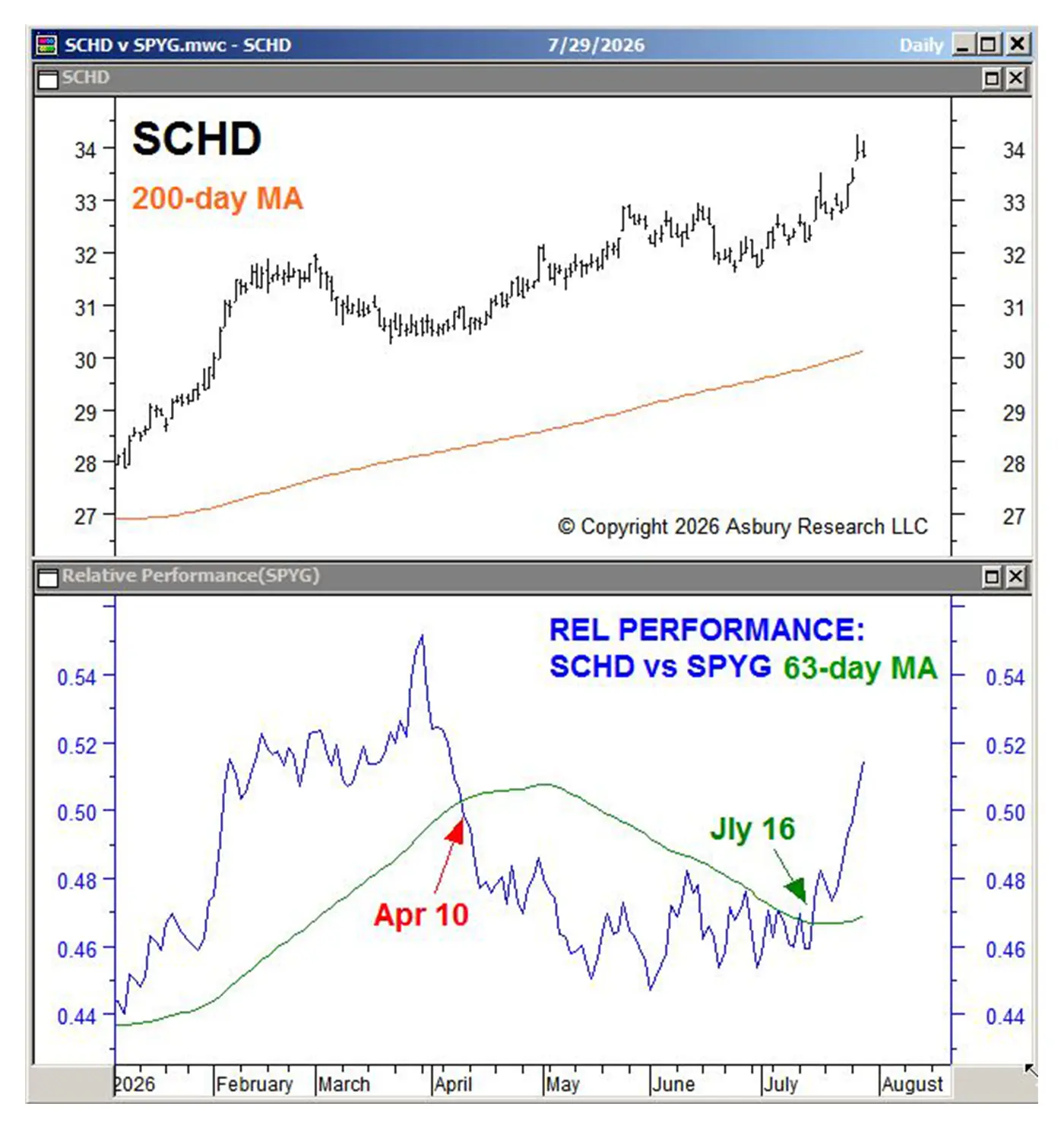
At the same time, money has not been leaving equities indiscriminately. Instead, investors are rotating toward more defensive areas of the market. Dividend-paying companies have begun outperforming growth stocks, value stocks are establishing a new intermediate-term leadership trend, and Financials, Health Care, and Real Estate currently rank as the strongest sectors within our Asbury SEAF (Sector ETF Asset Flow) Model. Collectively, these developments suggest institutional investors are emphasizing stability, dependable earnings, and valuation rather than maximum growth potential.
Investors appear to be positioning portfolios for slower—but still positive—economic growth rather than preparing for a sharp economic contraction.
Several important indicators argue against adopting an outright bearish outlook. Stocks continue to outperform bonds on an intermediate-term basis, mid-cap stocks continue to exhibit constructive relative performance, and the firm’s global allocation model shows broadening leadership across international equity markets. These are not the characteristics typically associated with the beginning of a recession-driven bear market. Instead, they suggest the current weakness is more likely to represent an intermediate-term correction occurring within an ongoing global economic expansion.
FIGURE 3: DEFENSIVE ROTATION IS BECOMING INCREASINGLY APPARENT
SCHD (SCHWAB U.S. DIVIDEND EQUITY ETF) VS.
SPYG (SPDR PORTFOLIO S&P 500 GROWTH ETF)
Source: Asbury Research. Data as of 7/29/2026.
Perhaps the most significant implication for investors is that market participation is becoming increasingly selective. Earlier in the year, leadership was concentrated in higher-beta technology stocks and other aggressive growth sectors. Today, leadership is broadening toward more defensive investments while market internals weaken and volatility begins to rise. The Asbury 6 Market Internals Model has shifted from positive to negative, further suggesting that the broad market’s underlying foundation has deteriorated even though the longer-term uptrend remains intact.
For investors, this changing environment calls for a different approach from the one that worked earlier in the bull market. Rather than chasing momentum, portfolios should increasingly emphasize quality, diversification, valuation, and risk management. Sector selection is likely to become more important, while maintaining exposure to areas demonstrating relative strength may prove more valuable than simply maintaining broad market exposure.
The market’s message is one of cautious optimism rather than outright pessimism. The economic expansion appears to remain intact, but the easy gains generated by widespread investor enthusiasm are giving way to a more disciplined environment in which leadership is narrowing and defensive positioning is increasing. Unless market leadership broadens and investor risk appetite begins to recover, the evidence favors a more defensive investment posture over the coming weeks, while continuing to recognize that the longer-term bull market has not yet been broken.
The opinions expressed in this article are those of the author and the sources cited and do not necessarily represent the views of Proactive Advisor Magazine. This material is presented for educational purposes only.
 Jack Kosar is vice president of investment strategy and a partner at Asbury Research, where he helps develop the firm’s proprietary technical and quantitative research and rules-based model portfolios. He holds a Master of Science in finance from the Illinois Institute of Technology and previously held investment and financial technology roles at Symetra, Allvue Systems, and Northern Trust. He also contributes to the firm’s Investor’s Business Daily podcasts and Fidelity Investments webinars, helping investors understand technical analysis, market trends, and quantitative strategies. asburyresearch.com
RECENT POSTS

Passing the baton to the next generation of financial advisors

The age of immediacy—and why investing still requires patience

Committed to clients’ financial clarity and confidence

Existing home sales slide in August, but affordability may improve