
Connecting the pieces of a family’s financial life
Connecting the pieces of a family’s financial life
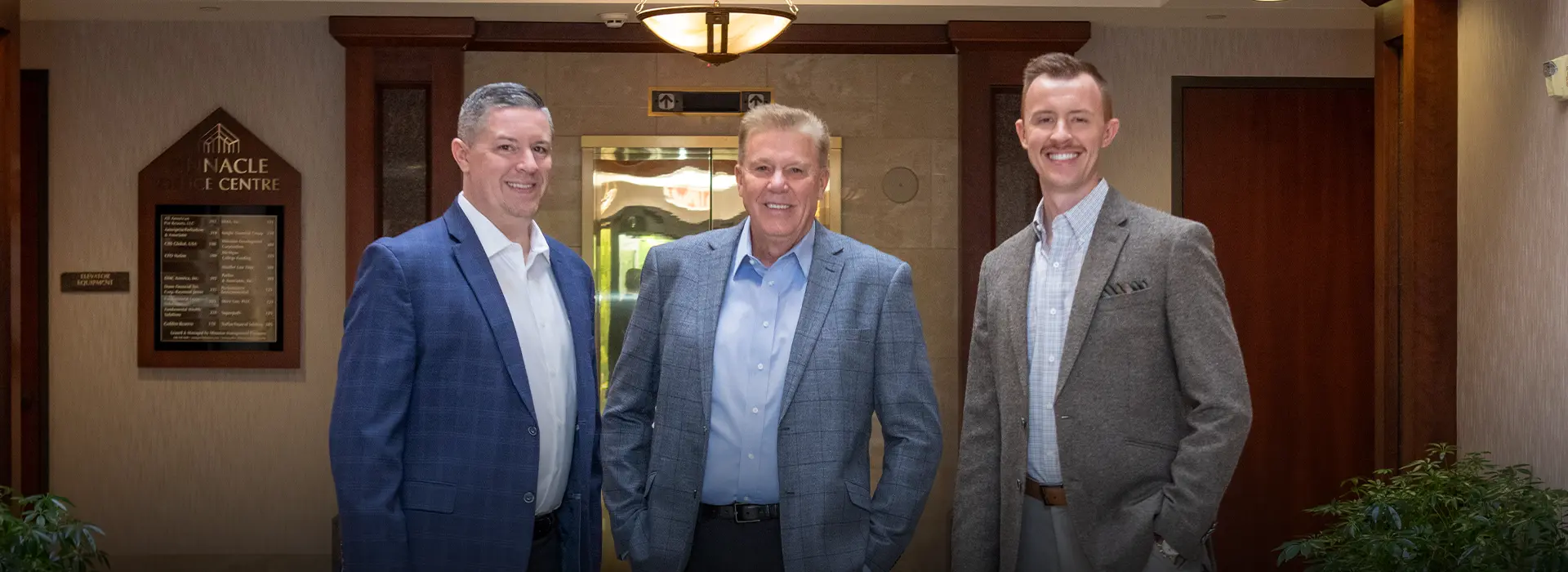
Rick Leidal • Chris Leidal • Alex Leidal • Novi, MI
Insight Financial Group • Sigma Financial Corporation
Read full biography below
Rick: Our family’s history in financial services goes back to 1966, when my father entered the business. He later worked with me in financial and retirement planning and employee benefits. He was a mentor and partner, and I learned a great deal from watching how he served people.
In 1987, I founded Corporate Fringe Benefits Consultants Inc., now known as Insight Financial Group, in Novi, Michigan. For many years, we worked in employee benefits, executive planning, business-owner planning, and retirement planning. As financial planning evolved, my passion moved toward helping families organize and understand their complete financial lives. In 2016, we developed The Insight Plan, our proprietary process for financial and retirement planning.
Our mission is to help clients see their financial picture clearly. Most families have many moving parts—retirement accounts, insurance, Social Security, pensions, taxes, estate documents, health-care concerns, long-term-care risks, and family legacy questions. These pieces are often handled separately by an attorney, CPA, insurance professional, and investment advisor, with no one coordinating the whole picture.
That’s where we can make a difference. We help clients connect those areas, understand the impact of each decision, and keep the plan moving as life changes. Planning should be an evolving process, and I stay in regular contact with clients throughout the year.
My sons Chris and Alex add unique skills and continuity for our firm. We are now a third-generation family business, working from the same foundation: helping families understand where they are, where they want to go, and what must be coordinated to get there.
Chris: I support my father’s client relationships by assisting with administrative support and day-to-day relationship management. I believe my 15 years of financial-services experience adds value to the firm and our clients, especially in the areas of Medicare and strategies for college planning. My goal is to help clients receive coordinated support as the team addresses their overall financial goals.
Alex: My role began in a support capacity, helping with the firm’s existing client relationships. I am building toward a lead advisor role, while coordinating planning work behind the scenes. My background in insurance helps me guide clients on risk management, asset protection, and liability exposure. I also work with clients on long-term-care planning and help connect estate, tax, and investment decisions into a more complete plan.
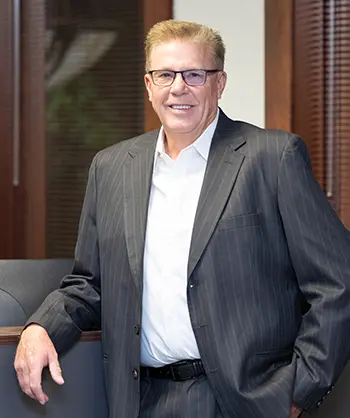 Rick: First, we try to make planning understandable. I have many years of experience, but that only helps clients if I communicate it clearly. I often say that 50% of my job is knowledge and 50% is communication. If clients do not understand what I am saying, the knowledge does not help them.
The Insight Plan starts with an inventory of assets, liabilities, income sources, insurance strategies, estate documents, and future goals. We want to know how accounts are titled, how they are taxed, what they are supposed to accomplish, and what risks could affect them.
Our process can include estate planning, generational planning, investment accumulation, tax planning, insurance protection, strategies for funding college and retirement, and daily wealth management.
For many clients, planning for retirement income is central. We begin with the future budget: Which expenses are essential, and which are discretionary? Essential expenses are bills that must be paid. Discretionary expenses support lifestyle: travel, hobbies, helping family, or other things that make retirement meaningful. The goal is to determine what income is needed and where it will come from.
We then look at predictable income sources, such as Social Security, pensions, or other income streams, and the assets that may need to supplement them. Each account may have a different purpose, tax treatment, and risk profile.
To simplify that conversation, I use a color-coded visual. Green represents cash—money for cash flow, emergencies, or expenses earmarked for a specific purpose. Yellow represents investments, where clients need to understand risk and tax implications. Red represents pretax retirement money because taxes may be owed when it is distributed. In front of those buckets is the insurance piece, which might include life insurance, long-term-care planning, disability protection, or other risk-management strategies.
The visual helps clients see their financial life in one place and creates an “aha” moment: “Now I understand what I have and how it works together.” We also use a secure client vault to store important documents for clients and family members who may need access in the future.
Rick: The investment plan has to serve the overall financial plan. I do not believe in trying to make one investment approach fit every person. Every client has different goals, resources, income needs, tax issues, and tolerance for volatility. Someone accumulating assets may need a different approach than someone drawing retirement income and trying to protect what they have built.
We start by asking what the money is supposed to do. Is it intended for retirement income, growth, principal protection, legacy planning, or some combination? Once we understand the purpose, we can talk about how the money should be invested.
One way I explain our philosophy is that we believe in diversifying among investment methods, not just asset classes. Most people understand simple investment diversification, and that is important. But different investment methods behave differently. Some are passive. Some are active. Some are tactical and may reduce exposure when risk becomes elevated. Some focus on income. Some rely on professional money managers with a specific discipline. Different approaches may perform better or worse in different environments. That is why we often use more than one method within a plan.
Risk management is an important part of that thinking. If the market is falling sharply, I do not want every dollar following it all the way down. For the right client and account, an active or tactical strategy may help manage volatility. That does not mean every loss can be avoided or that every strategy will work in every environment. But I believe clients can benefit from a plan built with risk mitigation in mind.
We use both active and passive strategies where appropriate. Passive investing can help when broad market exposure, cost, or long-term growth are priorities. Active management can help when we are looking for professional oversight, downside risk management, or a strategy that can respond to changing conditions. Third-party money managers bring specialized disciplines and approaches. The question is always what combination best fits the client’s goals.
 Alex: It reflects our story as a third-generation firm. Many clients are facing similar transitions in their own families. They may be asking, “What happens if something happens to me or my spouse? Do my children know where everything is? Do they understand the plan? Will they know who to call?”
Parents may have done a great job building wealth, but they may not have talked with their children about how their plan is structured or what their wishes are. Because we have been in the shoes of our clients’ children, we can relate to them in a unique way. The next generation can benefit from having its own relationship with us. They may have different questions, communication preferences, and planning needs.
The goal is to begin communication before a crisis occurs and introduce the next generation gradually—through family meetings, document reviews, estate-planning discussions, or planning work for the children themselves. If we clearly explain what we do and what a plan is designed to accomplish, we can build trust across generations.
 Chris: For those approaching retirement, choosing a Medicare plan can significantly impact their long-term well-being. I help clients understand the transition from traditional health insurance and navigate the often-confusing landscape of supplemental coverage options, enrollment periods, claims, and Medicare-related deadlines. My goal is to simplify the process, provide clear guidance, and help clients evaluate options in light of their health needs and financial goals. We look to provide ongoing, personalized service throughout our clients’ Medicare years.
Alex: To me, it means looking at the full picture. Estate planning, tax planning, risk management, income planning, and investment planning are all connected. A decision in one area can affect the others.
Many people already have what I would call a default plan, even if they have not created one intentionally. If they do not have estate documents, the state has rules for what happens. If they do not have a proactive tax plan, their tax plan may simply be filing a return and writing a check. If they do not have an income plan, they may have to rely only on Social Security or a pension.
Even families that have taken action can still have disconnected plans. They may have an estate attorney, CPA, insurance advisor, and investment advisor, but each professional may be looking at only one piece. Our role is to help coordinate the planning conversation across the entire plan.
 Related Article: Active vs. passive: How about both?
Rick: I hope clients would say we are thorough, responsive, and easy to understand—and that we help them connect the pieces of their financial life. Many people come in with accounts, documents, and concerns scattered across different areas of their lives. Our job is to organize the picture and explain it clearly. I want clients to understand what they have, what they are trying to accomplish, what risks they face, and what steps we recommend. If they understand the plan, they are more likely to stay engaged with it.
Clients also appreciate our experience and continuity. Chris and Alex are helping carry the firm forward while working from the same planning foundation.
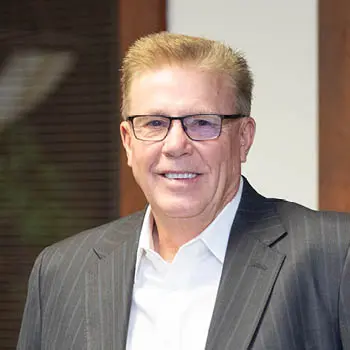 Rick Leidal, AIF, CLTC, CCFS, is the owner and president of Insight Financial Group in Novi, Michigan. His family’s financial-services history dates to 1966, when his father, Bill Leidal, entered the industry, later becoming a general agent with General American Life.
For over 40 years, Mr. Leidal has helped individuals, families, business owners, and employees address their financial needs. In 1987, he founded Corporate Fringe Benefits Consultants Inc., now known as Insight Financial Group. In 2016, the firm developed The Insight Plan, a proprietary planning process designed to help clients organize their financial lives. Today, two of his sons, Chris and Alex Leidal, also work at the firm.
Mr. Leidal works with clients on retirement planning, estate planning, portfolio management, insurance and asset protection, tax-aware planning, generational planning, and long-term-care planning. His philosophy emphasizes clear communication, ongoing engagement, and helping families understand how each area of their financial life connects. He enjoys outdoor activities and spending time with his wife, three sons, and grandchildren.
 Chris Leidal has over 15 years of experience in the financial-services industry. A Michigan State University graduate with a bachelor’s degree in organizational communication, he worked in the mortgage industry and banking before spending five years with Sigma Financial in operations, client service, and trading. At Insight Financial Group, he serves clients in an administrative support role. He and his wife have two sons and enjoy traveling. He is active in supporting youth sports.
 Alex Leidal, CLTC, is a financial planner with Insight Financial Group. A graduate of Oakland University, he spent seven years in property and casualty insurance before joining the firm full-time. His experience with liability exposure, asset protection, risk mitigation, and risk transfer informs his comprehensive approach, which emphasizes coordination among estate planning, tax planning, risk management, income planning, and investment planning. Mr. Leidal is currently completing CFP certification coursework. He enjoys traveling with his wife, playing golf, and other outdoor sports.
Disclosure: Investment advisory services offered through Sigma Planning Corporation, a registered investment advisor. Securities offered through Sigma Financial Corporation; Member FINRA/SIPC. Insight Financial Group is not affiliated with Sigma Financial Corporation or Sigma Planning Corporation.
AIF is a registered trademark of Fi360, a Broadridge Company. CLTC is a registered trademark of Certification for Long-Term Care LLC. CCFS is a registered trademark of the Association of Certified College Funding Specialists. CFP is a registered trademark of the Certified Financial Planner Board of Standards Inc. (CFP Board).
Photography by Hugh Anderson
QUICK TIP

Eight ways clients can better coordinate their financial lives
Rick Leidal and his son Alex provide comprehensive financial guidance to clients at Insight Financial Group, in Novi, MI.
“A client may have an attorney, CPA, insurance professional, and investment advisor, but no one coordinating the whole picture,” Rick Leidal says. “That is where we try to make a difference.”
Insight Financial Group uses The Insight Plan, its proprietary planning process, to help clients organize and coordinate the many pieces of their financial lives. As part of that approach, the firm helps clients think through several important considerations, including the following:
- Connect each decision to the full plan. Before making a major financial move, consider how it may affect taxes, income, investments, insurance, estate planning, and family goals.
- Know where everything is. Organize key documents, account information, insurance policies, estate documents, tax records, and professional contacts before your family needs them. Make sure accounts are titled properly and beneficiary designations are accurate.
- Start family conversations before a crisis. Adult children or trusted family members do not need to know every detail, but they should understand who to call, where documents are located, and what broad plans are in place.
- Separate essential and discretionary retirement expenses. Essential expenses are the bills that must be paid. Discretionary expenses support lifestyle. Knowing the difference can make retirement-income planning clearer.
- Do not confuse accounts with a plan. Having investments, insurance, estate documents, and tax filings does not automatically mean those pieces are working together.
- Plan for health changes. A serious illness, injury, or long-term-care need can affect income, assets, caregivers, and family roles. Addressing those risks early can help protect both the financial plan and the family.
- Match each investment strategy to a purpose. Different assets and investment methods may serve different roles, such as growth, income, protection, liquidity, or legacy planning.
- Schedule regular reviews. A financial plan should be updated as life changes, including retirement, health events, tax changes, market conditions, family changes, or the sale of a business or property.
RECENT POSTS

Every client life stage tells a story. Does your messaging connect to each chapter?

S&P 500 update: Market breadth improves in the first half of 2026

Banks set an early positive tone for Q2 earnings season

Why I wrote ‘Evidence-Based Investing’