Planning with perspective, service, and a family-office mindset
Planning with perspective, service, and a family-office mindset

David Reichert • Murray, UT
Reichert Wealth • LPL Financial
Read full biography below
I grew up in Salt Lake City in a family where education, professionalism, and service were important. My parents trained as physicians and met at Cornell’s medical school. My father went on to build a long career as a neurologist, while my mother chose to stay home and raise our family. I grew up in a home that valued learning, but just as importantly, one that was supportive and encouraging.
Many of my early years were shaped by sports and music. I played golf and tennis, eventually focusing on tennis in high school and college. My parents spent many hours traveling with my brother and me to tournaments. I also played saxophone and clarinet, and I loved jazz.
I attended Willamette University in Oregon, where I initially pursued music before majoring in cultural anthropology. That may not sound like an obvious prelude to a career in wealth management, but I think it shaped the way I think about people, values, and decision-making around money.
After college, I spent a year in Israel through an internship program. When I returned home, I entered financial services as a registered representative. I later joined Waddell & Reed, where I laid the foundation for my career over the next decade. That was where I learned to think of financial planning as the center of the client relationship. I grew into a more comprehensive advisory role, bought a retiring advisor’s business in 2014, and ultimately transitioned to LPL’s independent platform when it acquired Waddell & Reed.
I would describe our mission in three parts. First, we want to provide the highest level of customer service we can. Second, we want to bring clients an institutional approach to investing, moving beyond a traditional conversation limited to stocks and bonds when it makes sense. Third, we want to provide a family-centric office experience. Investments are only one part of a person’s financial life. Clients need someone who can assess the whole picture; help coordinate the moving parts; and ensure their financial life is aligned across their investments, taxes, and insurance needs, as well as with the recommendations of other professionals.
That family-centric office concept has become central to how I think about the business. Many clients already have a CPA, an attorney, and perhaps other professionals involved. But no one is really quarterbacking the overall situation. That is where we can add value. We want to make sure good ideas aren’t siloed and that decisions in one area do not undermine those in another. Meaningful value comes from identifying a planning opportunity, asking a better question, or bringing together the right people to execute a solution.
That may mean helping a client think through a tax issue their existing team has not fully developed, showing them how a retirement-plan design could change their long-term outcome, or helping them evaluate business-structure decisions more strategically. When clients see that you are doing more than managing money—that you are helping them think more clearly about their whole financial life—the relationship deepens.
I believe financial planning is a highly personal process. Whether a client’s goals are focused on next year or 20 years from now, their future depends largely on the decisions made today. That is why our process seeks to understand the goals unique to each client’s situation and help prioritize them thoughtfully.
Our financial-planning process has six ongoing steps. It begins with collecting essential information. From there, we analyze the client’s current strategy to determine whether it is positioned to meet the objectives they care about most. Then we work consultatively to identify the strategies or behavioral changes that may best address those objectives. After that, we use visuals to show how the proposed strategy can help clients progress toward those goals. Then we move into implementation. Finally, we monitor and review the plan over time, because financial planning isn’t a one-time event.
In practical terms, we’re trying to help people understand the consequences of their decisions and whether those consequences line up with their long-term goals. Sometimes a client is broadly on track and simply needs refinement. In other cases, we discover that the current path is not aligned with what they say they want. That opens the door to modeling alternatives and showing the trade-offs clearly.
We may examine retirement readiness, investment mix, savings behavior, insurance needs, estate considerations, tax efficiency, education funding, or survivor planning. The point is not to overwhelm clients with complexity. It is to help them see what matters, what should change, and what those changes may mean.
Our strongest fit tends to be small-business owners and high-net-worth clients, with overlap between the two. That is where the family-focused office style of service becomes especially valuable. With a business owner, the conversation is rarely just about a portfolio. It may involve how their business is structured, if that structure makes sense, what salary and profit distribution mix is appropriate, whether to consider a retirement plan such as a cash balance pension plan, and how all of that ties back to the owner’s personal taxes and long-term goals. Those are areas where thoughtful coordination can be impactful.

It starts with diversification—but not in a purely conventional sense. It is important to have broad asset-class diversification and to carefully consider how different parts of a portfolio interact. For many clients, that means moving beyond a traditional framework and considering whether alternative investments should play a role. The objective is to create a portfolio that is not overly dependent on one narrow set of market outcomes. Historically, some private investment asset classes have shown lower volatility characteristics than public markets, helping create a portfolio that is less tightly linked to broad market indexes.
I also believe in active oversight. We use managed platforms, third-party managers, and model-based solutions where appropriate, and we spend a lot of time thinking about each holding’s role in the portfolio. If a strategy within an asset class is supposed to play a certain role, we want to know whether it is doing that job. If not, we need to be willing to reassess. I think of it as putting the right players on the field and having a bench if the current lineup is not delivering. That is a more proactive approach to portfolio construction than simply assembling a collection of holdings and passively hoping for the best.
Tax awareness is another major part of the philosophy. For clients with taxable assets, it is not enough to talk about returns only in the abstract. We want to understand whether a strategy is efficient for the kind of account it sits in. For clients concerned about drawdowns, the conversation has to include risk in a real-world sense. Strong diversification can help. In some cases, more buffered or tactical approaches can also make sense. The objective is not to promise immunity from volatility. It is to build portfolios thoughtfully so that a difficult market environment does not automatically become a plan-breaking event.
 Related Article: The diversification illusion
I think clients value two things most. The first is basic but important: customer service. They want to know that when something matters, we are responsive, engaged, accountable, and paying attention.
The second is that we look beyond investments. Clients value advice that reflects their full financial plan, not just a narrow piece of it. When a client feels that you understand their goals, tax picture, business or family complexities, and the decisions that may be coming next, the relationship becomes more meaningful.
On a personal level, I think many clients would describe me as knowledgeable, low-key, and not high pressure. That matters to me. I do not think people make their best financial decisions when they feel pushed. I would rather build trust by being thoughtful, prepared, and clear about what I think and why.
Over time, I believe that kind of relationship leads to better conversations and better outcomes.
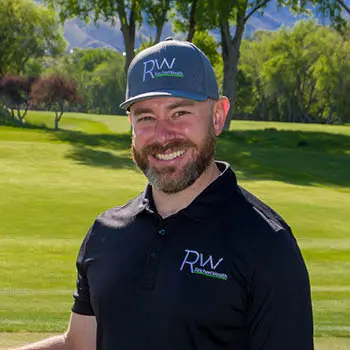 David Reichert, CFP, AWMA, APMA, is the founder of Reichert Wealth, located in Murray, Utah. He says, “We believe we can empower our clients to pursue their financial goals and create the future they want through proactive, relationship-oriented planning.”
Mr. Reichert was brought up in the Salt Lake City area. His father was a prominent neurologist and owned an advanced imaging facility. His mother met his father in medical school and later focused on taking care of their family. Mr. Reichert attended private school, where he excelled in tennis and music. He says, “My parents were always supportive, encouraging me in academics and traveling often to take me to tennis tournaments.”
Mr. Reichert graduated from Willamette University, where he majored in cultural anthropology. In college, he was active in his fraternity, participated in band and music ensembles, and played tennis until an injury shortened his career. He says, “My studies incorporated anthropology, psychology, political science, and sociology. These all provide some insights into how people think about the relationship of money to their lives.”
After graduation, Mr. Reichert spent a year in Israel as part of an internship program. He then returned to the U.S. and joined a financial-services firm in Salt Lake City as a registered representative. He later joined Waddell & Reed, where he spent 10 years focused on financial and retirement planning, including investment, risk-management, tax, and estate-planning strategies. He says, “I received excellent training and mentorship at Waddell & Reed and became proficient in handling complex financial-planning cases and developing sophisticated strategies for clients.”
Around the time LPL acquired Waddell & Reed, Mr. Reichert founded Reichert Wealth and purchased an office building for his firm and other tenants. He is a Certified Financial Planner practitioner and holds the Accredited Wealth Management Advisor and Accredited Portfolio Management Advisor designations. He is also a member of the NFLPA Registered Player Financial Advisors Program and was named to Forbes’ Top Next-Gen Wealth Advisors Best-in-State list in 2025.
Mr. Reichert and his wife live outside Salt Lake City. They enjoy spending time with extended family and traveling. He is also an auto enthusiast and enjoys playing saxophone and golfing. His firm supports several charitable organizations in his community.
Disclosure: Securities and advisory services offered through LPL Financial, member FINRA/SIPC, a registered investment advisor.
The Forbes ranking of Top Next-Generation Wealth Advisors, developed by SHOOK Research, is based on an algorithm of qualitative and quantitative data, rating thousands of wealth advisors born in or after 1980. Advisors are interviewed by telephone and in person to evaluate service models, investing process, experience levels, and integrity. Additional factors considered include compliance record, client retention, revenues produced for their firms, and assets managed. Portfolio performance is not a criterion due to varying client objectives and lack of audited data. Neither Forbes nor SHOOK receives a fee in exchange for rankings.
CFP and Certified Financial Planner are registered trademarks of the Certified Financial Planner Board of Standards Inc. (CFP Board). Accredited Wealth Management Advisor, AWMA, APMA, and Accredited Portfolio Management Advisor are trademarks of the College for Financial Planning.
All investing involves risk, including loss of principal. No strategy assures success or protects against loss. There is no guarantee that a diversified portfolio will enhance overall returns or outperform a non-diversified portfolio. Diversification does not protect against market risk.
Alternative investments may not be suitable for all investors and should be considered as an investment for the risk capital portion of the investor’s portfolio. The strategies employed in the management of alternative investments may accelerate the velocity of potential losses.
Photography by Glen Ricks
QUICK TIP

Why financial planning matters for clients
David Reichert, CFP, AWMA, APMA, founder of Reichert Wealth in Murray, Utah, explains the value of financial planning this way:
“Whether your financial goals are due next year or in 20 years, planning your financial future is one of your most important priorities. Your financial future depends largely on the decisions you make today. That’s why it’s so important to understand the benefits of financial planning and how it may help you improve your financial future.”
Mr. Reichert describes financial planning as a highly personal process that helps clients identify and prioritize the goals unique to their situation, then develop strategies to pursue them. He says his financial-planning process has six ongoing steps:
- Collect essential information.
- Analyze the client’s current strategy to determine whether it is positioned to work toward their financial objectives.
- Consult on the strategies or behavioral changes that may help the client pursue those objectives.
- Use visuals to show how a proposed strategy may help the client progress toward those goals.
- Implement the strategy.
- Monitor and review the plan over time.
Mr. Reichert says financial planning may help clients answer questions such as the following:
- What rate of return do they need on their investments to reach retirement goals or other financial objectives, such as college funding or a down payment?
- What financial resources would be needed if one spouse were to predecease the other?
- How can they optimize cash flow, and how might that affect other financial objectives?
- Does their mix of stocks and bonds (asset allocation) match their risk tolerance and investment-goal time horizon?
- What estate-transfer issues are they likely to face, and how can they transfer an estate or business as tax-efficiently and cost-effectively as possible?
RECENT POSTS

Passing the baton to the next generation of financial advisors

The age of immediacy—and why investing still requires patience
Committed to clients’ financial clarity and confidence

Existing home sales slide in August, but affordability may improve