Stocks kicked off May in record territory, with both the S&P 500 Index and the NASDAQ Composite recording new all-time highs last week.
Relatively positive first-quarter GDP growth data and April ISM Manufacturing data helped support the bullish market action.
Perhaps more importantly, the Q1 2026 earnings season has been stronger than many investors expected. Early results have helped markets look past a difficult macro backdrop marked by elevated oil prices, Middle East tensions, and uncertainty around the Federal Reserve’s rate path.
Big banks set the early tone with an impressive, though uneven, start. Trading desks benefited from volatile markets, dealmaking showed signs of improvement, loan growth picked up, and credit quality remained broadly stable.
At the same time, management comments were not universally optimistic. Banks remained cautious about the potential effects of prolonged geopolitical uncertainty, higher energy prices, and still-elevated borrowing costs on consumers, businesses, and capital markets. Reuters noted that all six major U.S. banks beat profit estimates, but the results also showed clear differences beneath the surface. Some banks benefited more from trading and investment banking strength, while others faced pressure in lending and fee-related income.
The focus then shifted to big technology, where results have reinforced the idea that artificial intelligence remains one of the biggest forces driving corporate growth and investor expectations. Strong earnings from several of the largest technology companies have helped improve the overall outlook for S&P 500 profits this quarter. However, investors are also paying close attention to how much these companies are spending to build out AI capabilities.
Companies that showed strong demand, especially in cloud computing and AI-related services, were generally rewarded. Those that increased spending without clearly showing when that investment might pay off faced more skepticism. Overall, Q1 earnings have sent a positive message about corporate profits, but they have also raised expectations. Investors want to see that heavy AI spending can eventually lead to lasting revenue growth, stronger profits, and healthier cash flow.
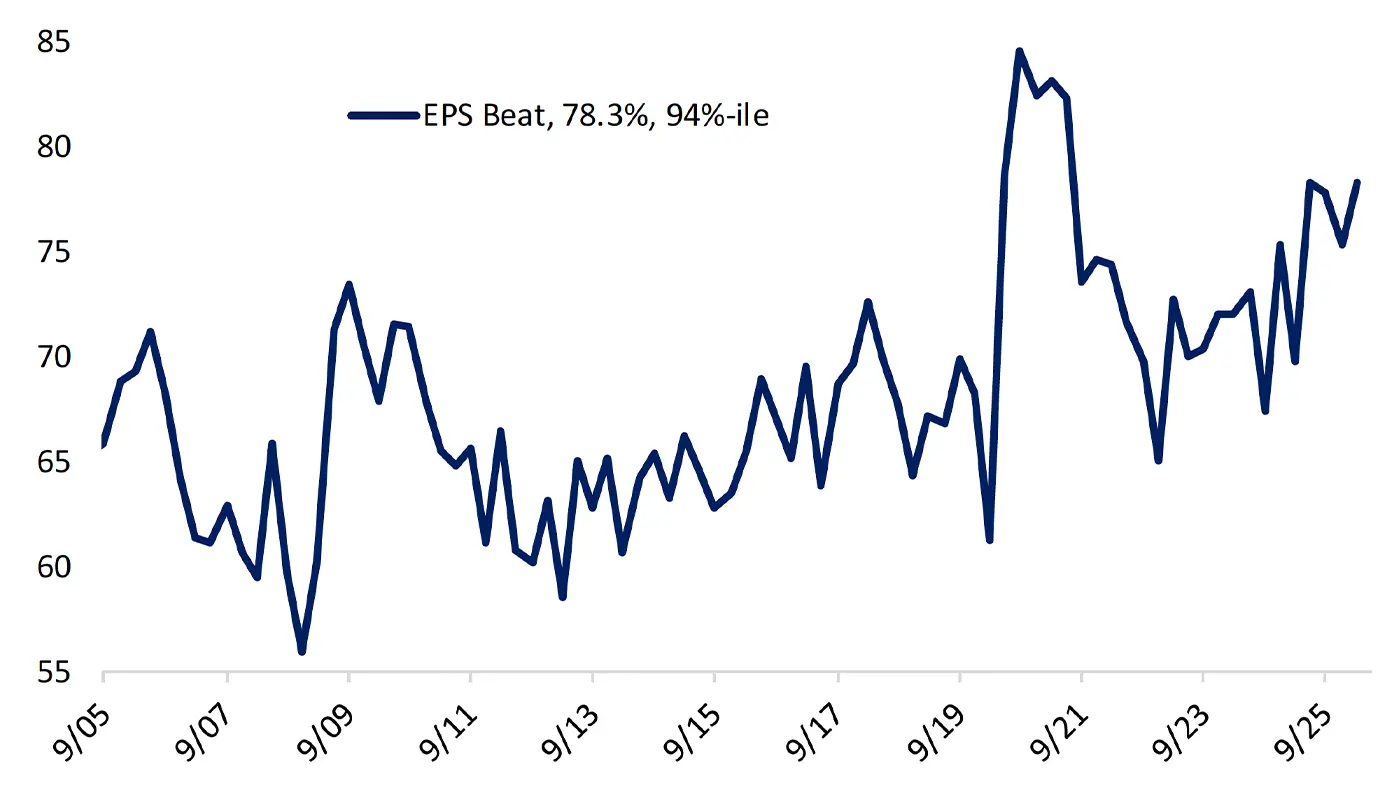
On May 1, Bespoke Investment Group commented on the broader earnings season beyond the S&P 500:
FIGURE 1: VERY STRONG EPS BEAT RATE CONTINUES
Source: Bespoke Investment Group
 Related Article: Beyond the headlines: The ‘Magnificent Seven,’ AI, and the technology product cycle
Highlights for Q1 2026 earnings to date
In its May 1 Earnings Insight, FactSet shared several key metrics on earnings progress for Q1:
- “Earnings Scorecard: For Q1 2026 (with 63% of S&P 500 companies reporting actual results), 84% of S&P 500 companies have reported a positive EPS surprise and 81% of S&P 500 companies [have] reported a positive revenue surprise.
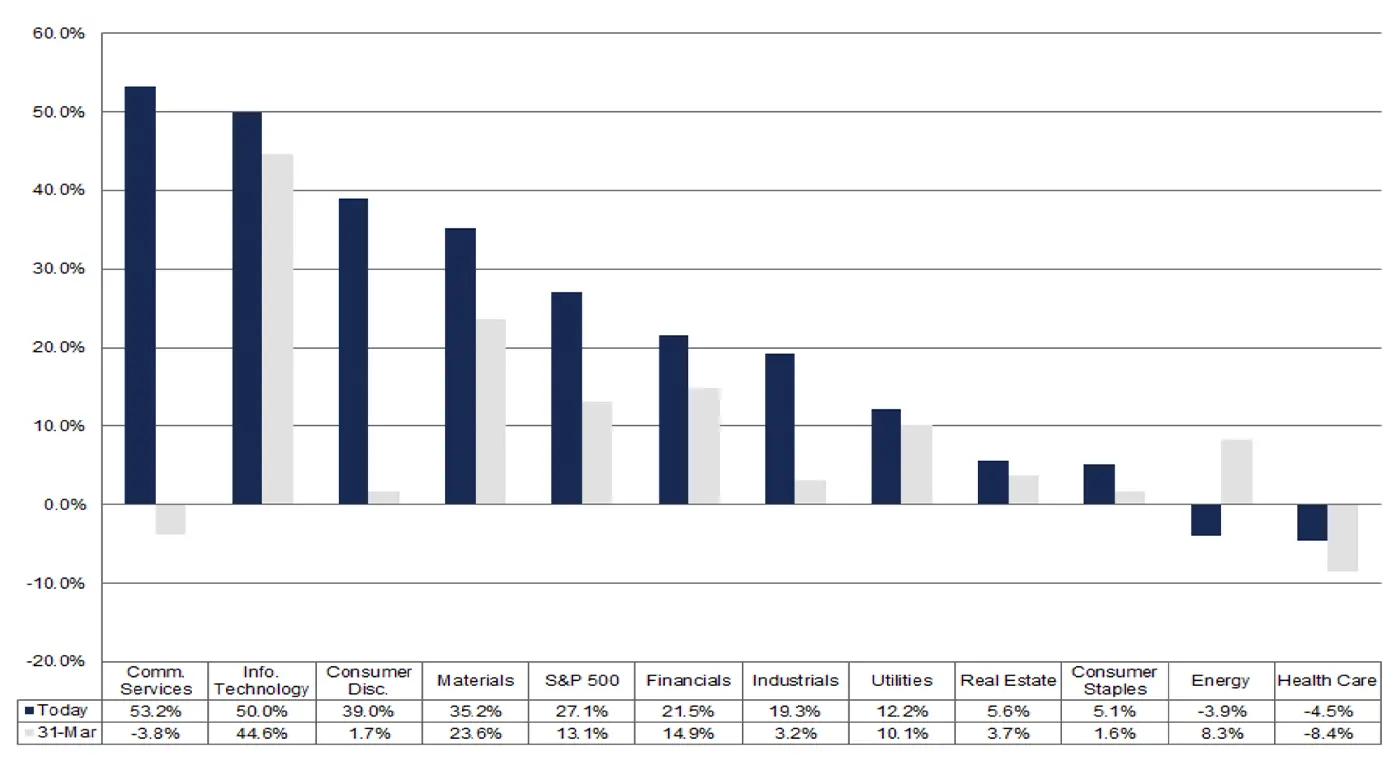
- “Earnings Growth: For Q1 2026, the blended (year-over-year) earnings growth rate for the S&P 500 is 27.1%. If 27.1% is the actual growth rate for the quarter, it will mark the highest earnings growth rate reported by the index since Q4 2021 (32.0%).
- “Earnings Revisions: On March 31, the estimated (year-over-year) earnings growth rate for the S&P 500 for Q1 2026 was also 13.1%. Ten sectors are reporting higher earnings today (compared to March 31) due to positive EPS surprises and upward revisions to EPS estimates.
- “Earnings Guidance: For Q2 2026, 28 S&P 500 companies have issued negative EPS guidance and 23 S&P 500 companies have issued positive EPS guidance.
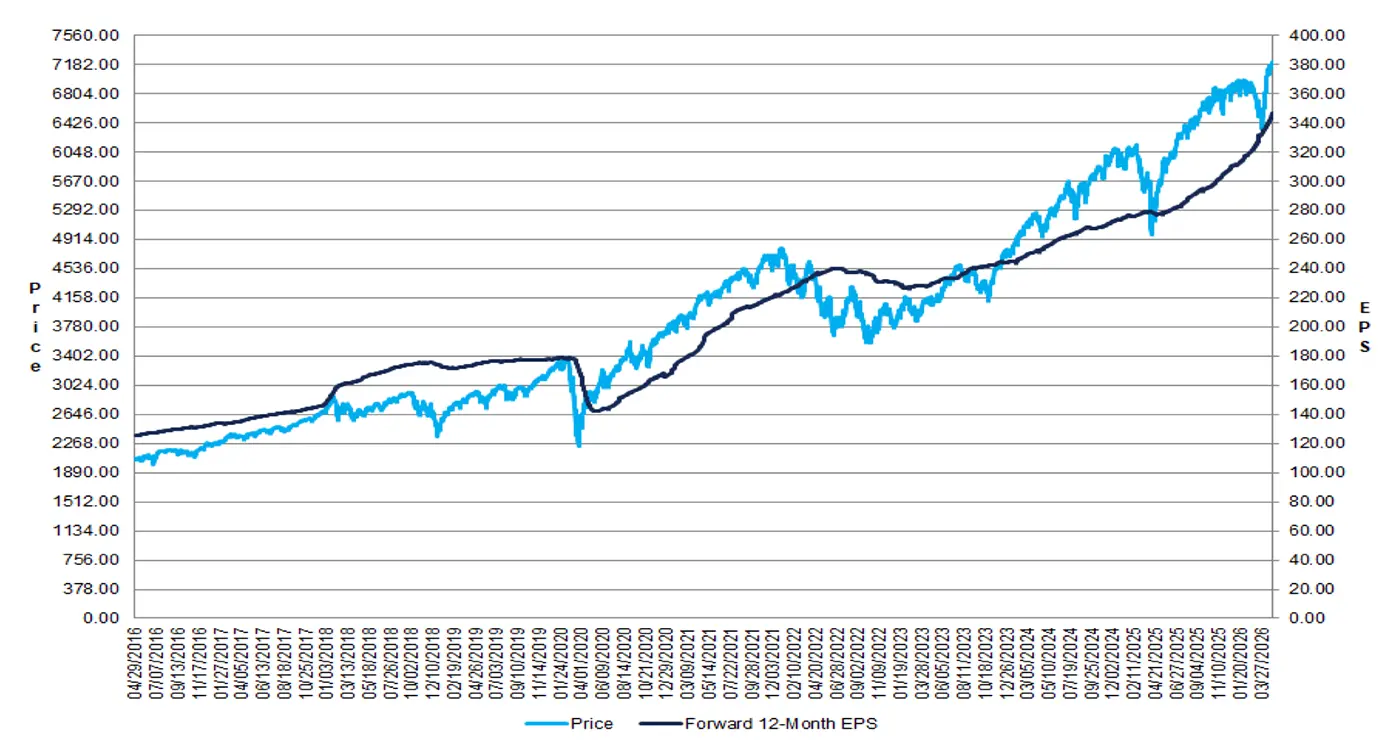
- “Valuation: The forward 12-month P/E ratio for the S&P 500 is 20.9. This P/E ratio is above the 5-year average (19.9) and above the 10-year average (18.9).”
FIGURE 2: S&P 500 CHANGE IN FORWARD 12-MONTH EPS VS. CHANGE IN PRICE—10 YRS.
Source: FactSet
FIGURE 2: PROJECTED S&P 500 EARNINGS GROWTH BY SECTOR (Y/Y)—Q1 2026
Source: FactSet
RECENT POSTS