The weaker-than-expected ADP National Employment Report released on July 2 raised hopes among many Federal Reserve watchers that a rate-cutting cycle could begin as early as the central bank’s July meeting.
FIGURE 1: ADP EMPLOYMENT CHANGE—ONE-YEAR TREND

Sources: ycharts.com, ADP
According to ADP, “private sector employment shed 33,000 jobs,” though annualized pay figures showed a healthy increase of 4.4%.
“Though layoffs continue to be rare, a hesitancy to hire and a reluctance to replace departing workers led to job losses last month,” said Dr. Nela Richardson, chief economist at ADP. “Still, the slowdown in hiring has yet to disrupt pay growth.”
CNBC reported on the ADP release,
“Private sector hiring unexpectedly contracted in June, payrolls processing firm ADP said Wednesday, in a possible sign that the economy may not be as sturdy as investors believe as they bid the S&P 500 back up to record territory to end the month. …
“Economists polled by Dow Jones forecast an increase of 100,000 for the month. The May job growth figure was revised even lower to just 29,000 jobs added from 37,000.”
June BLS employment report weakens rate-cut expectations
Following the ADP release, “whisper” numbers for the Bureau of Labor Statistics (BLS) report the next day had fallen to below 100,000 jobs created. Published consensus estimates ranged from 105,000 to 115,000.
The actual report from the BLS, released on July 3, showed that the U.S. economy added 147,000 nonfarm payrolls, exceeding all but the most optimistic estimates.
FIGURE 2: UNITED STATES NONFARM PAYROLLS—ONE-YEAR TREND

Sources: Bureau of Labor Statistics, Trading Economics
First Trust summarized key highlights from the BLS release:
- “Nonfarm payrolls increased 147,000 in June, beating the consensus expected 106,000. Payroll gains for April and May were revised up by a total of 16,000, resulting in a net gain, including revisions, of 163,000.
- “Private sector payrolls rose 74,000 in June but were revised down by 16,000 in prior months. The largest gains in June were education and health services (51,000) as well as leisure & hospitality (20,000). Manufacturing declined 7,000 while government increased 73,000.
- “The unemployment rate declined to 4.1% in June versus 4.2% in May.
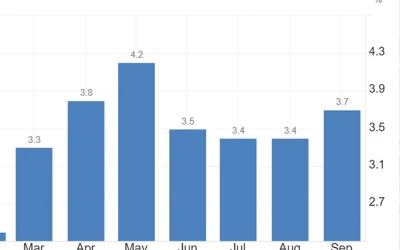
- “Average hourly earnings—cash earnings, excluding irregular bonuses/commissions and fringe benefits—rose 0.2% in June and are up 3.7% versus a year ago. Aggregate hours dropped 0.3% in June but are up 0.8% from a year ago.”
 Related Article: Is the yield curve’s predicted recession arriving?
Fed funds rate futures anticipate no cut in July
While the ADP report may have generated short-lived hope for a rate cut at the Federal Reserve’s July 29–30 meeting, the CME FedWatch tool, which tracks the market’s expectations, shows a 95% probability that the Fed will hold rates steady at 4.25% to 4.50%.
FIGURE 3: CME FEDWATCH—PROBABILITIES OF CHANGES TO THE FED FUNDS RATE

Source: CME
MarketWatch noted,
“Companies aren’t laying many people off, but they aren’t hiring very aggressively, either. It’s taking longer for people who have lost jobs to find another.
“Still, the rise in employment last month, though overstated, makes it unlikely the Federal Reserve will move up its timetable on lowering interest rates. A weak report would have renewed Wall Street speculation of a July rate cut.”
Following the July 3 release, Bespoke Investment Group added,
RECENT POSTS