Time’s irreplaceable value
Time’s irreplaceable value

Before his involvement as a Founding Father, Benjamin Franklin was a prominent writer in Philadelphia, publishing the annual “Poor Richard’s Almanack”—a collection of astronomical calendars, weather forecasts, and puzzles intended to be light-hearted education for the public.
Among the factual figures, he often included personal wit and wisdom. Historians use these simple aphorisms to describe the personality of one of the most accomplished figures in our nation’s history. In the 1747 edition, he famously observed, “Lost time is never found again.”
In an era when life was uncertain and often brief, his words served as a call to live with intention. Today, they remain just as relevant. While we constantly wish for more time, it is finite. The real challenge is using what we have wisely.
In this edition of “Three on Thursday,” we examine different aspects of time, exploring how we spend it, how media competes for it, and how it can shape long-term financial outcomes.
Time spent with others, by age
The American Time Use Survey, conducted annually by the Bureau of Labor Statistics, provides comprehensive data on how Americans spend their time and with whom they spend it.
To understand how social connections evolve over a lifetime, we can examine how much time people spend in the company of others, categorized by age. According to the data, social interactions peak around age 35 before gradually declining. After this point, time spent alone increases significantly, while time spent with children decreases sharply. This serves as a powerful reminder to cherish and invest in meaningful relationships while we have the opportunity.
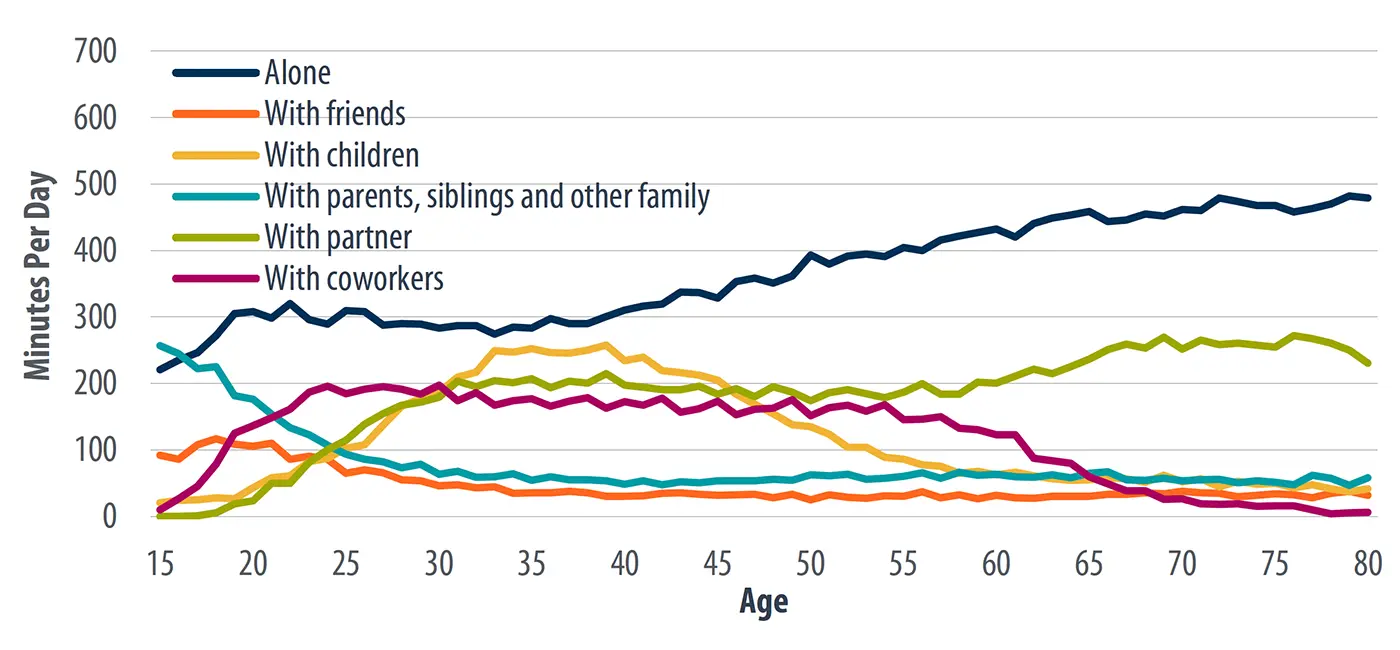
Note: Relationships used to categorize people are not exhaustive. Additionally, time spent with multiple people can be counted more than once (e.g., attending a party with friends and partner counts toward both “friends” and “partner”).
Sources: ourworldindata.org, Bureau of Labor Statistics, First Trust Advisors.
Data from the 2025 American Time Use Survey.
Time spent with media, by format
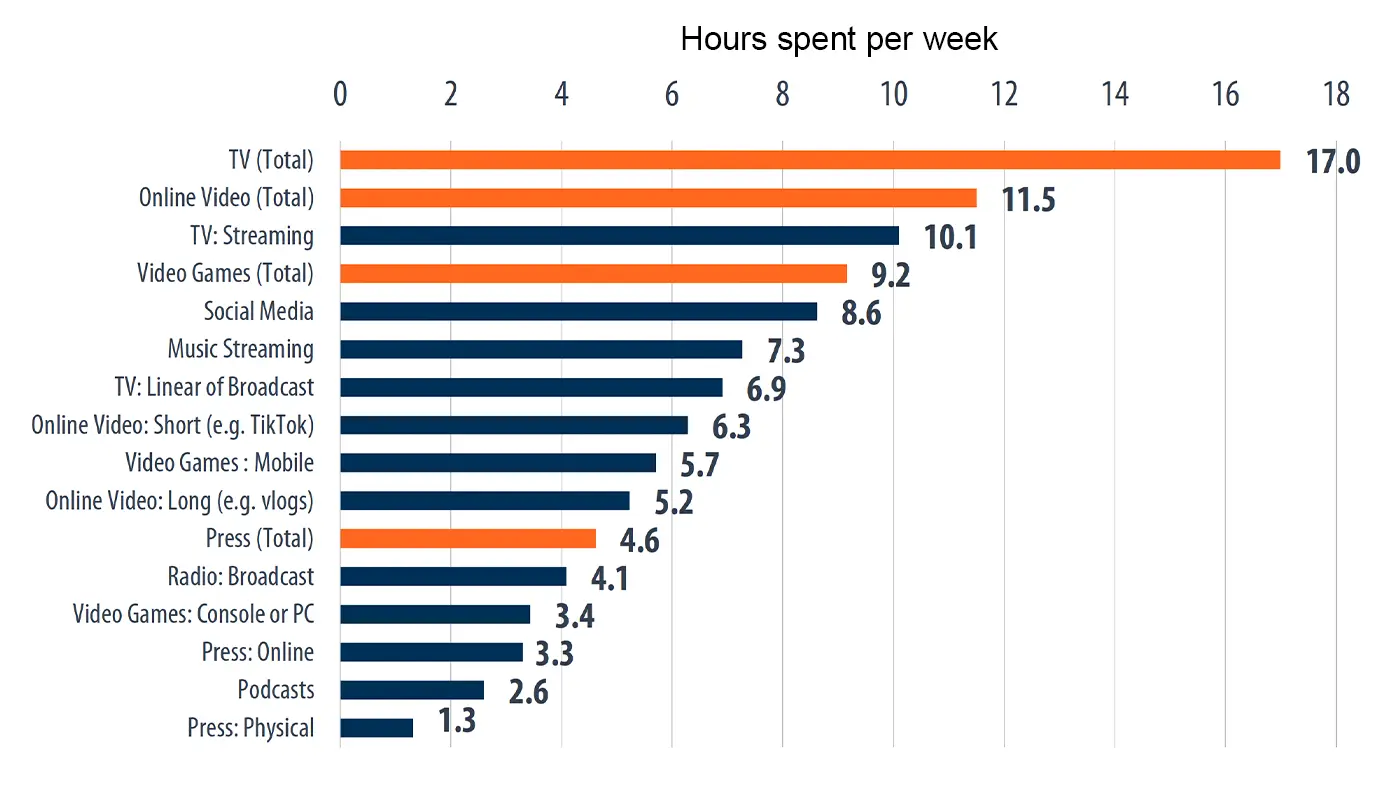
Media consumption continues to take up an increasing share of our lives. DataReportal’s “Digital 2026: The United States of America” report provides a comprehensive analysis of digital adoption and usage in the U.S.
With more than 150 in-depth charts, the report explores key trends in internet behavior, social media engagement, mobile usage, e-commerce, and digital marketing. According to GWI, a DataReportal partner specializing in global consumer research, American internet users spend, on average, more than 43 hours each week consuming media, led by 17 hours of television and 11.5 hours of online videos.
Sources: GWI, DataReportal, First Trust Advisors. Most recent data as of Q2 2025.
 Related Article: The power of planning: A behavioral perspective
Time spent in the market: Warren Buffett’s net worth
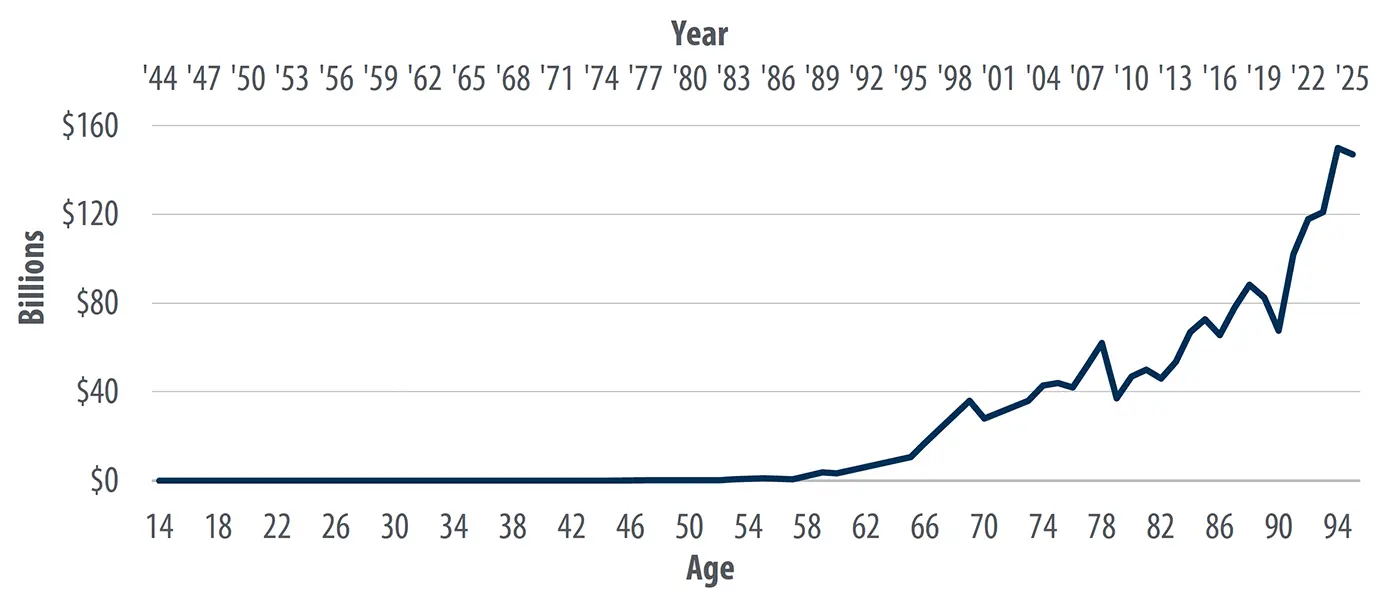
It’s not about timing the market—it’s about time in the market that truly matters.
This often surprises people, but Warren Buffett didn’t become a billionaire until he was over 50. Today, his net worth is around $147 billion, meaning over 99% of his wealth was accumulated after turning 50. Buffett started investing at just 11 years old, putting $114.75 into a natural gas company called Cities Service.
His success is a testament to the power of time and compound growth. The earlier you invest, the sooner compound interest works its magic, potentially turning modest early investments into substantial wealth over time. Wealth-building isn’t exclusive to financial wizards—it’s accessible to anyone with patience, discipline, and time on their side.
Source: First Trust Advisors
Editor’s note: Brian Wesbury is chief economist at First Trust Advisors LP. He and his team prepare a weekly market commentary titled “Monday Morning Outlook,” as well as frequent research reports and the recurring feature “Three on Thursday.” Proactive Advisor Magazine thanks First Trust for permission to republish an edited version of this commentary, which was first published on May 28, 2026.
This report was prepared by First Trust Advisors LP and reflects the current opinion of the authors. It is based on sources and data believed to be accurate and reliable. Opinions and forward-looking statements expressed are subject to change without notice. This information does not constitute a solicitation or an offer to buy or sell any security.
The opinions expressed in this article are those of the author and the sources cited and do not necessarily represent the views of Proactive Advisor Magazine. This material is presented for educational purposes only.
First Trust Portfolios LP and its affiliate First Trust Advisors LP (collectively “First Trust”) were established in 1991 with a mission to offer trusted investment products and advisory services. The firms provide a variety of financial solutions, including UITs, ETFs, CEFs, SMAs, and portfolios for variable annuities and mutual funds. www.ftportfolios.com
RECENT POSTS