Measure risk, invest accordingly
Measure risk, invest accordingly

Theodore Hicks • Cary, NC
Hicks & Associates Wealth Management LLC
Read full biography below
With more than two decades in the financial industry, I’ve had the opportunity to specialize in a variety of areas. When I began my career, I wanted to be a financial planner—to help clients navigate the complex world of finance. But after going through the dot-com bear market and then the global financial crisis, I came to realize that financial planning and asset management are two very different skill sets. The simplistic theory of relying only on basic portfolio diversification didn’t hold up in either of those severe bear markets.
Those experiences led me to transform my practice into a firm that specializes in asset management. Yes, we provide comprehensive financial planning for our clients and take pride in that. But we also believe that a well-designed financial plan combined with a poorly managed portfolio can still lead to a lot of problems.
We bring a family office–style approach to our services, offering personalized attention and comprehensive financial management. This involves coordinating various aspects of each client’s financial life, from investment management to retirement planning, and everything in between. Our goal is to provide a holistic approach to financial management, helping clients put all the pieces of their financial puzzle together in a way that clearly supports their goals.
Our philosophy is deeply rooted in the teachings of Colossians 3:23, which inspires us to pour our hearts into our work as if we’re serving the Lord and not just man. That verse guides our commitment to serve with excellence in all that we do. We believe that our clients deserve the best, and we strive to provide planning advice and portfolio management that exceeds expectations.

We primarily focus on pre-retirees and retirees, but we also work with younger clients. We tend to attract business executives and their spouses. Our active, disciplined investment approach resonates with higher-net-worth clients who want not only growth but also sound risk management.
We take a team approach. While each team member has a specific role, we act as one in meeting the needs of our clients across all services. I am the CEO and chief investment officer, overseeing investment strategies and active portfolio management. I also set our firm’s broad strategic direction and am ultimately responsible for operations, client acquisition and retention, and overall performance. Paul Richards is our chief financial planner and manages planning strategy for clients, including retirement, tax, and estate planning. He and I coordinate closely on aligning each client’s planning and investment objectives. Braxton Furstein is our investment analyst and dedicated trader. He assists with investment plan development and monitors the markets to implement our active trading strategies. Karen Hydar is our practice manager and supports both clients and team members with account services, administration, and scheduling.
Recognizing that every financial journey is unique, we tailor our advisory services to each client. That involves developing a comprehensive plan around their financial goals, risk tolerance, and time horizon. Whether they’re aiming to generate dependable retirement income, enhance their legacy plan, or give more efficiently to charity, our goal is to create a road map that guides them toward those financial aspirations.
 Whenever markets turn volatile, you’ll hear many financial experts urge people to remain focused and hold for the long term. The theory is that the market always recovers over time. But those who advocate for a strict buy-and-hold approach often haven’t deeply examined the evidence. There have been many periods when such inaction would have significantly hurt one’s long-term financial security. The unforgiving math of portfolio losses, the fallacy of long-term expected returns, and the flaws in modern portfolio theory all speak to that reality. Yes, clients should invest for long-term gain. However, we believe they also need proactive strategies that can help their portfolios weather short- and intermediate-term market volatility and steep drawdowns.
Our investment management service goes beyond merely managing assets. We adopt an active, rules-based approach, regularly adjusting client portfolios based on market trends and changes. By closely monitoring market conditions and leveraging our expertise, we aim to capitalize on opportunities while mitigating risk.
We start by assessing the market environment—identifying whether it’s risk-on, risk-off, or sideways. That shapes our investment decisions. We want to participate in strong market environments and adopt defensive or lower-exposure strategies in poor markets. To achieve this, we monitor trends and momentum across various sectors in the stock, bond, and commodities markets, tailoring our investment strategy accordingly.
Risk management is central to everything we do. We understand that accepting small losses is the key to avoiding significant ones. Our rigorous, rules-based, data-driven, multi-strategy approach is built to mitigate downside risk while pursuing growth. In a fast-moving market, we’re not afraid to sell a position that underperforms or to reduce exposure when overall conditions deteriorate.
Our detailed, written investment policy statement, or IPS—shared with every client—outlines our structured methodology. It’s designed to achieve their portfolio objectives through full market cycles. The IPS identifies our “model of models” approach, emphasizing strategy diversification across quantitative and tactical strategies, each with its own set of buy and sell rules.
We believe this approach helps clients avoid emotion-driven investment decisions. We serve those who want truly professional, truly active portfolio management—and who understand that having a defensive strategy is just as important, sometimes even more important, than having an offensive one.
I’d share the advice my father gave me: “Take personal responsibility for your actions, strive to be the best you can at what you do, and be a lifelong learner.”
Several things helped me gain knowledge about the advisory business and the ever-changing world of investment management early on—starting with a strong relationship I built with my college professor for personal financial planning. He was, and still is, a practicing advisor. He shared valuable insights about the business and recommended the national firm he felt offered the best training in the industry. That helped launch my career.
To new advisors, I’d say, take advantage of the training and credentialing programs available, and commit to them as opportunities to grow—not just as a way to add letters after your name. You’ll only get out of an educational program what you’re willing to put into it.
 Related Article: Investment lessons from defensive driving
My father also told me, “Pay attention to what successful people are doing and emulate that.” That mindset led me to seek out the best minds in investment management. Through my work toward the Chartered Market Technician designation, I’ve had opportunities to learn from many of them. I also read constantly—books on investment theory, white papers, market commentary, best practices from peers—and attend webinars and conferences to stay sharp. I recommend that to anyone starting out, even if their firm relies on third-party investment managers.
Finally, as you grow your practice, it’s critical to build a team of dedicated, high-quality people. I’ve been blessed with the opportunity to do exactly that.
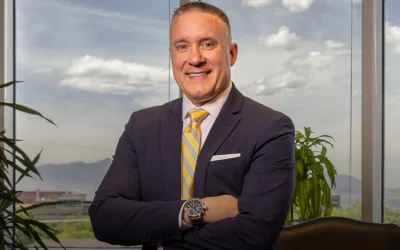
 Theodore (Ted) Hicks, CFP, CKA, CMT, is the founder, CEO, and chief investment officer of Hicks & Associates Wealth Management LLC, located in Cary, North Carolina. “We bring a family office–style approach to our services,” says Mr. Hicks, “offering personalized attention and comprehensive financial management.”
Born in Newport News, Virginia, Mr. Hicks later moved to Waldorf, Maryland, to live with his father and two brothers. His father, a historian and museum director, emphasized “personal responsibility, a work ethic, and lifetime learning,” says Mr. Hicks. In high school, Mr. Hicks was a multisport athlete, competing in soccer, football, and wrestling. He excelled as the placekicker in football, received a team leadership award in soccer, and was named scholastic athlete of the year as a senior.
Mr. Hicks attended North Carolina State University, where he studied business with a concentration in finance. To help pay for college, he worked throughout school, including in a co-op position with Nortel Networks. While the corporate experience was valuable, he realized he was more interested in personal financial planning after taking courses on the subject. A professor encouraged him to meet with American Express Financial Advisors, which helped launch his career in financial services in 1999.
Mr. Hicks spent 20 years working as a financial advisor with American Express and Ameriprise, serving as an employee, independent contractor, and ultimately a franchise owner. In 2002, he acquired the practice of a successful advisor who was relocating. “The transition was well-planned,” he says, “and I still have many clients from that period.” In 2020, Mr. Hicks joined the registered investment adviser (RIA) space and opened his own firm’s RIA in 2023. He says his firm stands out for how it “actively manages client portfolios, seeking advantageous risk-reward scenarios while mitigating risk.”
Mr. Hicks holds the Certified Financial Planner (CFP), Certified Kingdom Advisor (CKA), and Chartered Market Technician (CMT) designations. He is the author of “Evidence-Based Investing,” a book that offers insights into proactive wealth management.
Mr. Hicks and his wife have three children. Their eldest is married and recently welcomed a child. In his free time, Mr. Hicks enjoys flying as a private pilot and has a passion for reading. He is active in his church, serves on the board of the John Locke Foundation, and supports numerous community and charitable organizations through personal and firm contributions.
Disclosure: Advisory services offered through Hicks & Associates Wealth Management LLC, an investment adviser registered with the SEC.
Certified Financial Planner and CFP are registered trademarks of the Certified Financial Planner Board of Standards Inc. (CFP Board). CKA and Certified Kingdom Advisor are registered trademarks of Kingdom Advisors Inc. CMT and Chartered Market Technician are registered trademarks of the CMT Association.
Photography by Savannah Grace
QUICK TIP

Discipline over emotion: Helping clients succeed with a rules-based approach
Theodore (Ted) Hicks, CFP, CKA, CMT, is the founder, CEO, and chief investment officer of Hicks & Associates Wealth Management LLC, located in Cary, North Carolina.
The Hicks & Associates website outlines key principles of the firm’s investment philosophy. They use a rules-based asset-management process designed to navigate changing market conditions. The approach focuses on minimizing drawdown risk while seeking to maximize gains. That philosophy is carried out through four main practices:
- Gauge the risk. “We start by assessing the market environment—identifying whether it’s risk-on, risk-off, or sideways,” Mr. Hicks explains. “That shapes our investment decisions.”
- Keep up with the trend. Hicks says the firm aims to participate in strong market environments by monitoring trends, momentum, and movements across various sectors in the stock, bond, and commodities markets—adjusting their investment strategy accordingly.
- Prioritize risk management. “Risk management is central to everything we do,” says Mr. Hicks. “We understand that accepting small losses is the key to avoiding significant ones. Our rigorous, rules-based, data-driven, multi-strategy approach is built to control downside risk while pursuing growth.”
- Embrace active management. “In a fast-moving market, we’re not afraid to sell a position that underperforms or to reduce exposure when overall conditions deteriorate,” notes Mr. Hicks.
RECENT POSTS