The ‘great advisor exodus’ and your succession plan
The ‘great advisor exodus’ and your succession plan

A business continuity plan (BCP) that doesn’t reflect an intentional, vision-driven transition is merely a legal document. Your clients deserve more.
He’s a 60-year-old RIA founder reeling from a near-terminal cancer diagnosis with zero successor in place. I wish his story were rare, but in the first wave of the “great advisor exodus,” this is becoming all too common.
In February 2025, McKinsey & Co. reported that approximately 110,000 advisors, or 38% of the current total, are expected to retire by 2035. This is a sobering future we face. Through those doors will exit wisdom, expertise, communication savvy, and relationships forged across decades of fiduciary adherence.
Surely, a new wave of fresh faces will offset this exodus? Not exactly:
- Industry talent retention is down across financial services, with fewer than 10% of all advisors under the age of 30. Statistics from the CFP Board show that just 7.5% of CFP professionals are ages 20 to 29.
- The industry experienced negative recruitment numbers for four of the past five years.
- The CFP Board also reports that 21% of CFPs are 60 or older.
When I first read McKinsey’s article in February 2025, I sought to understand why so many advisors are eyeing their exit. It is especially surprising when the demand for financial advisors, according to many industry sources, is expected to increase significantly over the next decade as more Americans are approaching or already in retirement.
It led me to connect with well over 1,500 advisors at conferences, in coffee shops, on Zoom, through LinkedIn DMs, and on plenty of golf courses. During those conversations, I asked, “Why are advisors that you know leaving the industry?”
Three consistent reasons kept surfacing: age, AI-driven technology disruption, and elevated investor expectations paired with fee compression. Each of those reasons deserves its own article. Regardless of the reason, advisors are exiting at an arguably higher rate than our industry has ever seen, some with little to no continuity plan in place.
How are younger financial advisors approaching the advisor exodus of 2035?
Younger advisors see no reason to offer premium payouts for books of business they didn’t build when they can use technology to attract new business organically. Advisors under 40 have said these exact words to me:
- “Why would I bother acquiring an older advisor’s book? I’ll just spend the next two years using AI to show up everywhere, wait him out, and pick up his former clients as he fades.”
- “It’ll cost me less to just market to everyone in his book. I can get a near-identical dataset of his book for less than $250, build AI into my business, and show them the difference through ads. Which sounds better to you, Jon: pay $250 once or a couple hundred grand over a bunch of years?”
You’re right to recoil a bit, as I did when I first heard these comments.
The principle of trust seems woefully underappreciated in any discussion of book acquisition. The same advisor seasoned investors trusted for decades is the one they’ll rely on even more to choose the right successor. An emerging advisor doesn’t have the benefit of that trust, and it’s an advantage that no technology can truly fabricate. Only time, truth, and tact together are strong enough to foster such a bond.
 Related Article: Documenting your proprietary client process offers powerful differentiation
How are more senior financial advisors approaching the advisor exodus of 2035?
For older advisors, the pressure to realize at least some exit value is rising compared to only three years ago, before Commonwealth was acquired and LPL Financial, Raymond James, Osaic, Cetera, and a host of other independent broker-dealers started writing massive transition checks.
However, book acquisitions and transition checks aren’t the same game. Acquiring broker-dealers expect a transition period during which the advisor will continue working at the firm, a stipulation that acquiring advisors typically don’t offer or want. AI innovation itself is making it easier than ever to build a book and less appealing than ever to simply acquire an established one, given the economics.
Business continuity is gaining focus as more advisors realize their continuity plans may not be compelling to incoming advisors. One OSJ mentioned to me that three advisors, each in their mid-60s or older, separately approached an advisor under 40 within that same OSJ to add him to their business continuity plans because, “We like him, we trust him, and he’s younger than us.” That sentiment reflects how supply and demand are resetting the book acquisition market for advisors.
For some, life simply hit fast-forward on conversations they didn’t expect to have for another 20 years, if at all. The RIA founder from the beginning, who’s facing an uphill battle with cancer, had his outlook change drastically in less than 24 hours. His COO reached out to me with questions about how AI could help make their firm more attractive as a potential acquisition target in case the founder needed to exit within the next 12 months.
That inflection point prompted their leadership team to host several off-sites with the primary goal of creating a “What if he’s not here next year?” plan. The term “business succession” kept recurring in my conversations with the COO. With some coaxing, I encouraged the COO to reframe the conversations from “succession” to “continuity.” Does the nuance matter? It matters in the mindset. Succession, at least in my opinion, focuses on some new permanence in the exiting advisor’s role. “Continuity” suggests a more intentional, vision-driven transition on your terms, even if it’s not your ideal timing.
Instead of the “What if Daniel gets hit by a bus tomorrow?” scenario, business continuity planning needs to flip the conversation to something more along the lines of, “If Daniel won the lottery and moved to Aruba tomorrow, how would we provide even greater care to all of our investor clients?” The world of possibilities opens to a forward-framing perspective in this moment. How might we be even more efficient, informed, and relationally invested as a result of Daniel’s celebrated success?
Give your firm a vision beyond your business continuity plan
For the glass-half-full crowd, which is what I aspire to be, where is the opportunity? The hot topic in the advisor space right now is AI. Firms that are racing to implement AI, as many firms should, will enjoy an early-arrival advantage for a season. Adoption rates will reach critical mass soon enough, but then what?
Technology doesn’t care about your longevity, your retirement goals, or even whether you’ve lost your passion for serving investors. So, who or what does care about them? Your clients, your team members, your social circles, and your family, some of whom may be employed at your firm and wishing for a more candid conversation about this exact topic.
If you don’t have an up-to-date business continuity plan in place, do everyone you love in your life a favor and bring it up to date in the next two weeks. I know of a younger, seemingly healthy advisor, a father of three children, who died in a medical emergency while his incomplete BCP still sat on his desk. His outsourced CCO had reminded him three times that it remained an outstanding item, to no avail. There’s a reason why the SEC has proposed a BCP Rule for RIAs, though it hasn’t been adopted yet.
Business continuity extends beyond some executive handoff to the next advisor in line. It’s an ever-evolving conversation around who your firm is, what your staff is doing today to keep your firm from having an expiration date, and which opportunities ahead could reinforce why your firm matters more than any individual.
That RIA founder is now adding staff, clearing his schedule for mentoring conversations, and approaching AI through the lens of fiduciary duty. With whatever time he has left, he’s asking how technology can unlock his greatest legacy of care. His firm is stronger and more focused, generating more revenue, and better positioned to serve clients well, a shared goal that any firm would hope to achieve.
The opinions expressed in this article are those of the author and the sources cited and do not necessarily represent the views of Proactive Advisor Magazine. This material is presented for educational purposes only.
No information contained within this article and adjoining media may be construed as legal, financial, accounting, or investment advice. Readers should seek the services of a qualified professional in these areas.
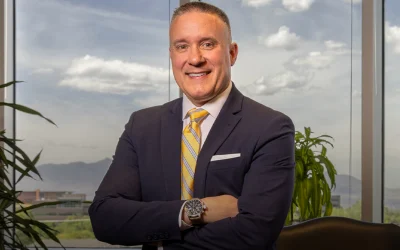
 Jon Cook is an author, speaker, and consultant serving the financial advisory community. He has worked with over 300 advisory teams to build human-first, AI-forward firms. Mr. Cook is the founder of Advisor Story and has contributed to TheStreet, MarketWatch, Advisor Perspectives, and Retirement Daily. advisorstory.com
RECENT POSTS