In investing, preparation beats predictions
In investing, preparation beats predictions

John Grace • Westlake Village, CA
Investor’s Advantage Corporation • LPL Financial
Read full biography below
Our specialty is seeking to limit losses. That may sound overly simple, but it’s the heart of what we do. Too many people in this business still tell clients that losses are just something they have to live with. I think that view is both defeatist and outdated.
When I entered the business years ago, investors had far fewer tools and choices. Today, I believe you can have more precise and thoughtful conversations with clients about risk. Instead of using vague labels like conservative, moderate, or aggressive, we ask clients a more specific question: How much loss—in dollars or percentages—can you truly live with? Not the loss they think sounds reasonable on a questionnaire. We mean the kind of drawdown that would affect them on a deep emotional level and undermine their confidence in staying with their investment plan. Once you know that, you can begin to build a portfolio that has a real chance of operating within those parameters.
Of course, the other side of that equation is seeking portfolio growth over the long term. Clients aren’t hiring us simply to avoid pain; they want to make progress toward retirement, legacy, and lifestyle goals. Our view is that better risk management, paired with sophisticated portfolio diversification, can improve the odds of achieving those goals—because severe losses can do significant damage to a long-term plan.
We want clients to stay in the game, maintain optionality, and avoid having to wait and hope for a portfolio to recover after it has been badly hit. To me, that’s not just an investment issue. It’s a planning issue. A great financial plan paired with a poorly managed portfolio is still a problem. Our work sits at the intersection of the two.

Our clients represent a wide range of people, but we tend to work mainly with boomers and millennials. Many are engineers. A lot of advisors do not enjoy working with engineers because they ask hard questions and drill down into details.
Engineers are not impressed with slogans, simple charts, or conventional industry thinking. They want to know how something works, where the possible failure points are, and what assumptions and scenario stress tests are being used. That suits us very well because we like to have substantive conversations. We want clients to fully understand the rationale behind our recommendations, not just accept them at face value.
We take a team approach to financial and investment planning. I often lead the initial big-picture discussion, especially when someone comes to us through a referral and wants to speak with me first. Then my associate, Daniel Medina, joins the process and helps drive the detailed discovery process. He has been with me for many years and handles much of the planning work, money management, client service, and compliance.
“What matters is being prepared for a range of outcomes.”
We carefully gather the facts, both qualitative and quantitative: the clients’ assets, liabilities, income sources, and family structure, as well as their near-term concerns, long-term goals, and the risks they most want to avoid. We use planning and reporting tools to help make those trade-offs as clear as possible, but at the center of the process are still conversations. We ask a lot of questions because the details matter when developing effective solutions.
Daniel sometimes describes clients’ financial lives as a complex puzzle. All the pieces might come in a box, but they are disorganized and lack cohesion. We want to help clients put that puzzle together in a disciplined and intelligent way that holistically reflects their objectives. Our services in this regard include many facets of wealth management and retirement planning; financial coaching and goals-based planning; and protection, risk-management, and estate-planning strategies.
 The phrase I keep coming back to is consistent with Warren Buffett’s philosophy: “Predicting rain doesn’t count. Building arks does.” I don’t think anyone consistently wins by pretending to know every market move in advance. What matters is being prepared for a range of outcomes and positioning portfolios so that clients are not devastated if things go badly.
That means we don’t simply accept the default industry playbook. The old 60/40 model may still be useful in some contexts, but it shouldn’t be treated like sacred doctrine. I often point to large institutional investors such as Yale University, which long ago moved away from a traditional formula toward a broader mix of asset classes in pursuit of more stable, consistent results. We may not be able to precisely replicate an endowment strategy, but we can learn from the principle that diversification should be thoughtful, not automatic.
In terms of specific alternatives to equities and bonds, we will often explore private equity, private credit, various real estate investment vehicles, currencies, and commodities. Diversifying portfolio assets through alternatives is compelling in today’s markets, where public market investments tend to move in the same direction more than ever before. There are many diversifying strategies out there that aren’t very well known, and people generally don’t have access to them on their own. We find that clients appreciate approaches that seek to smooth out returns and volatility without introducing significant additional risk.
Another major piece of our investment approach is active management, which we usually introduce to client portfolios through sophisticated tactical strategies from third-party managers. I appreciate managers who are willing to reduce exposure, move to cash, or reallocate when conditions call for it rather than simply remaining fully exposed in a static strategy.
We have seen the results of this approach in periods of steep drawdowns such as the early 2000s and the Great Recession. But we also see value from active management in less stressful market conditions. Strategies that pursue geographic, asset-class, or sector rotation can often seek opportunities that may be missed with a primarily passive portfolio.
 Related Article: Active vs. passive: Is it for real?
Everyone wants to be safe and make a lot of money, but balancing those two desires can be challenging. Sometimes clients have saved enough to be very conservative. But more often they have not, and they need a measure of growth and, therefore, exposure to more volatility. Part of our job is helping them understand that risk-return trade-off in a clear, realistic way—and then how to manage it.
Finally, I have long been a believer in the value of macroeconomic research. Our firm subscribes to research from a highly respected analytical firm. One reason is that so much of the industry depends on product providers for its ideas. If all you do is listen to the people trying to sell the next thing, your view can become very narrow.
I value research that steps back and asks bigger questions, especially demographic and macroeconomic questions. That kind of work can challenge your assumptions and force you to think about long-wave changes in housing, spending, markets, and investor behavior. Whether every forecast proves exactly right is not the point. The value is that it keeps you thinking independently instead of simply following the crowd.
Clients tell us that they appreciate that we start with their biggest concerns, including worst-case scenarios and the outcomes they most want to avoid. They also like that we make both spouses feel equally heard, respected, and involved. Our approach is very planning-oriented, so we help clients see how major financial decisions could affect their long-term goals before they act.
Clients also value our investment approach, which is centered on limiting losses, managing risk thoughtfully, and building portfolios that reflect the level of downside they can realistically live with. That gives them the ability to make informed, clear-eyed choices and greater confidence that their plan and investments are working together on their behalf.
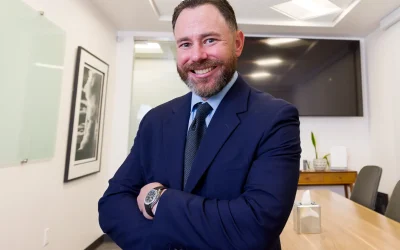
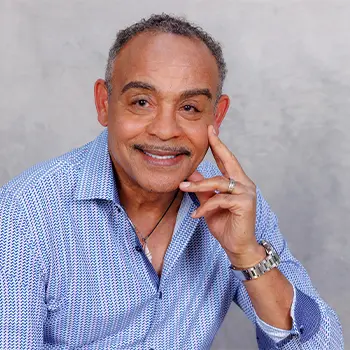 John Grace is the founder and president of Investor’s Advantage Corporation, based in Westlake Village, California, and a registered principal with LPL Financial. With over 40 years of experience, he says he is “passionate about working with clients seeking financial independence.” Mr. Grace’s practice has a clear objective: helping clients make long-term financial progress while working to limit losses during difficult markets.
Raised in South Los Angeles, Mr. Grace observed sharp contrasts between households with very different financial circumstances, which shaped his interest in how people build stability over time. His father owned a small upholstery shop, and his mother worked for the Federal Aviation Administration evaluating fitness standards for flight personnel. He attended public schools and spent formative summers outdoors with the Cub Scouts and Boy Scouts, ultimately becoming a camp counselor and earning the rank of Eagle Scout. He swam competitively in high school and served on the student council.
Mr. Grace attended Carleton College in Minnesota and later took courses at California State University, Los Angeles. He entered the financial-services industry through a mentorship that introduced him to consultative client work and developed his financial-planning discipline in an environment that emphasized comprehensive planning rather than “product-first” sales. Over time, his process has incorporated independent research and the use of third-party managers with strategies designed to support investment risk management. He works closely with his associate, Daniel Medina, to develop comprehensive financial plans for clients.
Mr. Grace is a master certified and charter member of the HS Dent Advisors Network, which focuses on macroeconomic research. He is a Certified Employee Ownership Advisor (CEOA) and a member of the Black Financial Advisor Community at LPL. The Los Angeles Business Journal named him to its list of Top 200 Most Influential Leaders for 2023–2025.
Investor’s Advantage Corporation helps nonprofit organizations raise funds through charity poker tournaments. Mr. Grace is a past president of the Ventura County chapter of Boy Scouts of America and the Rotary Club of Westlake Village Sunrise. He is a charter member of the American Heart Association, Ventura County, and a board member of the California Lutheran Education Foundation and the El Camino College Foundation.
Mr. Grace and his wife have four children. He enjoys spending time with family and fitness activities, such as yoga, swimming, biking, and going to the gym. Mr. Grace is a frequent media guest, sought-after speaker, and contributor to financial publications.
Disclosure: Securities and advisory services offered through LPL Financial, a registered investment advisor. Member FINRA and SIPC.
Photography by Susan Sheridan
QUICK TIP

4 principles for building resilient, risk-managed portfolios
John Grace is the founder and president of Investor’s Advantage Corporation, based in Westlake Village, California. Mr. Grace’s practice has a clear objective: helping clients make long-term financial progress while working to limit losses during difficult markets.
He says he often uses sports analogies to discuss broad investment strategy with clients. He explains it this way:
“Savvy investors and championship sports teams win the same way: They play defense first.
“They know offense gets attention, but risk control keeps you alive when conditions turn ugly. They avoid catastrophic mistakes, adjust strategy when momentum shifts, protect the lead instead of showboating, and understand that one bad turnover can erase a season—or a lifetime of savings.
“Champions don’t rely on miracles. Savvy investors don’t either. Both focus on limiting losses so they’re still standing when the opportunity to win shows up.”
Mr. Grace says his firm follows four key principles when putting this philosophy into practice with clients:
- Define your risk tolerance in percentage terms.
- Build a portfolio to limit losses within your risk appetite.
- Apply active management. Say no to static accounts.
- Add alternative investments for greater diversification.
He adds, “Investor’s Advantage Corporation believes that financial and investment planning should be about risk mitigation, not unnecessary risk creation.”
RECENT POSTS