Recent economic data, including the spike in oil prices, is not giving the Federal Reserve any easy answers when it comes to near-term interest-rate decisions.
The inflation outlook has become more complicated as the war involving Iran has pushed oil prices sharply higher, with Brent recently topping $100 per barrel and spiking even higher over the course of the conflict. While forecasts of $150 or more per barrel are purely speculative, analysts at Goldman Sachs see higher prices lasting throughout 2026.
FIGURE 1: ICE BRENT CRUDE OIL FUTURES (MAY 2026 CONTRACT)
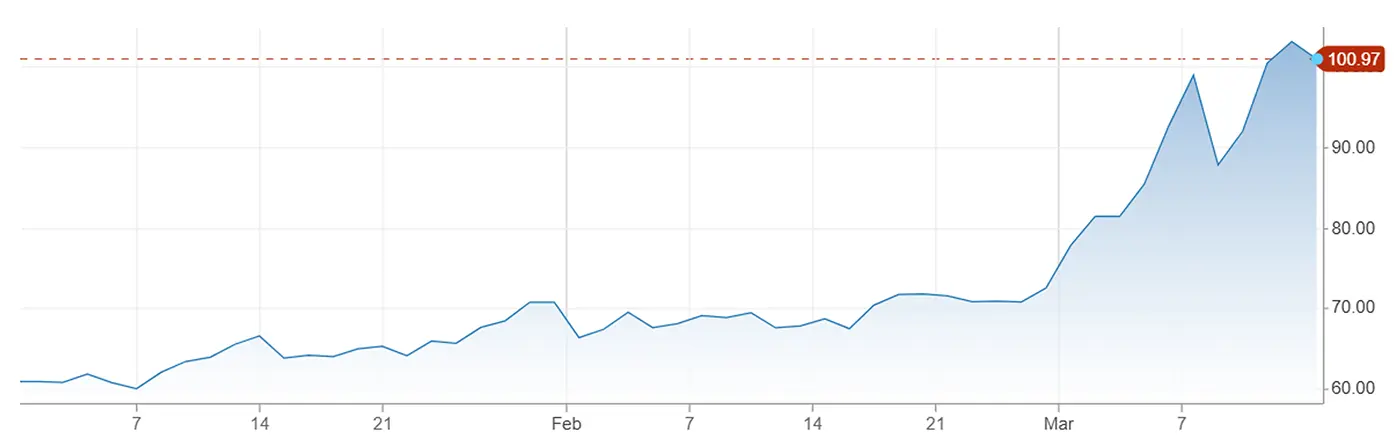
Source: CNBC; data as of 10:30 a.m., 3/16/2026
According to OilPrice.com,
“Goldman Sachs expects Brent Crude prices to average over $100 per barrel this month as the Middle East war continues to choke supply, the investment bank said on Friday, noting that prices could surge even higher if the biggest oil supply disruption in history extends into months instead of weeks.
“Analysts at Goldman Sachs see the average Brent Crude price at $85 per barrel in April, they said in a note carried by Reuters.
“The new estimates follow Thursday’s price forecast update in which Goldman Sachs hiked its Brent Crude forecast to $71 per barrel in the final quarter of the year, and sees WTI Crude averaging $67 a barrel in Q4, up from $66 and $62 per barrel previously, respectively.”
Even if Fed officials prefer to look through geopolitically driven commodity moves, they cannot ignore the risk that higher energy costs bleed into gasoline and heating oil prices, shipping and travel costs, input costs for petroleum-dependent products, and consumer and business inflation expectations.
February consumer inflation data had looked relatively contained before the latest Iran escalation. But the new oil shock threatens to interrupt the previous slow path to lower inflation—just as policymakers were hoping to gain confidence that price pressures were easing.
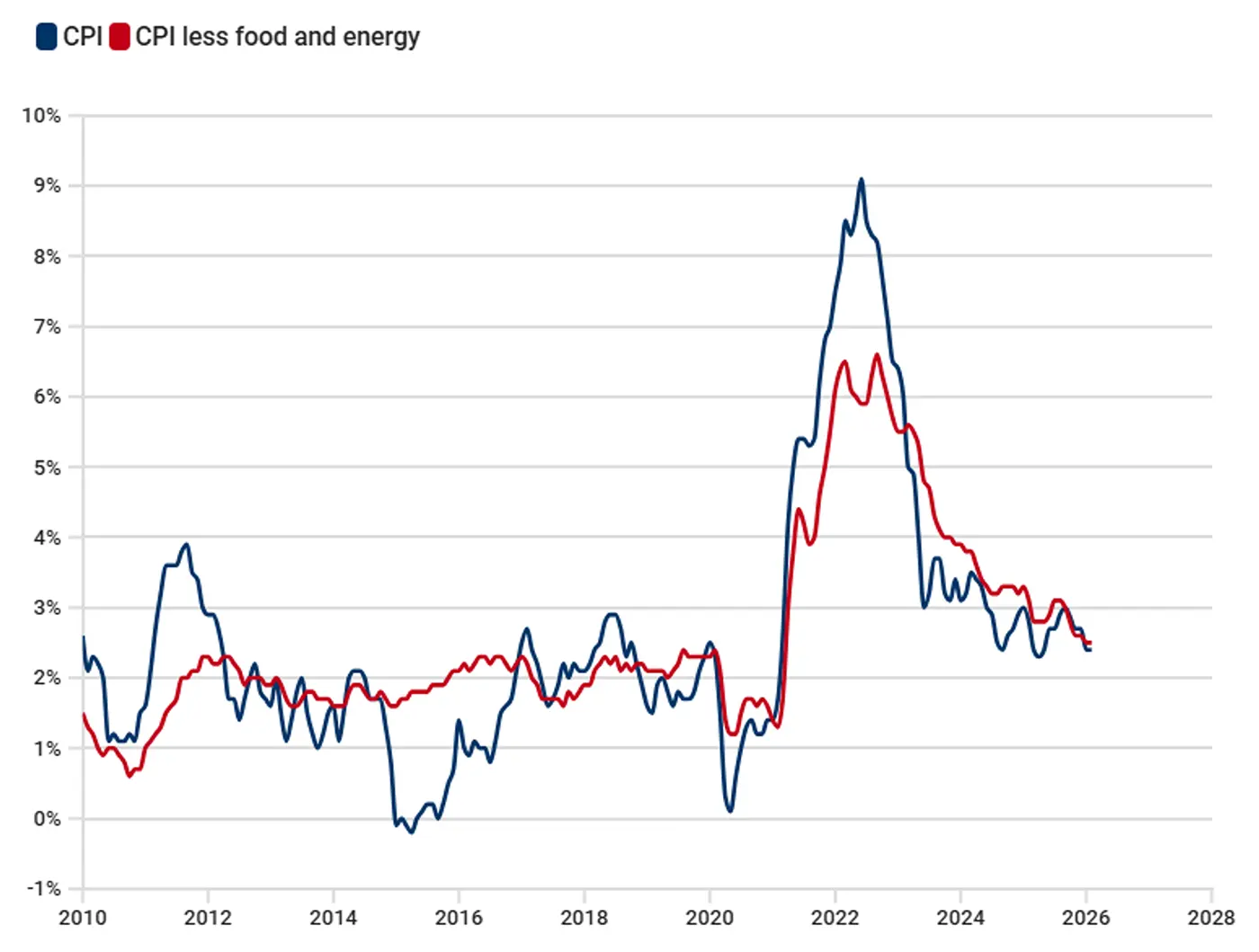
February 2026 inflation data showed headline CPI holding steady at 2.4% year over year, its lowest level since May 2025, while core inflation remained at 2.5%.
Fox Business reported last week,
“So-called core prices, which exclude volatile measurements of gasoline and food to better assess price growth trends, were up 0.2% from the prior month and rose 2.5% from a year ago. Those figures were in line with economists’ expectations.
“The monthly core CPI figure was slightly cooler than January’s 0.3% reading, while the annual figure was unchanged from last month.”
FIGURE 2: ANNUAL CPI INFLATION (2010–2026)
Sources: U.S. Bureau of Labor Statistics via St. Louis Federal Reserve, Fox Business
For the Fed, that matters because energy-driven inflation can be difficult to ignore even when it originates from geopolitics rather than domestic or global energy demand. It raises the risk that the central bank keeps rates higher for longer—not because growth is strong, but because inflation expectations become less anchored as households and businesses begin adjusting to higher fuel costs.
Fox Business highlighted the most likely course of action for the Fed:
“‘A steady inflation reading would probably be a welcome data point on any other day, but against the current backdrop of geopolitical uncertainty and surging oil prices, it may not carry as much weight in the markets—or with the Fed,’ said Ellen Zentner, chief economic strategist for Morgan Stanley Wealth Management.
“‘Despite the prospect of releasing oil reserves, continued uncertainty translates into continued upside risk for oil prices, and that translates into a Fed that will remain cautious about cutting interest rates,’ Zentner added.”
 Related Article: What is driving the surge in precious metals?
GDP and employment reports further impact Fed decision-making
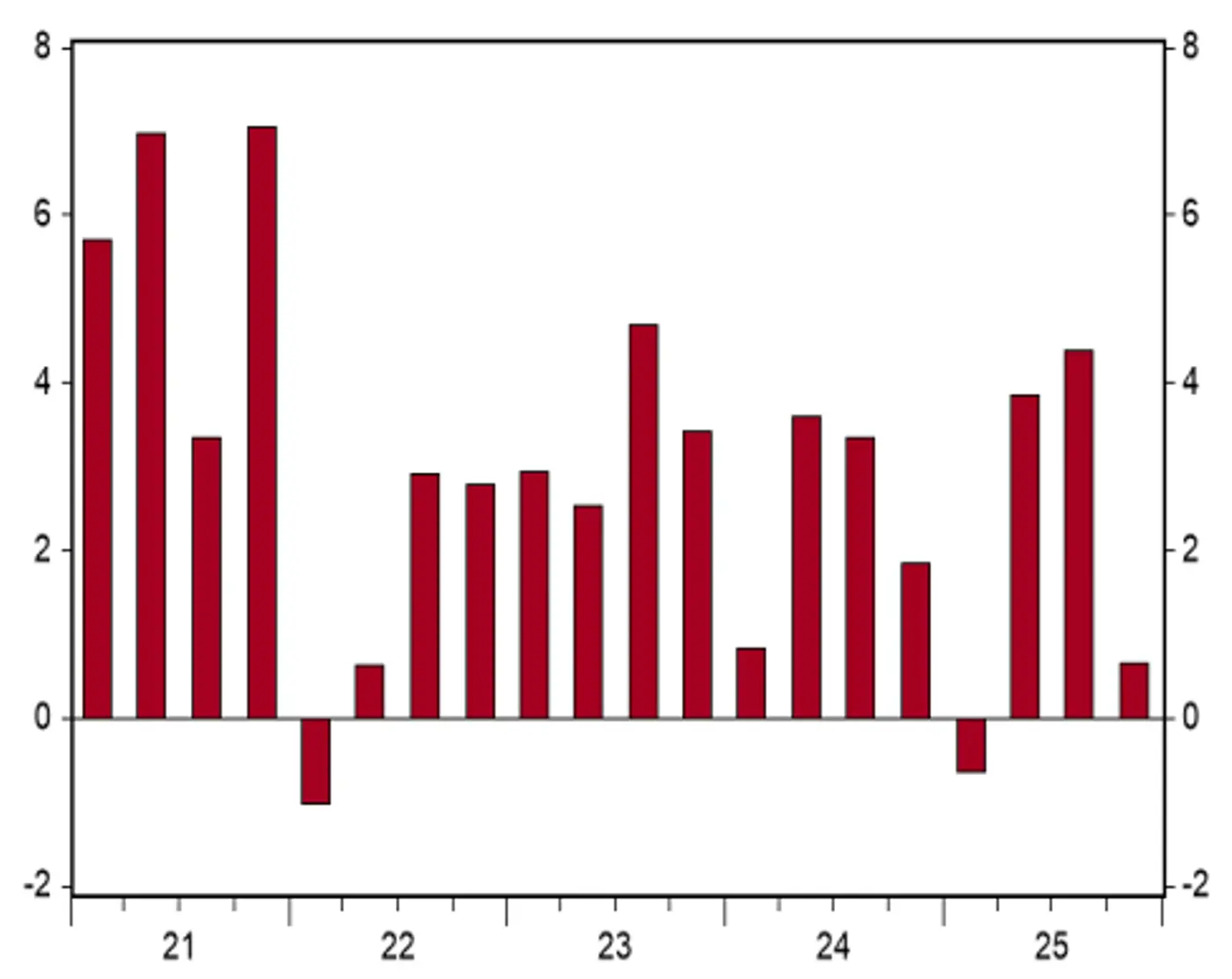
At the same time, the growth and labor data argue for caution on the economy rather than caution on inflation. The government’s latest revision cut fourth-quarter 2025 real GDP growth to 0.7% from the initial 1.4%, with weaker consumer spending, investment, government spending, and exports all contributing to the downgrade.
FIGURE 3: REAL GDP GROWTH—ANNUAL RATE % CHANGE
Sources: First Trust, Bureau of Economics/Haver Analytics
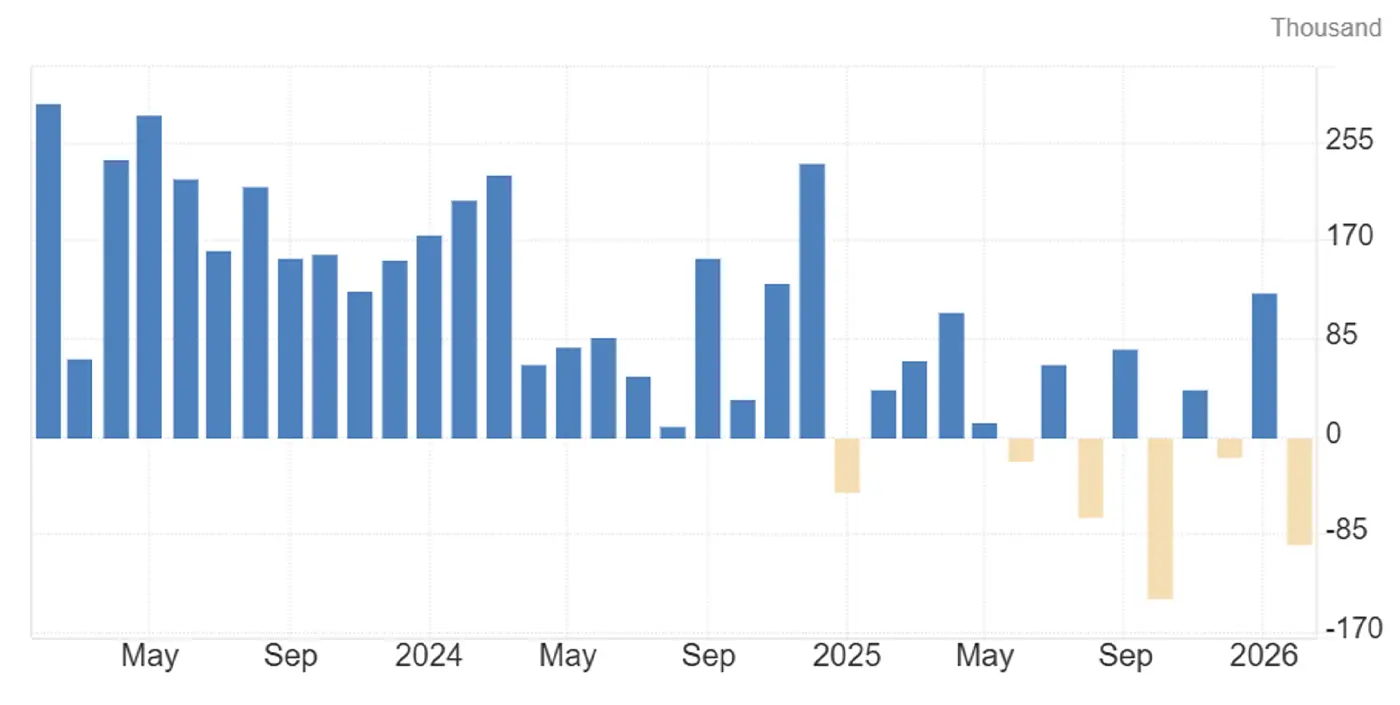
However, the government shutdown, says Reuters, appears to have weighed on the quarter, which suggests some of the weakness may prove temporary. Labor data have also softened. February payrolls declined by 92,000 jobs, unemployment rose to 4.4%, and the January JOLTS report showed hiring remained tepid even as openings increased. Taken together, those figures suggest the economy is losing momentum, which in a normal setting would strengthen the case for rate cuts.
FIGURE 4: UNITED STATES NONFARM PAYROLLS (FEB. 2026 REPORT)
Sources: Trading Economics, U.S. Bureau of Labor Statistics
That is why the Fed faces such a difficult balancing act. The real economy is sending slower-growth signals, but inflation risk has not fully disappeared.
One reason markets have not turned decisively pessimistic is that corporate profit trends remain firm. FactSet’s latest earnings data show the S&P 500 is still expected to post double-digit year-over-year earnings growth for the first quarter of 2026. That points to continued resilience in corporate America even as macro data soften.
The key takeaway is that strong earnings may give the Fed room to wait rather than rush into rate cuts. Unless labor weakness deteriorates sharply, policymakers may prefer to hold rates steady until they can determine whether the recent softness reflects genuine economic slowdown or temporary distortion—and whether the oil shock becomes more of a short-term event or a broader inflation problem.
However, MarketWatch recently noted that the “unthinkable” could occur in Fed interest-rate policy:
More likely, MarketWatch says, is a “stay the course” policy for the short-term, perhaps moving rates later in the year:
“Many economists think the Fed is still likely to cut rates at some point this year, but they’ve pushed back their forecasts for the timing of any cut until September or later.
“Former Dallas Fed President Robert Kaplan urged the central bank to be patient. ‘I have a funny feeling things are going to look different at the end of March than they do now,’ he said in a CNBC interview.
“Former top Fed official Vincent Reinhart said the majority in the Fed is still leaning toward easing monetary policy, ‘but is in no way in a hurry.’
“‘The events in the Middle East don’t change that direction and only give you more reason to want to wait,’ he said in an interview with MarketWatch.”
RECENT POSTS