Taking emotion out of the investment equation
Taking emotion out of the investment equation

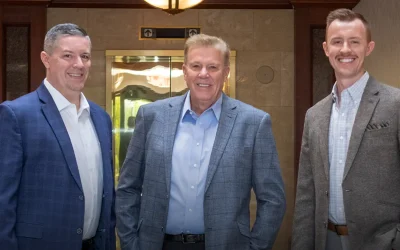
Thomas Campbell • Frisco, TX
STF Management LP
Read full biography below
I started as an engineer at Texas Instruments—TI—in the late 1980s. I had earned a degree in business administration from McMurry University and worked in a summer program at TI. It required a hard technical degree, so I returned to McMurry and earned a BS in computer science. In addition to programming, I worked on a range of process-oriented projects, including quantitative analysis, experimental design, and training other engineers. Having business and technical degrees was definitely a plus, and I was often called in on special projects, including capital-spending campaign planning.
While I loved working at TI, a recruiter convinced me to consider a position at Fidelity Investments. I worked there for two years in retail marketing, focusing on direct marketing campaigns and data analysis. TI later offered me a role as its infrastructure support manager for North America, and I decided to return.
My exposure to financial services at Fidelity had a huge impact, and I considered moving to another financial organization. I became an independent representative and financial advisor in 1995 and a branch manager in 1999.
While I have worked with clients in a full-service financial-planning capacity for 30 years, my greatest passion lies in investment management. I often say I caught the active investment management bug around 2001 and have since focused on tactical approaches to asset allocation. The market displacements during the dot-com crash and Great Recession only fortified my belief that active approaches to managing investment risk—and seeking to build long-term compounded asset growth—can offer many tangible and psychological benefits to clients.
Describe the basis of your investment philosophy in more detail.
 Staying committed to a long-term strategy is critical to a successful retirement plan. Attempting to perfectly time short-term market highs and lows does not translate into a good investment strategy, especially in today’s fast-moving market environment.
Investors have traditionally relied on strategic asset allocation to provide diversification and reduce volatility. A blend of stocks, bonds, and alternatives can provide an efficient trade-off between long-term returns and protecting against market downturns. Within this framework, investors can fine-tune their portfolio allocation to match their investing horizon, risk tolerance, and financial goals.
However, a static, diversified portfolio often misses opportunities. First, it provides no insight about investment timing. Hesitant investors may leave money on the sidelines when concerned about turbulent markets. Others may worry about moving money into stocks while indexes are at all-time highs. Loss-aversion studies show that investors tend to lose out on returns when waiting to deploy capital—especially during unpredictable periods.
A static portfolio also offers little protection when historical correlations between asset classes break down. Investors typically expect bonds to help preserve and even grow capital during a stock sell-off. Yet during the Great Recession, and downturns in 2020 and 2022, bonds fell alongside stocks. They provided no stability to the strategy when it was needed most. For the average investor, the breakdown of a well-planned strategy may lead to capitulation.
Having studied investor behavior for years, it is clear that most individual investors underperform the market. And many working with financial advisors often do not fare much better. Most investors go through an endless, poorly timed cycle of chasing performance and then getting burned through capitulation at just the wrong time.
“We believe in using tactical strategies within a well-diversified portfolio.”
Capitulation typically occurs for one of two reasons: (1) steep drawdowns, when investors are scared to remain invested; or (2) extended periods of flat or static performance (laydown), when investors abandon their long-term strategy in search of what they perceive as better returns.
The mantra of major Wall Street firms has always been to stay invested regardless of market conditions, based on the idea that “the market always comes back.” There are several flaws in this thinking. First, it does not align with investor behavior, as capitulation is very real for many investors. Second, the time it takes for markets to “get back to even” can span years—also leading to investor behavioral issues. Third, the argument is based on the theory that investors cannot afford to “miss the best days of the market,” suggesting their long-term returns will collapse. But Wall Street only tells part of that story. Research shows that the “best days” often occur during the most volatile bear market environments and are frequently accompanied by the worst market days. Missing both the best and worst market months will usually provide better long-term portfolio performance than a purely passive approach.
What solutions do you believe can help address these issues?
 I see no reason why access to sophisticated, risk-managed strategies should be limited to major institutions or the wealthiest individual investors. The average investor deserves similar tools to support their financial-planning and investment objectives. I believe tactical investment management is what most people actually want—once they understand it—but the industry often pushes incomplete observations to support purely passive approaches.
I begin the process with new clients with a rigorous fact-finding assessment of their current situation and future goals. Education around sound financial principles is central to that process and can span all areas of a client’s financial plan, from basic life insurance needs to estate planning to sophisticated, long-term retirement-income planning.
Since the early 2000s, much of my focus has been on the equity side of client portfolios, developing strategies designed to help address that cycle of chasing performance, capitulation, and abandoning a long-term investment strategy.
We believe in using tactical strategies within a well-diversified portfolio built on five core principles: (1) the ability to adapt to changing market conditions, (2) consistent equity exposure with less volatility, (3) rules-based risk management, (4) tactical navigation of short-term market environments in pursuit of long-term performance, and (5) an approach that helps investors set aside emotion and better adhere to their overall investment plan.
Markets essentially do two things: They go up, and they go down—with some directionless periods in between. Our goal is to help investors employ strategies that can potentially make money in both bullish and bearish environments, while keeping the approach simple, repeatable over time, and grounded in what we believe offers the best available predictive power—within recognized limits.
I also make no absolute predictions. Even the world’s best strategists cannot claim 100% accuracy on market direction and timing. We will all be wrong at times, and not all strategies will fire on all cylinders at once. That underscores the importance of diversification and a careful blend of strategies.
A cornerstone of our active management approach is offering a wide potential combination of diversified strategies. We can incorporate different third-party money managers to construct individualized approaches for clients, supported by an open-architecture framework that provides flexibility across strategies, products, money managers, and fiduciary relationships.
 Related Article: Missing the best days is (still) a myth–and why it matters
This is a paradigm shift for most clients, who come to realize that the health of their portfolios does not have to depend only on a rising equity market. For example, one of the highly sophisticated strategies we have developed exclusively trades the NASDAQ 100 and can move among long, leveraged long, short, or cash positions based on proprietary indicators.
This tactical asset-allocation model can play offense or defense, employing momentum, correlation, and volatility trends to determine an appropriate allocation to the underlying index. A risk-on/risk-off approach can avoid exposure to outsized market moves by managing risk through analysis of historical trends. If done correctly, this strategy can generate returns similar to those of the underlying index while reducing volatility and mitigating drawdowns.
How do clients tend to react to this approach?
I believe our clients are comfortable with the articulation of both their long-term objectives and how we seek to pursue those goals through a combination of well-designed strategic and tactical investment approaches. They come to realize that building wealth and financial security does not depend on any one strategy’s occasional good year. Clients will inevitably experience some drawdowns, which is why we carefully discuss expectations and risk tolerance during the portfolio development process. They have a full understanding that we are targeting consistently positive net performance across many years, using several complementary strategies and making actively managed adjustments along the way.
 Thomas Campbell is managing partner and co-CEO of STF Management LP, in Frisco, Texas. He has 30 years of experience in the financial-services industry, guiding clients in addressing their financial-planning and investment objectives.
Born in Colorado, Mr. Campbell grew up in several different states. His father, a Korean War veteran in the Air Force, worked in customer service and supply-chain management for technology companies. His mother was primarily a homemaker. In high school, he competed on successful math and science teams.
Mr. Campbell attended McMurry University, earning a bachelor’s degree in business administration and a bachelor of science degree in computer science. He began his career at Texas Instruments, where he worked as a programmer, industrial engineer, and capital-spending planner. Between two stints with the company, he worked for Fidelity Investments on retail marketing efforts.
Mr. Campbell became an independent representative and financial advisor in 1995 and a branch manager for his firm in 1999. He also completed his CFP designation (since released). He says he “caught the active investment management bug” around 2001 and has since focused on tactical approaches to asset allocation. Those efforts culminated in 2008 with the creation of the rule set for Self-Adjusting Trend Following (STF), which remains a separately managed account offering and 1940 Act Fund from Flexible Plan Investments. The Quantified STF Fund (QSTFX) received Morningstar recognition in 2020, 2023, and 2024 as its top-performing tactical allocation fund, and in 2017 as its top-performing U.S. equity mutual fund. In 2014, Mr. Campbell developed his second algorithmic system, STF Tactical Unconstrained Growth (TUG), which is offered as a separately managed account and ETF. He later developed a third system, STF Tactical Growth and Income (TUGN), which is offered as an ETF.
Mr. Campbell and his wife live in Frisco and have two grown children. They enjoy spending time with family and travel extensively. Mr. Campbell is an elder in his church and teaches Bible study lessons. He is also an avid golfer.
Disclosure: All investments involve risk, including the possible loss of capital. The products and services of STF Management LP are not available in all jurisdictions or regions where such provision would be contrary to local laws or regulations.
Morningstar awards are based on Morningstar fund data. No fees are paid in connection with these awards.
CFP and Certified Financial Planner are registered trademarks of the Certified Financial Planner Board of Standards Inc. (CFP Board).
Photography by Sarah Hailey
QUICK TIP

A tactical, rules-based approach to long-term investment performance
Thomas Campbell is managing partner and co-CEO of STF Management LP in Frisco, Texas. He has 30 years of experience guiding clients in addressing their financial-planning and investment objectives.
Mr. Campbell says he sees no reason why sophisticated, risk-managed strategies should be accessible only to major institutions or the wealthiest investors. “The average investor deserves similar tools to support their financial-planning and investment objectives,” he says. “We offer clients an open-architecture approach framework that provides flexibility across strategies, products, money managers, and fiduciary relationships.”
He adds that this approach centers on using tactical strategies within a well-diversified portfolio built on five core principles:
- The ability to adapt to changing market conditions
- Consistent equity exposure with less volatility
- Rules-based risk management
- Tactical navigation of short-term market environments in pursuit of long-term performance
- An approach that helps investors set aside emotion and better adhere to their overall investment plan
Mr. Campbell summarizes the philosophy with an analogy he often shares with clients: “We have built an America’s Cup–caliber boat, employ the best crew in the world, and are on a beautiful ocean. When the wind blows—and we don’t care which way it blows—we think we can do some terrific sailing. That does not mean we will not encounter some rough water, but we have full confidence we will successfully reach the finish line.”
RECENT POSTS

Market exuberance is in the eye of the beholder

How August and September have fared after June and July closed lower

Helping clients move forward with a plan and a purpose
Falling consumer sentiment accompanies weaker retail sales