Thomas Campbell • Frisco, TX
STF Management LP
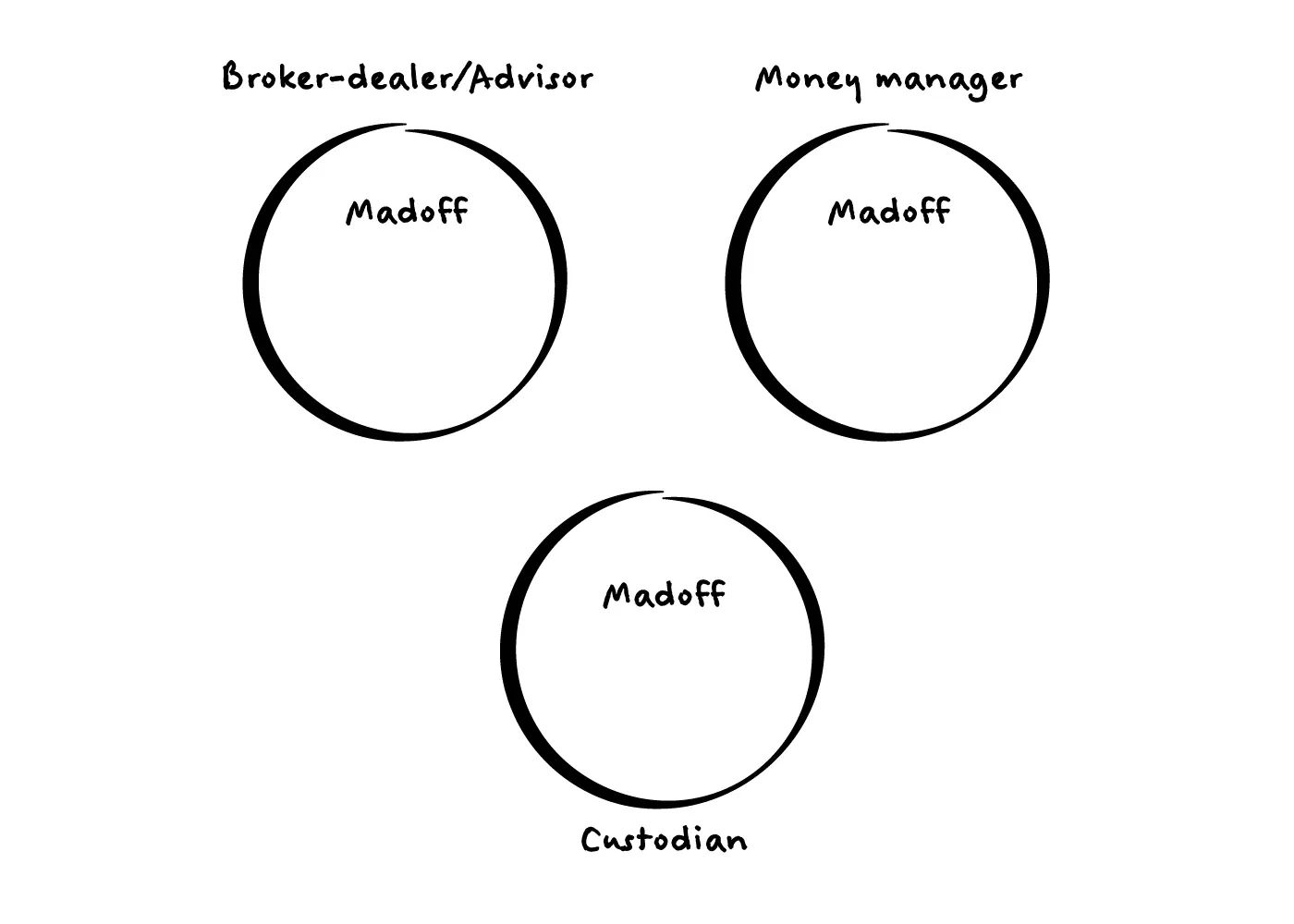
 One of the educational approaches I use with clients relies on a simple diagram to explain the fundamental structure—and potential flaws—of the investment industry.
One of the biggest financial scandals in recent memory involved Bernie Madoff, who defrauded thousands of investors of billions of dollars. Madoff essentially used the promise of steady, high returns to build his client base, using new investors’ funds to pay existing clients over a period of many years.
How did Madoff get away with it? Most people will say it was a sophisticated, well-executed Ponzi scheme, which is correct.
But the next question is the important one: How did the investor not know it was a Ponzi scheme?
I tell clients that they need to understand that in every financial investment relationship, there are three parties.
The first is the broker-dealer and/or advisor representative. This is the individual you think of first when you think about your account. It is their duty to know who you are and what your situation is (“Know Your Customer”). This includes your risk tolerances, goals, desired outcomes, and constraints. They then introduce you to the second party: the money manager.
The money manager makes the specific decisions on what to buy and sell, and when. In Madoff’s case, he could have shown you a 15-year track record in which he reportedly lost money in only two of the 180 months—pretty outstanding! Who do I make the check out to?
That brings us to the third party: the custodian. They hold your actual investments and make the proper disclosures to the IRS and other regulatory agencies. They generate monthly statements and provide online access. In the case of Bernie Madoff, he was also the custodian.
I then ask clients a simple question: Would you personally ever invest under this type of structure?
Source: Thomas Campbell
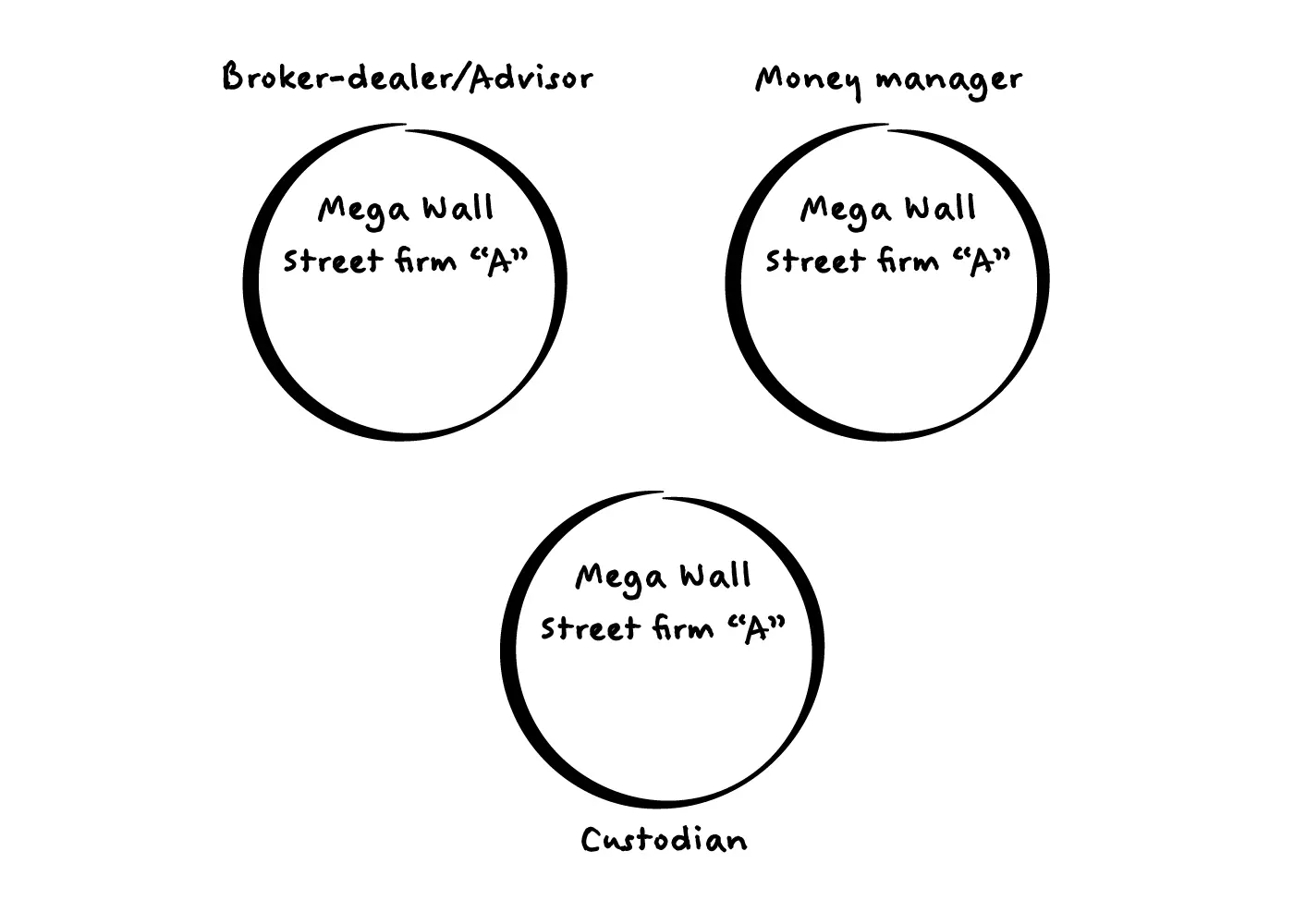
Next, I ask whether they are familiar with large Wall Street investment firms such as Merrill Lynch, Morgan Stanley, Goldman Sachs, Fidelity, or Vanguard, just to mention a few. And the answer is, “Of course.”
I am not questioning the integrity or investment expertise of these firms. What I do question is how firms serving massive numbers of clients can consistently provide unbiased, customized attention to each client’s unique investment objectives.
Their operating model illustrates the challenge. When you walk into or call one of these firms, you will speak with one of their investment representatives. This representative will likely recommend one of the firm’s investment products or prepackaged portfolio options. And then your check will be made out to the same firm.
Sound familiar?
Madoff got away with his scheme not because he asked his clients to do something extraordinary, but rather something that has come to be seen in the industry as common practice.
You could substitute any large Wall Street firm into all of those circles. It is how the industry works.
Source: Thomas Campbell
This is not how I work, or how my firm works.
I explain to clients that I’m an independent advisor with STF Management (STFM). As a fiduciary, I have the duty to understand who you are and what your goals, desired outcomes, and constraints are.
A core part of my investment philosophy is that access to sophisticated, risk-managed strategies should not be limited to large institutions, hedge funds, or the wealthiest individual investors. The average investor deserves the same types of investment tools to support their financial and investment planning and implementation.
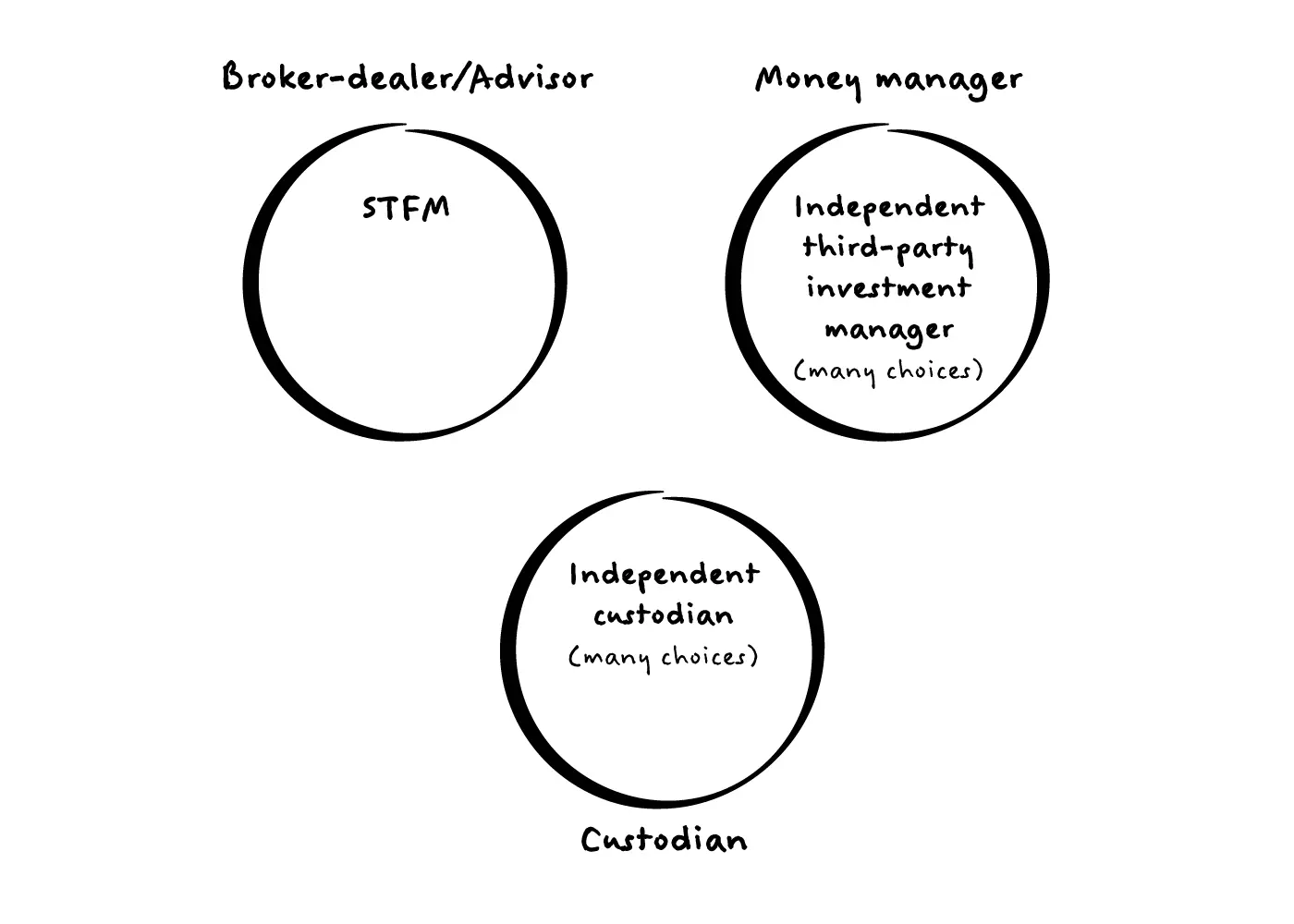
So, for over three decades, I have built relationships with many high-quality third-party investment managers that can offer sophisticated investment strategies to the average investor. While many options exist, I most often work with Flexible Plan Investments, Q3 Asset Management, and Capital Advice, depending on which firm is most appropriate for a specific client’s needs. These third-party investment managers offer strategy development, day-to-day investment oversight, and trade execution.
 Related Article: Today’s market calls for a multidimensional investment approach
The same approach applies to custodians. We offer clients multiple options, all of which provide strong technology, reasonable costs, and solid reporting. The ones I recommend most frequently are Axos Advisory Services, Schwab, Pershing, and Nationwide.
This open-architecture structure does more than just distribute risk across three separate, independently owned entities.
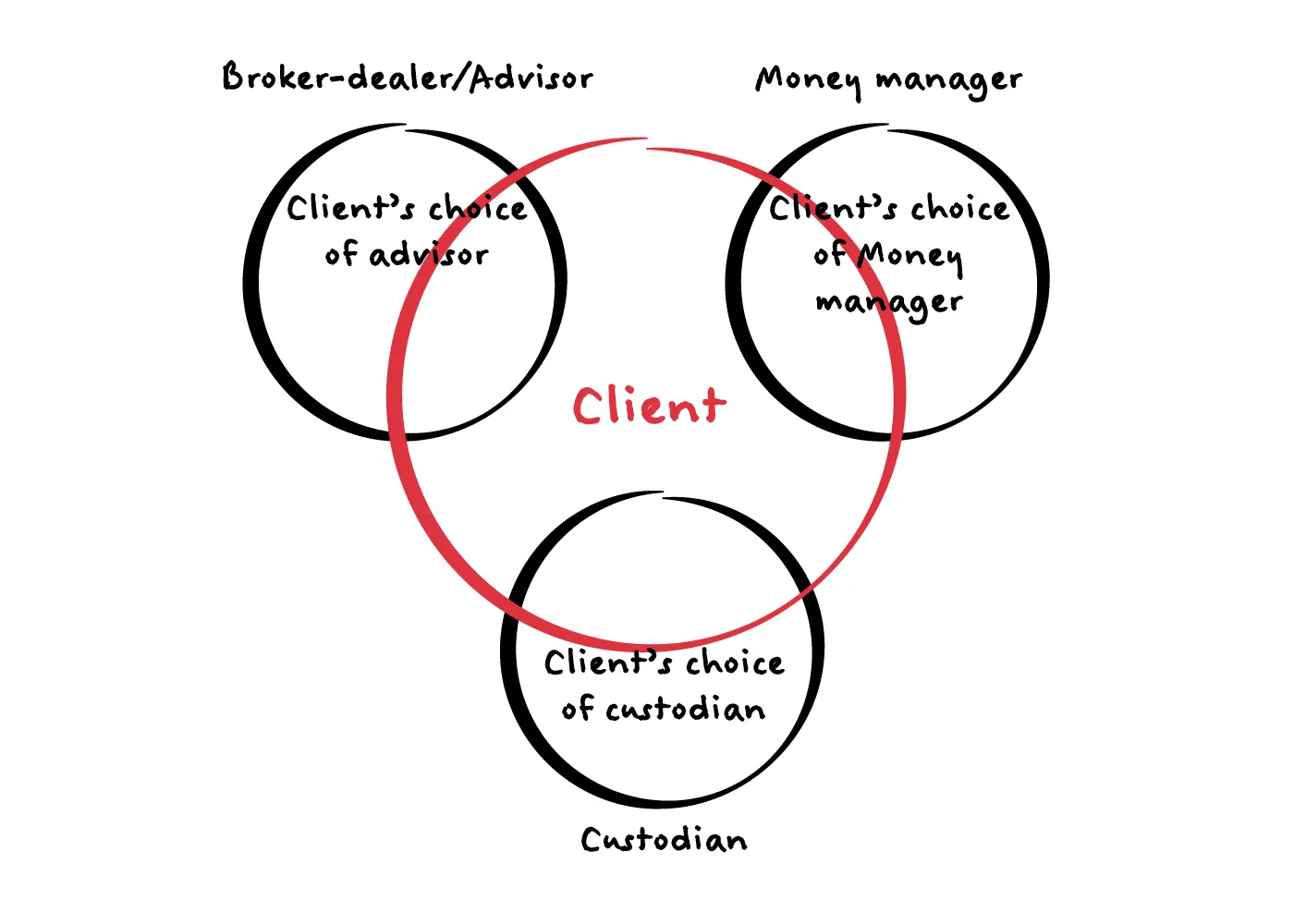
For example, a client may not want to work with Flexible Plan Investments or Axos, for whatever reason. That is not a problem. There are many other qualified options available, even beyond the names I mentioned. Or, if a client later decides not to continue working with me, they could transition to another advisor while maintaining the same third-party investment manager and custodian, if they choose.
Source: Thomas Campbell
Under this structure, there are many more checks and balances. More importantly, it places ultimate control with the investor. They are at the center of the process, supported by three independent organizations that each fulfill a distinct role.
Source: Thomas Campbell
Does this approach require a bit more time and paperwork? Yes.
Is it worth it? I believe it is.
The goal is to ensure everyone understands their roles and responsibilities. When questions arise about who does what, I simply draw the “three circles” diagram—and gladly review it with any client who wants a clearer picture.
Disclosure: All investments involve risk, including the possible loss of capital. The products and services of STF Management LP are not available in all jurisdictions or regions where such provision would be contrary to local laws or regulations.
Photography by Sarah Hailey